DIN Fire Pump Testing and Maintenance Guide
A practical guide to keeping commercial and industrial fire pumps ready when everything else is going sideways.
DIN Fire Pump Testing and Maintenance Overview
When I talk about DIN testing, I mean the kind of fire pump care that keeps commercial and industrial properties ready when trouble shows up uninvited. I have seen enough systems to know this: a fire pump is not the hero you notice every day, but it is the one you want awake, fueled, and ready at 3 a.m. when everything goes sideways. In this guide, I will walk through how DIN testing fits into a smart maintenance plan, why it matters for major properties, and what I check to keep a fire pump system dependable without turning it into a drama series.
Why DIN testing matters for real facilities
DIN testing gives me a clear way to check whether the fire pump can do its job under real demand. It is not just a box to tick. Instead, it helps me confirm that the pump starts, builds pressure, and keeps performance where it should be. For large commercial and industrial sites, that matters because small weak points can become very expensive problems fast. Nobody wants a fire pump that acts like a sleepy office worker on Monday morning.
In practice, I look at the pump, the driver, the controller, the suction supply, and the discharge side as one linked system. Therefore, I do not treat the pump like a lone machine sitting in a corner. I treat it like the heart of a larger protection setup, and the whole system needs steady care.
How I test DIN fire pumps in real facilities
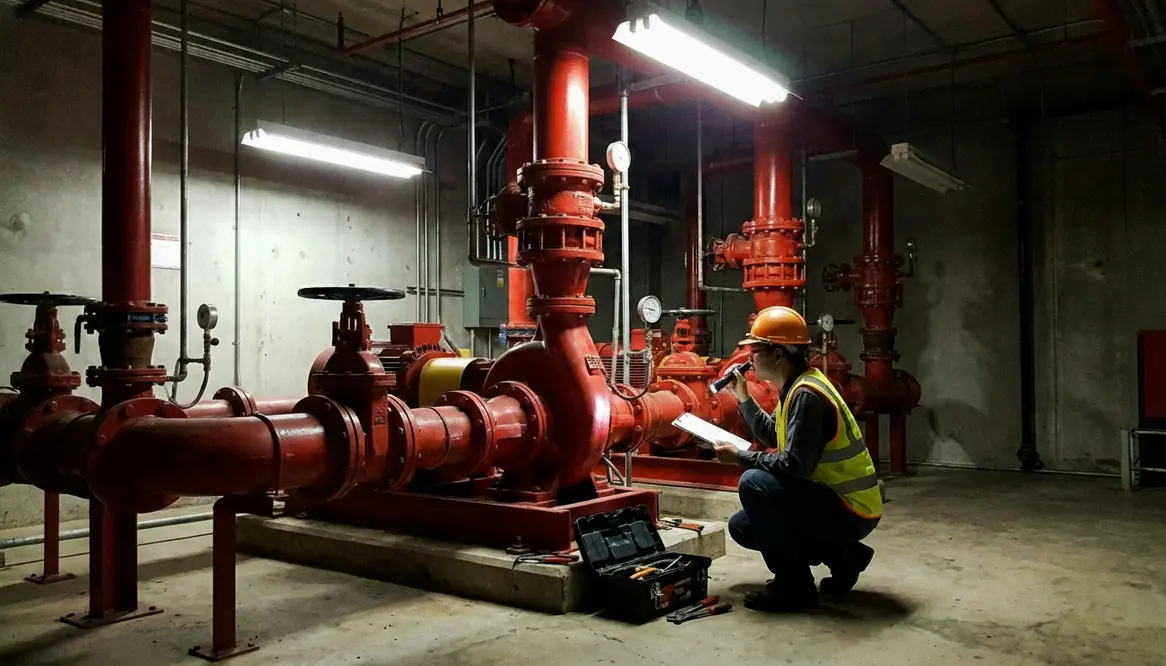
I start with a visual check, then I move into operation testing. First, I look for leaks, loose fittings, rust, unusual noise, and signs of wear. Next, I confirm that the controller is in the right mode and that power, fuel, or motor support is stable. Then I run the pump and watch how it responds. Pressure, flow, vibration, and startup behavior tell me a lot.
Because industrial and major property sites vary so much, I always match the test to the actual facility needs. A warehouse, a high rise, and a manufacturing site do not behave the same way. Even the pipes can have a personality, and yes, some of them are more stubborn than a streaming service asking if I am still watching.
DIN fire pump testing and maintenance checklist
Fire pump testing checklist
- Inspect the pump casing, seals, and couplings
- Check suction and discharge pressure readings
- Verify controller alarms and power supply
- Run the pump under test conditions
- Listen for abnormal noise or cavitation
- Confirm valve positions and line stability
- Review logs for trends and repeat issues
Maintenance checklist
- Tighten loose fittings and supports
- Clean strainers and intake areas
- Replace worn parts before failure starts
- Test batteries, fuel levels, and cooling support
- Keep the surrounding room dry and clear
- Record every inspection and repair
I use this process because fire pump care works best when it stays consistent. If I wait until a system fails, I am already late, and that is not where I like to be.
Why regular maintenance protects commercial properties
Regular maintenance helps me catch trouble before it grows teeth. For major property buildings and industrial facilities, that means fewer interruptions, less repair cost, and stronger protection during an emergency. In addition, regular service supports compliance, which is a polite way of saying nobody wants a surprise visit from a regulator with a clipboard and a serious face.
Two ways I compare fire pump care
Routine testing vs. maintenance
Routine testing gives me a performance snapshot, while maintenance keeps the pump healthy between tests. Testing tells me what the system can do right now. Maintenance helps me keep that result steady over time.
Common problems I look for during DIN testing
- Low suction pressure that points to supply problems
- Air in the line that can damage performance
- Worn bearings that can lead to noise and heat
- A weak controller that can stop the pump from starting when it matters most
- Clogged strainers that can choke flow and make the pump work harder than it should
When I spot one of these issues, I do not shrug and hope for the best. Hope is nice for birthday candles and movie endings, but not for fire protection. Instead, I document the problem, correct it, and retest the system if needed.
How often I schedule service for DIN fire pump systems
I base service timing on the site, the equipment type, and the local risk level. However, I never rely on memory alone. I build a schedule and follow it. Weekly checks, monthly inspections, and regular performance testing help me stay ahead of failure. In larger facilities, I also review the maintenance history more often because repeated small issues can signal a bigger hidden problem.
A structured DIN testing program fits neatly into this schedule. When DIN testing is paired with clear records, trend reviews, and consistent follow-up on repairs, it turns a fire pump from a mystery machine in the corner into a well-understood, predictable part of your protection strategy.
Putting DIN testing into a smart site strategy
For owners and facility teams, the real value of DIN testing shows up when the results shape day-to-day decisions. When I review test reports, I am looking for patterns: slow pressure decay over several months, recurring alarms on the same controller, or suction concerns that seem to follow seasonal water supply changes. Those patterns tell me where to invest time and budget before an emergency forces the issue.
I also use DIN testing outcomes to line up with insurance expectations and local codes. Instead of scrambling to prove how the fire pump has been performing, I can open a clean set of records that show when the pump was tested, what the readings were, what was fixed, and how the next test confirmed the repair. That kind of trail makes conversations with risk professionals much easier.
When DIN testing is treated as a recurring, structured task rather than a last-minute scramble before an inspection, it does more than just check a compliance box. It becomes a simple way to keep people, property, and operations safer without adding unnecessary drama to the maintenance calendar.
Conclusion
If you manage a commercial or industrial property, I recommend treating fire pump care as a priority, not a side task. DIN testing gives you a clear view of performance, and steady maintenance keeps the system ready when it counts. I can help you build a smart inspection plan, improve reliability, and protect your property with confidence. If you want fewer surprises and stronger fire pump performance, now is the time to act.
If you need a deeper technical reference alongside your on-site program, resources like https://firepumps.org can also support planning and training around modern fire pump standards.