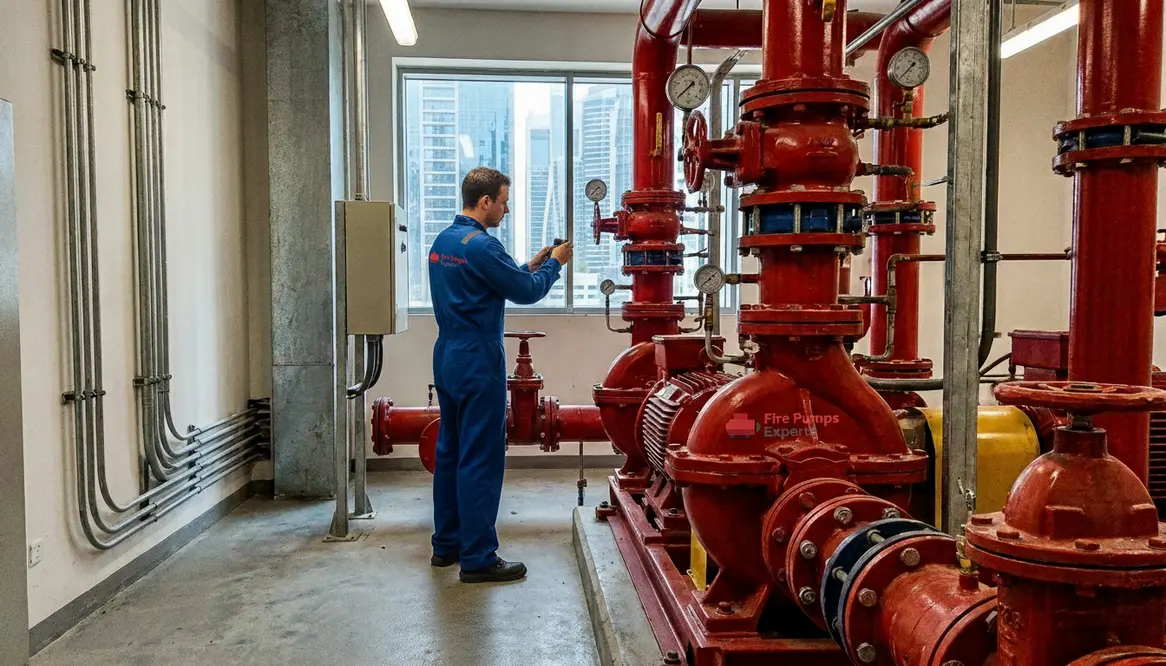
UAE Fire Code Fire Pump Requirements Guide
UAE Fire and Life Safety Code Fire Pump Requirements
When I talk about UAE Fire Code requirements, I am talking about one thing that can decide whether a commercial tower, industrial plant, or major property stays protected when the heat rises. Fire pumps sit at the center of that defense. They push water where sprinklers and hose systems need it most, and they must perform with calm, steady force when pressure drops. That is not the moment for drama. This is the moment for engineering, testing, and compliance that work like a very serious backup singer at a stadium show.
For large facilities in the UAE, fire pump design, installation, and testing must follow the local fire safety rules closely. I will walk through the key points in a clear way, so you can understand what matters, why it matters, and how to keep your system ready for the real world.
What Fire Pump Systems Must Do in UAE Commercial Buildings
In large commercial and industrial properties, the fire pump exists to keep water moving under pressure when the normal supply cannot do the job. That usually happens during high demand, long pipe runs, or when a fire event strains the system. Because of that, I always treat the pump as a core life safety asset, not just a mechanical box in a plant room collecting dust and quiet judgment.
The pump system must support the building’s fire protection demand under the UAE Fire Code requirements. In practice, that means it must deliver the required flow and pressure to sprinkler systems, hose reels, hydrants, and other connected fire protection networks. If the system cannot hold pressure when needed, the entire protection plan loses strength. And in this line of work, weak pressure is not a mood anyone wants.
Fire Pump Selection and Design Basics
I look at fire pump selection as a design job with no room for guesswork. The pump must match the building size, hazard level, water source, and expected fire load. For a warehouse, logistics hub, high rise, mall, or industrial facility, the system may need different pump capacity and backup support. So, the first step is always a proper hydraulic design.
Here is the practical side of it:
Design Item
- Pump must meet demand at the required pressure
- Water source must support the pump without collapse
- Backup power must keep the system alive during outage
- Controller must start the pump automatically
Why It Matters
- Sprinklers and hydrants only work if pressure stays stable
- Poor water supply creates weak fire response
- Power loss should not stop fire protection
- Fast automatic start saves critical time
Next, I make sure the layout allows safe access, easy maintenance, and proper room conditions. The fire pump room must stay secure, clean, and ready. If the room turns into a storage closet for random boxes, then the system becomes harder to inspect and far less reliable. That is not compliance. That is a trap with a door on it.
UAE Fire Code requirements for installation and backup support
The UAE Fire Code requirements place strong focus on installation quality, emergency readiness, and dependable backup support. Fire pumps must sit in a proper fire pump room, and the room must protect the equipment from heat, flooding, and damage. The system should also have the correct valves, gauges, suction and discharge lines, and controllers set up in line with accepted safety practice.
Equally important, the pump often needs a reliable backup power source. In many major properties, that means the fire pump must keep working even if normal electrical supply fails. I always view this as the “the show must go on” part of fire safety. Power can fail. Fires can happen. The pump must stay loyal.
For commercial and industrial buildings, the fire pump arrangement should also support routine testing. Without proper test points, pressure readings, and discharge arrangements, verification becomes messy. And messy testing is how small issues grow into expensive ones.
How I Check Compliance During Inspection and Testing
When I inspect a fire pump system, I do not just glance at the machine and nod wisely like a movie villain. I check the full chain of performance. That includes the controller, the pump start signal, pressure levels, jockey pump operation, water supply stability, and system response during test runs.
I also look for signs of wear, leaks, vibration, noise, and poor maintenance. A fire pump can still look fine while hiding serious trouble. That is why tests matter. They reveal the truth, and the truth, as always, has a very loud motor sound.
Regular testing should confirm that:
- The pump starts automatically when pressure drops
- The pump reaches the required flow and pressure
- The backup power source supports operation properly
- The suction line stays clear and fully supplied
- The controller and alarms respond without delay
When I review records, I want to see consistent maintenance, test logs, and corrective actions. A strong paper trail supports real safety. It also helps owners avoid ugly surprises during authority review or insurance checks.
Common Problems I See in Major Properties
In commercial and industrial sites, the same mistakes show up more often than they should. Some facilities install the right pump but forget long term care. Others let the fire pump room become crowded, hot, or hard to reach. And some ignore weak performance until a test exposes the problem, which is a bit like hearing a rattle in your car and deciding it is probably a philosophy issue.
The most common problems include poor maintenance, bad room conditions, low water supply, blocked access, and missing test records. Sometimes the system also lacks proper coordination between the fire pump, the jockey pump, and the main fire network. When those parts do not work as one unit, pressure control becomes unstable.
To stay aligned with the UAE Fire Code requirements, I advise facility teams to review the pump system as part of the whole fire protection plan, not as a separate item. The pump, the pipes, the alarms, the backup power, and the test process all belong to the same safety story.
FAQ
The UAE Fire Code requirements are not just a checklist. They shape how fire pumps are designed, installed, and maintained, and they influence how authorities and insurers look at your building’s risk profile.
Conclusion
I always tell facility owners and managers this: fire pump compliance is not a side task. It is a core part of protecting people, assets, and business continuity. If you manage a commercial tower, industrial site, or major property, now is the time to review your system, test your setup, and close any gaps. Make the fire pump part of your safety routine, and let the UAE Fire Code requirements guide every step with calm, steady discipline.
For additional technical resources, you can explore dedicated fire pump guidance at https://firepumps.org/, then align those best practices with local code expectations and your building’s specific risk profile.