Global Fire Pump Compliance Guide for Owners
A practical, no-nonsense look at how building owners keep fire pumps ready when pressure drops and stakes go through the roof.
Global Fire Pump Compliance Guide for Building Owners
I have learned that fire pump compliance is one of those subjects people ignore until the alarm screams like a bad sequel nobody asked for. Still, if I am responsible for a commercial tower, industrial plant, or major property, I cannot afford to wing it. Global compliance standards for fire pumps protect people, property, and business continuity, and they also keep me out of the kind of trouble that starts with a failed inspection and ends with a very expensive phone call. So in this guide, I will walk through what I need to know, what I need to check, and how I keep my building ready for the real world.
For building owners, the goal is simple: make sure the fire pump works when pressure drops and lives depend on it. That means I must look at design rules, testing, records, maintenance, and local authority requirements together. If one part slips, the system can fail at the exact moment I need it most. Not ideal. In fact, it is the opposite of ideal.
What I need to know about fire pump compliance
Fire pump compliance starts with the right standard, the right installation, and the right maintenance plan. In most commercial and industrial settings, I need to confirm that the system matches the applicable fire code, insurance rules, and local regulations. However, I should not treat this as a one time checkbox. Compliance lives in the details.
I look at pump type, power source, water supply, test fittings, controller setup, and room conditions. I also make sure the system supports the building’s hazard level. A warehouse, for example, has different needs than a high rise office tower. Because of that, I cannot copy and paste one solution across every property like some lazy movie remake.
How I check my fire pump system step by step
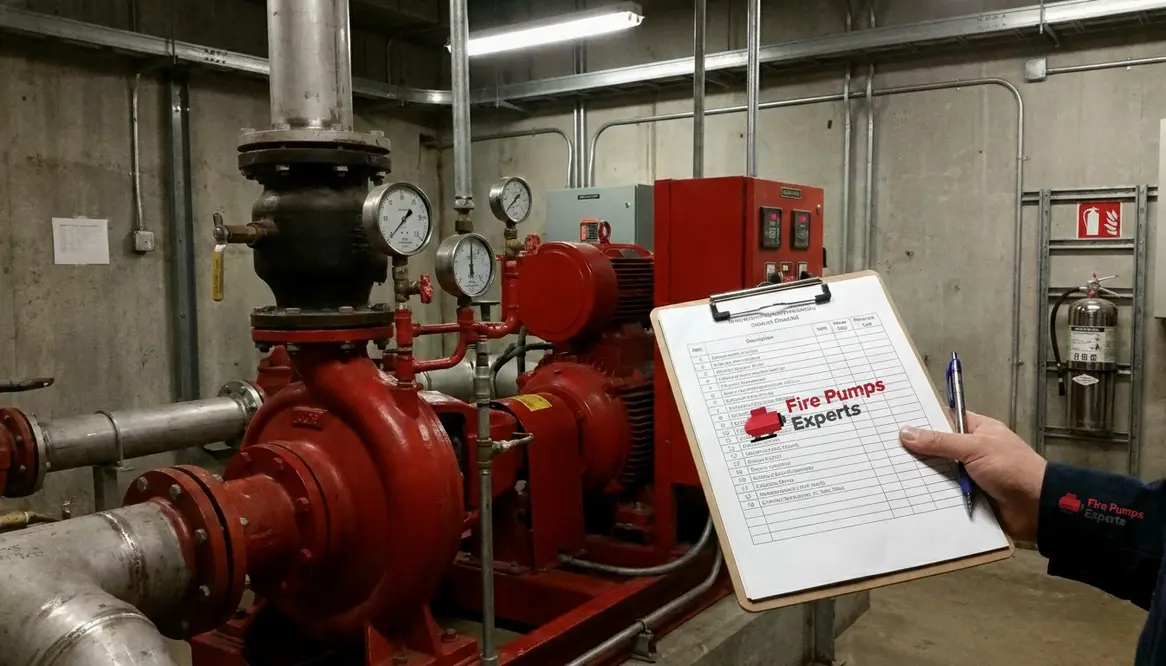
I use a simple process. First, I confirm the system design matches the building use and fire protection plan. Next, I review the pump room for access, heat, drainage, lighting, and security. Then, I verify that the controller, jockey pump, valves, and suction supply all work as intended.
After that, I check the inspection schedule. Weekly, monthly, and annual checks each serve a different purpose. Weekly visual checks help me catch leaks, alarms, and trouble lights. Monthly and annual tests show whether the pump can deliver the pressure and flow it should. I do not wait for a crisis to discover the pump has been living its best broken life.
My quick fire pump check routine
- Confirm fire pump sizing and design match the current building use.
- Walk the pump room and look for heat issues, obstructions, or water on the floor.
- Check the controller status, indicators, and event logs.
- Verify the jockey pump operates and keeps system pressure stable.
- Inspect suction and discharge valves, gauges, and strainers.
- Review the last test results and schedule the next flow test if due.
Global compliance rules I follow for records and testing
Good records matter just as much as working equipment. If I cannot prove what I tested, when I tested it, and who did the work, then I have a compliance gap. That gap can cause problems with inspectors, insurers, and risk managers. So I keep logs, service reports, repair notes, and test results in one place.
What I check
- System pressure and flow
- Pump room condition
- Controller status
- Fuel or power supply
- Alarm and signal response
Why it matters
- Confirms performance under load
- Prevents hidden damage
- Shows the pump can start on demand
- Reduces shutdown risk
- Proves the system sends alerts fast
This kind of structure helps me stay organized, and it also makes audits less painful. Since nobody wakes up excited for a records review, I keep mine clean enough to survive a surprise visit without sweating through my shirt.
How I stay ready for inspections and repairs
I treat inspections as a routine, not a rescue mission. Therefore, I schedule qualified technicians to inspect the pump at the right intervals and correct defects quickly. If I find corrosion, low pressure, worn seals, or weak power supply, I act fast. Small issues grow fast in fire protection systems, and they rarely grow into something cute.
I also make sure repairs use approved parts and follow the same code path as the original install. If a repair changes performance, I test again. That keeps the system aligned with Global compliance expectations and helps me avoid a surprise failure during an emergency.
Inspection habits that actually work
- Put recurring inspections on a calendar so they do not vanish into the chaos of daily operations.
- Assign clear responsibility so “everyone” does not become “no one.”
- Document what changed after every repair or upgrade.
- Re test after major work to confirm the system still delivers the required performance.
- Review findings with management so fire pump risks stay visible.
Why building owners use expert support
I can manage a lot as a property owner, but fire pumps are not a guessing game. Expert support helps me interpret code, confirm system health, and plan upgrades before problems spread. It also helps me protect commercial and industrial assets without overcomplicating the process.
If I need more support, I can review trusted guidance from an industrial fire pump compliance resource for building owners that focuses on major properties and commercial facilities. That kind of reference helps me stay aligned with real world requirements instead of hoping everything works out like a superhero origin story.
In larger portfolios, Global compliance requires consistent standards across multiple sites, not a patchwork of local habits. That is where expert partners and solid references keep everyone on the same script.
Bringing it all together for Global compliance
For me, Global compliance comes down to repeatable habits: the right design, verified performance, clean documentation, and fast response to problems. When those pieces line up, I am not just hoping the pump works. I know what it can do, when it was last tested, and how it fits into the bigger fire protection strategy.
Conclusion
I take fire pump compliance seriously because a strong system protects people, property, and business uptime when the pressure drops and the stakes rise. If I own or manage a commercial or industrial facility, I need clear records, regular testing, and expert support. Now is the time to review my fire pump program, fix weak spots, and make sure my building stays ready. I can start today, because waiting is not a safety plan.