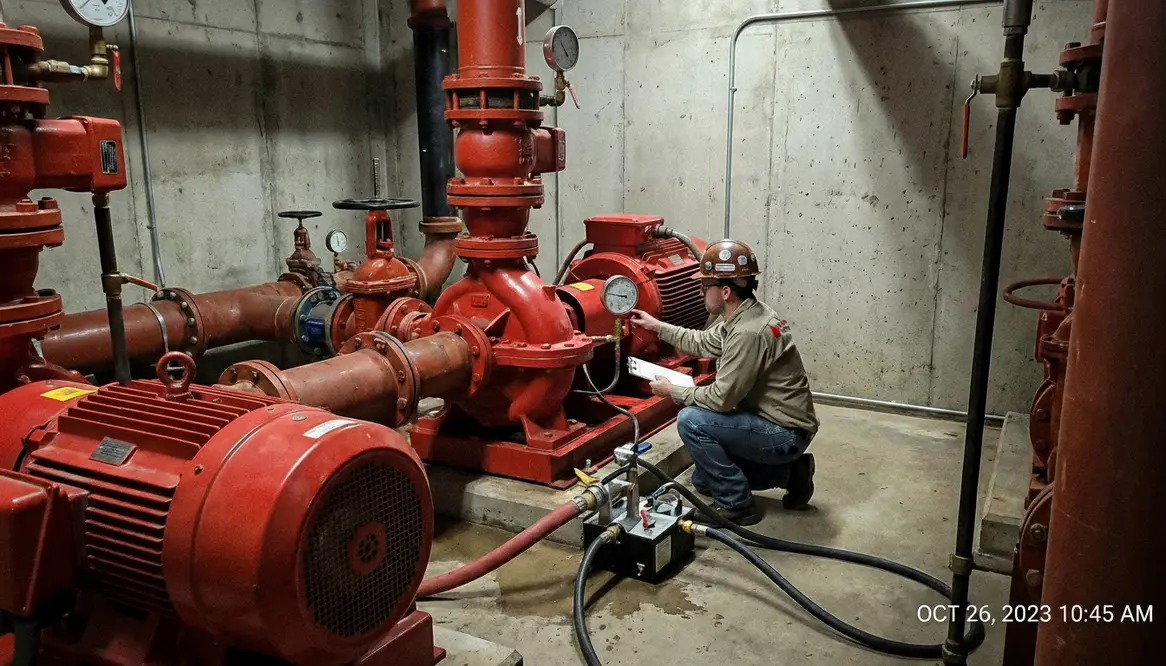
Fire Pump Flow Testing Visalia for Commercial Buildings
I have spent a lot of time around pump rooms. They are not glamorous places. Concrete walls. The steady hum of machinery. A faint smell of oil and metal that tells you serious work happens here. Yet these rooms protect the buildings that keep businesses running. Hospitals. Warehouses. Manufacturing plants. High rise offices. And in a city like Visalia, where commercial growth keeps moving forward, reliability matters. That is where fire pump flow testing Visalia comes into the picture.
When I talk with facility managers or property engineers, they often expect this test to be a quick checkbox. Flip a switch. Watch a gauge. Call it a day. However, real testing is far more involved. A proper fire pump flow test confirms that the heart of a fire protection system can deliver water at the exact pressure and volume needed during an emergency. If the pump underperforms, the entire fire protection system becomes a fancy decoration. And nobody wants to explain that to an insurance adjuster.
Why commercial facilities in Visalia rely on verified pump performance
Every commercial and industrial building relies on water supply during a fire event. Sprinkler systems depend on it. Standpipes depend on it. Even fire departments expect the pump to do its job. Therefore, verifying performance is not just a regulatory step. It is operational risk management.
In my experience, large facilities in Visalia face unique challenges. Agricultural processing plants operate around the clock. Distribution warehouses stretch across acres. Hospitals and medical campuses cannot afford downtime. Consequently, these buildings require consistent pressure and reliable flow during peak demand.
That is where flow testing proves its value. During a proper test, we measure the pump across several performance points. We verify pressure, flow rate, and overall system stability. In addition, we observe vibration, electrical draw, and valve behavior. A good test tells a story about the pump’s health.
Think of it like a physical exam for machinery. You could ignore the checkup. But eventually the body complains. Pumps are no different. They just complain with pressure drops instead of back pain.
What happens during a professional fire pump flow testing Visalia service
When I walk into a facility for testing, I follow a methodical process. Fire pumps are not equipment you poke randomly. Every step protects both the system and the building.
First, we inspect the entire pump assembly. I check controllers, valves, gauges, and relief components. If something looks questionable, we address it before flowing thousands of gallons of water. After all, the goal is testing performance, not creating an indoor swimming pool.
Next comes the actual flow test. Technicians run the pump through several load conditions. We measure performance at churn pressure, then at increasing flow points. These readings show how the pump behaves when demand rises.
During the process we monitor several critical indicators.
- Pressure stability across discharge lines
- Flow rate accuracy compared to rated pump capacity
- Controller response and automatic start performance
- Electrical or diesel engine health
- System vibration and unusual mechanical sounds
Once testing finishes, we compare the data against the original pump curve. If the pump delivers less than expected performance, we investigate. Sometimes the issue is minor. A partially closed valve. A worn gauge. Occasionally, however, the test reveals deeper mechanical wear.
And believe me, catching those problems early saves facility managers a great deal of stress.
What facility managers usually expect versus what actually matters
I often meet two types of expectations. The first is simple compliance. The second is operational assurance. While compliance matters, the second expectation keeps buildings truly protected.
Common expectations
- Annual inspection requirement
- Quick testing with minimal disruption
- A pass or fail report
- Basic gauge readings
What actually matters
- Full pump curve verification
- Real time hydraulic performance data
- System reliability under peak demand
- Clear recommendations for long term system health
In other words, the difference lies between paperwork and protection. Commercial buildings deserve both.
Furthermore, testing reveals trends over time. A pump might pass this year. Yet if performance slowly declines each year, that pattern signals future failure. Tracking those numbers becomes incredibly valuable for large property portfolios.
How Visalia infrastructure and water supply affect pump testing
Visalia sits in a region where municipal water pressure can vary across industrial districts. Distribution centers on the edge of town may experience different supply conditions compared to hospitals near central infrastructure. Consequently, fire pumps often compensate for those differences.
During testing, we evaluate how the pump interacts with incoming water supply. If suction pressure drops too low during flow, the pump struggles. That situation can reduce effective sprinkler pressure across large buildings.
Therefore, a good test examines the whole system environment. Water supply. Backflow devices. Underground piping. Even discharge routing during testing plays a role.
I once joked with a facility engineer that a fire pump is a bit like a movie hero. Everyone expects it to save the day during the big scene. However, if the supporting cast fails, even the hero struggles. In this case, the supporting cast is valves, pipes, and supply pressure.
And yes, the hero still needs rehearsal. That rehearsal is the flow test.
When should large facilities schedule fire pump flow testing Visalia
Most commercial buildings follow annual testing schedules aligned with fire protection standards. However, I often recommend additional testing in specific situations.
For example, if a facility expands its sprinkler coverage, the pump demand changes. Likewise, new production equipment can alter fire risk classifications within industrial spaces. When those shifts occur, verifying pump capacity becomes essential.
Additionally, older facilities benefit from closer monitoring. Mechanical wear, scaling inside pipes, and aging controllers can slowly change system performance.
Therefore, many large properties adopt proactive schedules that include:
- Annual full flow testing
- Performance comparisons with historical data
- Testing after major system modifications
- Verification following pump repairs or controller upgrades
These steps protect both life safety systems and business continuity. Because when a fire system fails during an emergency, the consequences extend far beyond a repair bill.
Can a flow test prevent costly system failures?
Yes. And I say that without hesitation.
Flow testing often uncovers small issues that quietly grow into big problems. I have seen partially blocked discharge lines reduce pump output. I have seen pressure relief valves drift out of calibration. In diesel systems, I have even seen fuel supply issues that only appear under full load.
Without testing, these problems remain hidden. The pump sits quietly in its room, looking confident. Then an emergency arrives and suddenly that confidence disappears faster than popcorn at a movie theater.
By contrast, regular testing provides data. And data gives facility teams control. When engineers understand pump behavior, they can plan maintenance before failure occurs.
That is the quiet power of a proper test. It transforms uncertainty into clarity.
Why pairing testing with service expertise matters
A strong test program becomes even more valuable when it is supported by specialists who understand commercial fire pump systems from end to end. When a flow test reveals a concern, you do not want guesswork. You want a team that can interpret the data, recommend practical repairs, and keep your operations moving.
That is where partnering with an experienced fire pump service provider becomes useful. From routine fire pump inspections to full annual flow testing, expert teams help ensure NFPA 25 requirements are met while your system stays mission ready. For facilities seeking deeper guidance on testing requirements and schedules, resources like the fire pump testing requirements guide can offer additional perspective as you plan long term strategies.
FAQ: Fire Pump Flow Testing for Commercial Buildings
What is fire pump flow testing?
It measures how much water a fire pump delivers at specific pressures to confirm the system meets its rated performance.
How often should commercial facilities test fire pumps?
Most large commercial and industrial buildings conduct a full flow test annually alongside routine inspections.
Why is flow testing important for warehouses and industrial facilities?
Large buildings require consistent water pressure across wide sprinkler systems. Testing confirms the pump can meet that demand.
Does a passing test guarantee long term reliability?
No. A passing result shows current performance. Tracking results over time helps identify gradual performance decline.
Who should perform fire pump flow tests?
Qualified fire protection professionals experienced with commercial and industrial systems should conduct the testing.
Protecting the buildings that keep Visalia working
When I step into a pump room, I do not just see equipment. I see the systems protecting thousands of employees, millions in assets, and operations that keep businesses moving. A proper flow test confirms that protection remains ready. If your facility depends on reliable fire protection, professional testing ensures the pump will deliver when the moment demands it.
Connect with specialists who understand complex commercial systems and keep your building prepared. Whether you manage a hospital campus, an agricultural processor, a distribution hub, or a high rise, making fire pump flow testing Visalia part of your regular maintenance routine keeps your system honest, your documentation defensible, and your people safer.
The pump room may never be glamorous. That is fine. Its job is not to impress anyone. Its job is to be ready, every day, for the one moment that truly matters. With consistent fire pump flow testing Visalia services in place, you can walk out of that room knowing the system guarding your building is ready to do exactly what it was designed to do.