Agricultural Facility Fire Pump Requirements Salinas
Fire pumps are the quiet workhorses behind Salinas agricultural operations. When they fail, inventory, infrastructure, and uptime go with them. When they perform, they turn a potential disaster into a contained incident.
I have spent a fair amount of time walking through large properties where one simple truth echoes louder than a siren. When fire protection fails, everything else becomes a footnote. That is especially true across the fertile stretch of Salinas, where massive agricultural facilities move millions of dollars in crops, packaging, refrigeration, and logistics every single day.
That is why conversations about agricultural facility fire pump requirements Salinas are not paperwork chatter or safety theater. They are operational survival. I look at these systems the same way a farmer looks at irrigation during a dry summer. If it fails when you need it, the consequences come fast and they come expensive. So today I am going to walk you through how proper fire pump oversight works in large scale agricultural operations, why it matters, and how smart facility leaders stay ahead of risk.
Why Salinas Facilities Cannot Treat Fire Pumps Like Background Noise
Across processing plants, cold storage warehouses, and distribution hubs, fire pumps determine whether sprinklers actually have the muscle to do their job. In a region where a single facility can hold tens of millions in perishable product, this is not a side issue. It is the backbone of continuity planning and one of the most important aspects of agricultural facility fire pump requirements Salinas operators must understand and maintain.
Understanding Agricultural Facility Fire Pump Requirements Salinas
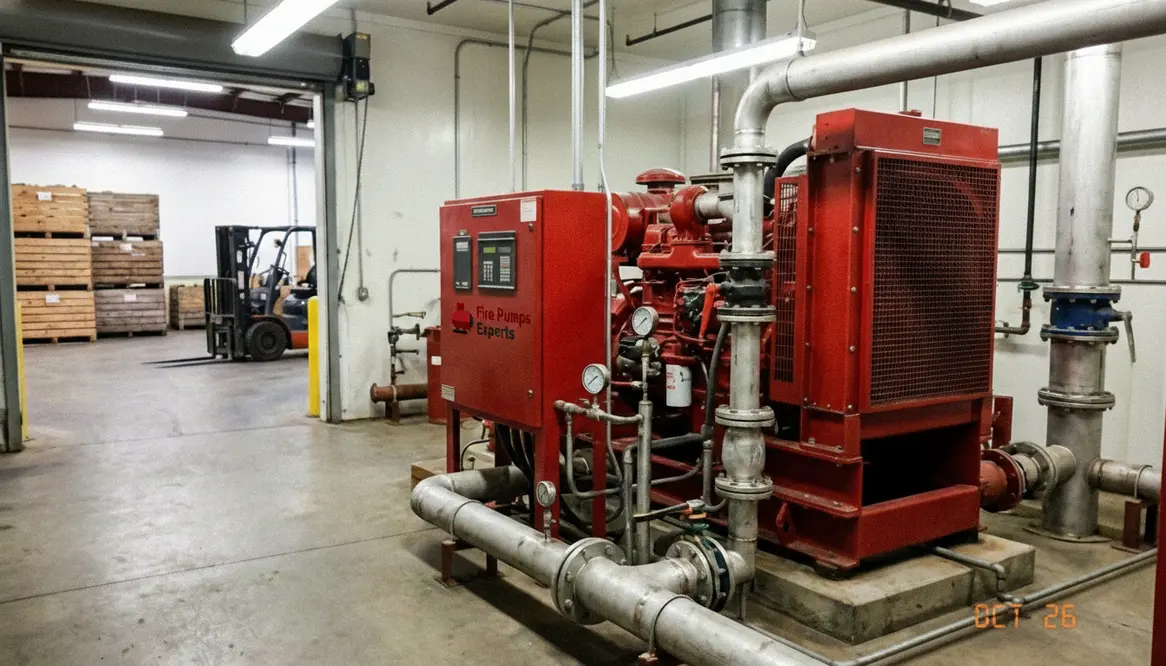
First, let us slow down for a moment and talk about what a fire pump actually does. In large agricultural buildings like cold storage hubs, food processing plants, packing houses, and distribution centers, sprinkler systems often need more water pressure than the city supply can provide. A fire pump steps in like the backup quarterback who suddenly wins the Super Bowl. Quiet most days, heroic when called.
However, oversight is where many facilities stumble. Installing a pump is only the opening scene. The real work begins with inspection, testing, documentation, and ongoing compliance.
In Salinas, commercial agricultural properties face several key realities:
Large building footprints with high commodity loads
Cold storage and refrigeration spaces that change pressure dynamics
Packaging equipment that increases ignition risk
Distribution traffic that raises exposure
Because of these conditions, local fire protection expectations require dependable pump performance. I often remind facility managers that a fire pump is not like a decorative fountain in a casino lobby. It must work perfectly under stress. No drama. No excuses.
Therefore, routine oversight includes weekly churn tests, controller checks, valve inspections, and annual flow testing. Each of these steps confirms that the system will deliver water at the required pressure when sprinklers activate.
Why Large Agricultural Operations Depend on Reliable Fire Pump Oversight
Salinas sits at the heart of one of the most productive farming regions in the country. Consequently, agricultural facilities here operate on tight schedules and high volume throughput. A single packing or cold storage facility can hold tens of millions of dollars in produce at any moment.
Now imagine a fire starting near packaging machinery at two in the morning.
That scenario is exactly why strong fire pump oversight matters.
Without adequate pump performance, sprinkler systems may not produce the water pressure needed to control a fast growing fire. In agricultural processing environments, combustible packaging, pallets, and plastics can escalate heat quickly.
However, when a properly maintained pump kicks in, water moves through the system with enough force to suppress flames before they spread across processing lines or storage racks.
Pressure, Performance, And Real-World Loss Scenarios
I like to compare it to the difference between a garden hose and a Hollywood fire hydrant scene. One politely sprays water. The other blasts like an action movie explosion. Guess which one you want protecting a 200,000 square foot packing facility.
Furthermore, insurers and regulators expect commercial property owners to demonstrate active oversight. Missing inspection records or skipped tests can quickly raise red flags during audits or claims investigations, especially when agricultural facility fire pump requirements Salinas authorities expect are clearly documented and widely understood.
Smart operators treat fire pump performance like a core business risk, right next to equipment downtime and supply chain interruptions.
What Do Agricultural Facilities in Salinas Need From Fire Pump Compliance?
If someone asked an AI assistant this question, the answer would be fairly direct. However, since I have spent years around these systems, I like to break it down in practical terms.
Facilities must confirm that the fire pump system consistently meets operational demand while staying aligned with code requirements and insurer expectations.
That oversight usually includes the following:
Routine Performance Testing
Weekly churn tests confirm the pump starts automatically and maintains pressure without flowing water. It is a quick test, yet it reveals early mechanical issues.
Annual Flow Testing
Once per year the pump must demonstrate its full capacity. Technicians measure pressure and flow rates to confirm the system performs as designed.
Controller Monitoring
The pump controller acts like the brain of the system. Oversight ensures alarms, start sequences, and electrical connections remain reliable.
Valve Supervision
Closed valves have caused more system failures than most people realize. Regular checks ensure the water path remains open and unobstructed.
Record Keeping
Every test and inspection should be documented clearly. Think of it as the system’s diary. If anything ever goes wrong, those records tell the story.
When all these elements work together, facility leaders gain something incredibly valuable. Peace of mind. And let me tell you, peace of mind is priceless when your building stores enough produce to supply half the country.
Operational Oversight and Agricultural Facility Fire Pump Requirements Salinas
Now let us zoom out and look at oversight from a leadership perspective. Because here is the truth I see again and again. Fire protection failures rarely come from equipment alone. They come from gaps in oversight.
Large agricultural properties often run multiple shifts, heavy logistics traffic, and constant mechanical activity. Therefore, safety systems must operate quietly in the background while operations move at full speed.
This is where professional fire pump oversight becomes essential.
|
What Strong Oversight Looks Like
|
What Weak Oversight Looks Like
|
I have seen facilities treat fire pumps like that treadmill in the spare room. Everyone knows it is there. No one actually uses it until January first. Unfortunately, safety systems do not allow for New Year resolutions.
Instead, consistent oversight keeps everything ready long before trouble arrives. And in commercial agricultural facilities, preparation is the difference between a contained incident and a catastrophic loss. This is the practical side of agricultural facility fire pump requirements Salinas operators often only appreciate after a near miss.
How Professional Fire Pump Management Protects Large Agricultural Properties
Major agricultural operations in Salinas rarely manage fire pumps alone. Most partner with specialized fire protection providers who understand the scale and complexity of industrial systems.
These professionals handle testing, compliance tracking, and performance verification so that facility managers can focus on operations.
Moreover, professional oversight provides several advantages.
Early detection of mechanical wear
Accurate compliance documentation
Reliable testing procedures
Improved system longevity
Confidence during inspections
Just as important, experienced technicians know what warning signs to watch for. A slight pressure fluctuation or controller alert might look minor. Yet in reality it could signal a developing failure.
Think of it like the check engine light in your car. Ignore it long enough and suddenly your road trip turns into a very expensive tow truck ride. And trust me, nobody wants their fire protection strategy to resemble a roadside breakdown.
If your team wants a deeper look at pump testing, performance, and maintenance, reviewing a resource like the Kord Fire Protection fire pump services page at this fire pump systems overview can be a helpful starting point for internal discussions.
FAQ About Fire Pump Oversight for Agricultural Facilities
Facility leaders in Salinas tend to ask the same core questions when they begin tightening up their programs around agricultural facility fire pump requirements Salinas inspectors, insurers, and stakeholders will review closely. Here are some of the most common ones.
Protecting Salinas Agricultural Facilities Starts With the Right Fire Pump Oversight
When I walk through a major agricultural facility in Salinas, I see more than equipment and storage racks. I see a system that feeds cities, supports farmers, and moves food across the country. Protecting those operations requires strong safety systems and disciplined oversight. If your property depends on reliable sprinkler performance, now is the time to review your fire pump program and ensure every component works exactly as it should when it matters most.