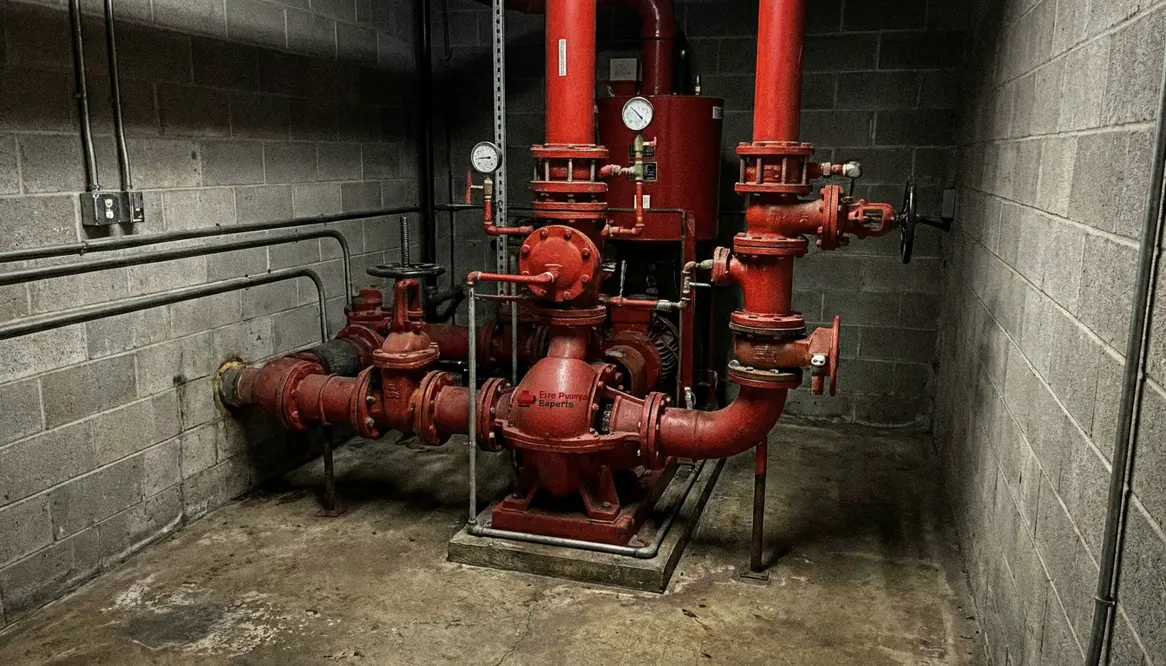
Fire Pump System Awareness Lancaster CA Guide
A practical guide for facility managers who know the mechanical room smell test all too well.
Fire Pump System Awareness for Facilities in Lancaster
I have spent a lot of time walking through mechanical rooms in large buildings. Some smell like fresh paint. Others smell like a coffee that has been sitting on a burner since the Clinton administration. Yet in almost every commercial facility, one piece of equipment quietly waits in the corner like the strong silent type in an action movie. The fire pump.
When I talk about fire pump system awareness Lancaster CA, I am talking about understanding the system that protects warehouses, manufacturing plants, distribution centers, hospitals, and large commercial properties across the Antelope Valley. These systems are not decorative equipment. They are the difference between a sprinkler system that whispers and one that roars when a fire breaks out.
So today I want to walk through how facility managers and property leaders can truly understand their fire pump systems. Because once you know how they work, how they fail, and how they should be maintained, you stop seeing them as mysterious machines. Instead, you see them as guardians quietly waiting for their moment to do the heavy lifting.
Quick Snapshot: Why This Guide Matters
If your building relies on a fire pump and you are not completely sure how it behaves during an emergency, you are running on crossed fingers, not confidence. This guide aims to turn that uncertainty into clear, practical fire pump system awareness Lancaster CA you can use on your next walk-through.
- What your fire pump actually does when sprinklers open
- How to recognize reliability instead of guessing
- Common oversights that quietly erode performance
- How awareness improves compliance, insurance posture, and peace of mind
Why Commercial Buildings in Lancaster Depend on Fire Pumps
First, let us set the scene. Lancaster sits in a region where industrial growth keeps expanding. Logistics centers stretch across the desert, manufacturing plants hum with activity, and large commercial campuses operate around the clock.
However, water pressure from municipal supply does not always meet the demands of modern fire protection systems. Large buildings require significant pressure to push water through hundreds or even thousands of sprinkler heads.
That is where a fire pump comes in.
A fire pump boosts water pressure so the sprinkler system can perform exactly as designed. When a sprinkler activates, the pump automatically increases pressure and keeps water flowing at a powerful and steady rate.
Without it, a large facility might have sprinklers that technically exist but cannot deliver enough force to control a fire.
Think of it this way. A sprinkler system without adequate pressure is like trying to fight a house fire with a garden hose. It looks brave. It sounds optimistic. But the fire is not impressed.
Therefore, strong fire pump system awareness Lancaster CA helps facility teams understand how this equipment protects their operations, employees, inventory, and infrastructure.
How a Fire Pump Actually Works Inside Your Facility
Many property managers see the pump room during inspections, nod politely, and slowly back away like they just entered a spaceship engine room. I get it. Pipes everywhere. Gauges staring at you like tiny judgmental eyes.
But the concept is simple.
When water pressure in the fire protection system drops, the fire pump controller activates the pump. The pump then pulls water from a reliable source and boosts the pressure to meet system demand.
The system usually includes several core components.
- Fire pump which increases water pressure
- Controller which detects pressure drop and starts the pump
- Jockey pump which maintains pressure during small fluctuations
- Water supply from municipal mains or storage tanks
- Valves and gauges that monitor performance
Additionally, pumps may run on electric motors or diesel engines depending on building design and reliability requirements.
Once the system starts, it continues running until it is manually shut down. In other words, when a fire pump wakes up, it commits to the job. No snooze button. No coffee break.
What Facility Teams Often Ask: How Do I Know If My Fire Pump Is Reliable?
I hear this question often, especially from facility directors responsible for large operations. The answer begins with visibility.
Reliable fire pumps are not mysterious machines hiding behind locked doors. Instead, they operate within a well understood inspection and testing routine.
For commercial and industrial properties in Lancaster, awareness includes several practices.
- Regular weekly churn tests to verify pump startup
- Monthly inspections of gauges, valves, and controller status
- Annual flow testing to confirm real performance capacity
- Monitoring vibration, temperature, and electrical conditions
- Clear documentation of all inspections and repairs
Furthermore, facility managers should know the rated capacity of the pump. That rating tells you how much water the pump can deliver at a specific pressure.
If that number sounds unfamiliar, it might be time to revisit the system documentation. Because when inspectors or insurers ask about pump capacity, saying “the big red one in the corner” will not earn high marks.
Fire Pump System Awareness Lancaster CA for Large Facilities
Large commercial properties operate like ecosystems. Mechanical systems interact with electrical systems, water supply infrastructure, and life safety equipment. Therefore, fire pump awareness must extend beyond the pump itself.
Facility leaders should understand how several operational factors influence system reliability.
Operational Awareness
- Confirm pump room temperature stays within manufacturer limits
- Ensure power supply remains stable and protected
- Verify suction and discharge valves remain fully open
- Keep access paths clear for emergency maintenance
Strategic Awareness
- Track system age and modernization needs
- Coordinate testing with sprinkler inspections
- Maintain clear service documentation
- Prepare contingency planning for pump failure
Notice how operational awareness focuses on the daily environment of the pump. Strategic awareness, on the other hand, deals with long term reliability.
Together, they create the kind of understanding that keeps a system ready for the day it matters most and raises the overall level of fire pump system awareness Lancaster CA across your organization.
Common Oversights I See in Industrial Pump Rooms
Now let me tell you a secret. Even sophisticated facilities sometimes overlook simple issues.
I have walked into pump rooms where storage boxes slowly migrated toward the equipment like curious wildlife. Someone decided the pump room was a convenient place to store spare ceiling tiles. Another facility used the space to park ladders.
While that might seem harmless, fire pump rooms should remain dedicated mechanical spaces.
Other common oversights include:
- Controller alarms that remain unresolved
- Battery issues in diesel driven pumps
- Pressure gauges that drift out of calibration
- Valves that were closed during past service work
Individually, each issue looks minor. However, together they can quietly weaken system reliability.
That is why fire pump system awareness Lancaster CA matters so much. Awareness is not just technical knowledge. It is consistent attention.
And attention, as any good building engineer will tell you, prevents small problems from becoming expensive stories later.
Why Awareness Strengthens Compliance and Insurance Confidence
Commercial properties face increasing scrutiny from inspectors, insurance carriers, and risk managers. Fire protection systems play a major role in that evaluation.
When a facility demonstrates strong awareness of its fire pump system, several benefits appear quickly.
- Inspection processes move more smoothly
- Compliance documentation becomes easier to maintain
- Insurance underwriters see reduced operational risk
- Emergency response teams trust the infrastructure
Additionally, awareness supports faster troubleshooting when something changes. If a pressure gauge suddenly reads differently, a trained facility team recognizes the issue immediately instead of discovering it during the next annual inspection.
In other words, awareness turns reactive maintenance into proactive protection. For deeper design and compliance context, resources such as the NFPA 20 overview on Kord Fire Protection’s site at https://kordfire.com/how-nfpa-20-regulates-fire-pump-systems/ can help your internal team align day-to-day practices with industry standards.
FAQ: Fire Pump Systems in Lancaster Facilities
The questions below show up constantly in conversations about fire pump system awareness Lancaster CA. Use them as a quick-reference checklist with your team.
Conclusion
Strong buildings rely on strong systems. When facility leaders understand their fire pumps, they protect more than equipment. They protect people, operations, and long term property value. If you manage a commercial or industrial property in Lancaster, improving fire pump system awareness Lancaster CA is one of the smartest steps you can take. Partner with experienced specialists who focus on large scale facilities and ensure your system stays ready for the moment it is truly needed.