Fire Pump Documentation Requirements Guide
I have spent enough time around commercial and industrial facilities to know one truth. Fire protection systems are only as strong as the paperwork behind them. It sounds dull at first glance, like reading the instructions on a shampoo bottle. However, the moment an inspector walks in or an emergency happens, that paperwork becomes the star of the show. That is where fire pump documentation requirements step into the spotlight.
In large properties such as hospitals, distribution centers, high rise towers, and manufacturing plants, documentation is not optional. It proves that the system was designed correctly, installed properly, tested regularly, and maintained responsibly. Without it, even the best fire pump system looks suspiciously like a sports car with no title. Impressive, sure. Legal and reliable? Not quite.
So today I will walk through what matters, why it matters, and how smart facility managers keep their documentation clean, organized, and inspection ready.
Understanding Fire Pump Documentation Requirements in Commercial Buildings
Let me start with the simple truth. A fire pump system does not just exist in steel pipes and electric motors. It exists on paper first. Plans, calculations, approvals, test results, and maintenance logs all form a trail that proves the system can perform when it matters most.
For commercial and industrial properties, this trail protects more than compliance. It protects lives, business continuity, insurance coverage, and liability exposure. Therefore, every document tied to the fire pump tells part of the story.
Typically, the documentation begins long before installation. Engineers develop hydraulic calculations and design drawings that demonstrate how water will move through the system. Authorities review those designs to ensure the system meets local fire codes and NFPA standards.
After approval, installation records follow. These confirm that contractors installed equipment exactly as specified. Inspectors rely heavily on these documents because even small installation changes can alter system performance.
Then comes testing and commissioning. And frankly, this stage separates well run facilities from the ones scrambling when inspectors arrive. Test reports confirm that the pump actually delivers the pressure and flow required by the building design.
Finally, ongoing inspection and maintenance logs continue the story year after year. A properly documented system shows consistent care. A poorly documented one raises red flags faster than a smoke alarm during burnt popcorn night.
What Documents Should Every Fire Pump System Have on File
When I review fire pump system records for large facilities, I look for a very specific chain of documentation. Each document builds confidence that the system will perform under pressure.
At minimum, commercial facilities should maintain the following:
- Approved system design drawings that show pump layout, piping configuration, and water supply connections.
- Hydraulic calculation reports proving the pump can meet required flow and pressure demands.
- Manufacturer data sheets for pumps, controllers, drivers, and related components.
- Installation certifications confirming equipment was installed according to code and design.
- Acceptance test reports documenting the initial full performance test.
- Weekly or monthly churn test logs verifying the pump starts and runs properly.
- Annual flow test results confirming the pump still meets required performance levels.
- Inspection and maintenance records detailing repairs, parts replacements, and service visits.
- Controller event logs that track alarms, start events, and operational conditions.
Each piece might look small on its own. However, together they create a complete life story of the fire pump system. Think of it as the pump’s resume. And in the world of life safety, that resume better be impressive.
How Facility Managers Keep Documentation Organized and Inspection Ready
Now let us talk about real life. Because in theory every document sits neatly in a binder. In reality, someone misplaced the commissioning report in 2016 and nobody wants to admit it.
Fortunately, strong documentation management solves most of these headaches. I have seen the best facility teams follow a simple but disciplined structure.
Physical Documentation Control
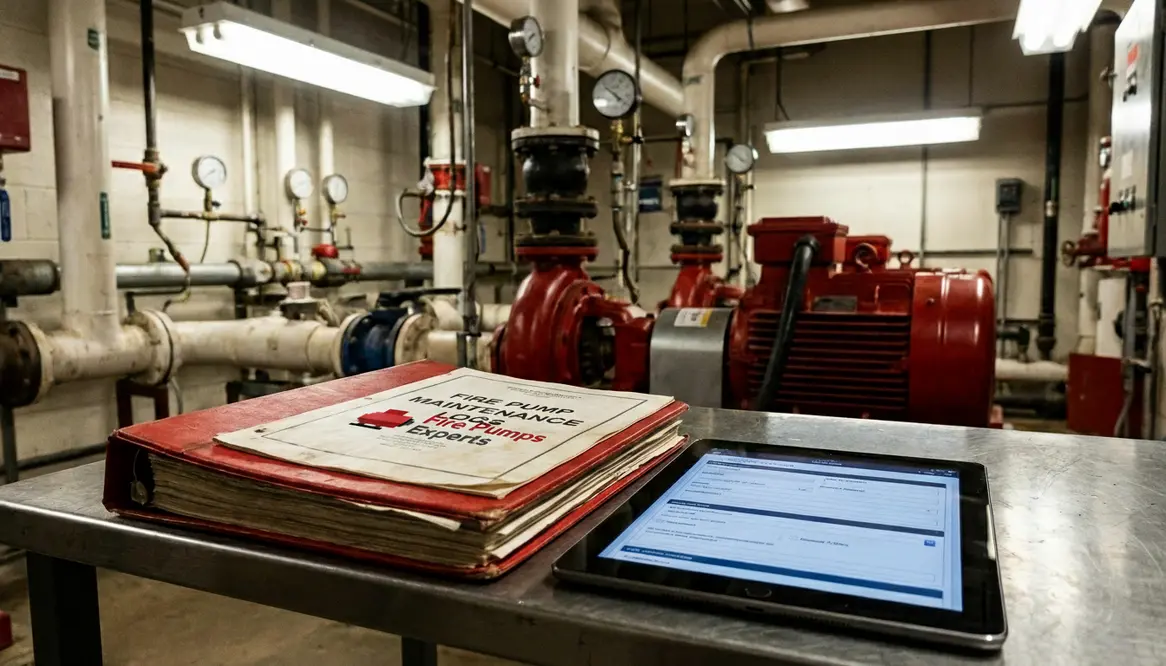
- Dedicated life safety binders stored in the fire pump room
- Clearly labeled sections for design, installation, and testing
- Inspection logs updated immediately after service
- Printed annual reports signed by technicians
Digital Documentation Systems
- Cloud storage for drawings and reports
- Automated reminders for weekly and annual tests
- Digital inspection forms completed in the field
- Quick access during fire marshal inspections
Ideally, facilities use both methods. Physical binders satisfy inspectors on site, while digital systems provide redundancy and long term storage. Because if a server fails or a binder disappears, the backup saves the day.
And yes, I have seen inspectors walk into pump rooms like detectives in a crime show. They flip through documents with laser focus. When everything is organized, the inspection goes smoothly. When it is not, the tension in that room rivals the final scene of a courtroom drama.
Fire Pump Documentation Requirements During Testing and Maintenance
Testing is where documentation becomes truly powerful. Every weekly churn test, monthly inspection, and annual flow test generates data. That data shows trends, identifies problems early, and proves compliance.
For commercial facilities, maintenance records must capture specific operational details.
- Date and time of each inspection or test
- Name and credentials of the technician
- Pump start method and run duration
- Suction and discharge pressure readings
- Controller status and alarm conditions
- Observed mechanical issues
- Corrective actions taken
Over time these records reveal patterns. For example, if pressure readings slowly drop over several years, the facility team can investigate before performance falls below required levels.
Moreover, insurers often request these records after a fire incident. If the documentation shows consistent testing and maintenance, the facility demonstrates responsible system management.
Without those records, the conversation with insurance adjusters becomes far less pleasant. And believe me, nobody enjoys explaining missing maintenance logs to someone calculating millions of dollars in damages.
Why Inspectors and Insurers Care So Much About Documentation
You might wonder why paperwork receives so much attention. After all, the pump itself does the real work. Yet documentation proves the system will work when nobody has time for guesswork.
Fire marshals rely on documentation to verify compliance with national standards and local fire codes. They cannot dismantle every pipe or test every component during inspections. Instead, they review the records that confirm proper design, installation, and testing.
Insurance carriers follow the same logic. Commercial and industrial facilities carry significant financial exposure. Therefore insurers want evidence that life safety systems remain reliable.
Proper records reduce risk. They demonstrate that facility managers treat fire protection seriously. In turn, that professionalism often supports smoother inspections, stronger insurance confidence, and fewer unpleasant surprises.
In other words, documentation builds trust. And in the world of fire protection, trust is everything.
What Happens If Fire Pump Records Are Missing?
If documentation is incomplete, inspectors may require immediate testing, corrective actions, or even system shutdown until compliance is restored. Additionally, insurance carriers may question coverage after an incident.
Connecting Documentation To Real-World Fire Pump Service
Of course, paperwork alone does not move water. That job still belongs to a well designed, well maintained fire pump system that has real technicians behind it. When a service company shows up to perform an annual flow test, weekly churn test support, or repairs, the strongest teams treat documentation as part of the work, not an afterthought.
Done well, fire pump documentation requirements line up perfectly with what is happening in the pump room. Every RPM reading, pressure measurement, and controller alarm gets captured in clear, repeatable formats. That way, years later, you can still trace exactly how the system has been performing.
If your facility needs help aligning real-world testing with solid records, working with a dedicated fire pump partner such as Kord Fire’s fire pump service team can close the gap between fieldwork and documentation.
Fire Pump Documentation Requirements In Everyday Language
Think Like An Investigator, Not A File Clerk
When you think about fire pump documentation requirements, imagine an investigator showing up the day after a fire. They want to know one thing: did the system have a fair chance to do its job? Your logs, test reports, and drawings answer that question long after the smoke clears.
Tie Every Test To A Piece Of Paper (Or A File)
If a technician touches the fire pump, something should be documented. Weekly churn run? Log it. Annual flow test? Full report with readings. Controller trouble alarm? Note the cause and the fix. The most reliable facilities are not just good at service; they are relentless about turning every task into a clear record.
FAQ
What are fire pump documentation requirements?
They are records proving the fire pump system was designed, installed, tested, and maintained according to fire codes and industry standards.
How long should fire pump test records be kept?
Most commercial facilities keep records for at least three to five years, though many retain them longer for liability protection.
Do inspectors check fire pump documentation?
Yes. Fire marshals frequently review maintenance logs, acceptance tests, and annual flow test reports during inspections.
Who is responsible for maintaining fire pump documentation?
Facility managers or property owners typically maintain records, often with support from certified fire protection service providers.
Are digital records acceptable for inspections?
Yes, many jurisdictions accept digital records, though printed copies stored in the pump room are still widely recommended.
Final Thoughts for Facility Leaders
If you manage a commercial or industrial property, do not treat documentation like an afterthought stuffed in a cabinet. Treat it like part of the fire protection system itself. When your records clearly show proper design, testing, and maintenance, inspections move faster and risks shrink. If you want your fire protection strategy to stand strong when it matters most, start by organizing the story your fire pump system tells on paper today.