Abu Dhabi Fire Pump Requirements Guide
Abu Dhabi Fire Pump Requirements Explained
When I talk about Abu Dhabi requirements for fire pumps, I am talking about one thing: keeping commercial and industrial buildings ready when the heat turns serious. In Abu Dhabi, fire pump systems are not decoration, and they are not there for a polite suggestion. They support life safety, property protection, and code compliance for major properties, from warehouses to high rise towers. So, if your building depends on reliable water pressure during a fire event, this topic matters more than a coffee machine that breaks on Monday morning.
In this guide, I break down the key fire pump rules, the common design needs, and the checks that help projects stay safe and approved. I will keep it clear, practical, and focused on commercial and industrial facilities only, because that is where the real fire pump story lives.
What Abu Dhabi Fire Pump Systems Must Do
Fire pumps in Abu Dhabi must deliver steady water flow and pressure when the sprinkler or standpipe system needs it most. First, the system must match the building risk, occupancy type, and water demand. Then, it must support the full fire protection network without weak points. In simple terms, if the system has the strength of a tired office intern, it will not pass the test.
For commercial and industrial sites, the fire pump usually works as part of a larger setup. That means I look at the pump, the driver, the jockey pump, the controller, the water supply, and the piping layout as one team. If one part fails, the whole system can lose its edge. Therefore, the design must follow the local authority requirements and the approved fire code approach used in Abu Dhabi.
How I Check Design And Sizing For Major Properties
Getting The Sizing Right
Proper sizing matters. A pump that is too small cannot support demand, while a pump that is too large can create other issues in the system. So, I always start with the building use, floor area, fire risk, and required flow and pressure. After that, I review whether the site needs electric driven pumps, diesel driven pumps, or both for backup.
Design For The Worst Reasonable Day
Here is the practical part. For major properties, the fire pump should support the most demanding fire scenario expected for that site. That often includes sprinkler demand, hose reel demand, or standpipe demand, depending on the design basis. In many cases, the water source must also hold enough volume and reliability to feed the pump without drama. No one wants a fire system that acts like a reality show contestant and quits under pressure.
Abu Dhabi Requirements For Installation And Pump Room Setup
Why The Pump Room Makes Or Breaks Compliance
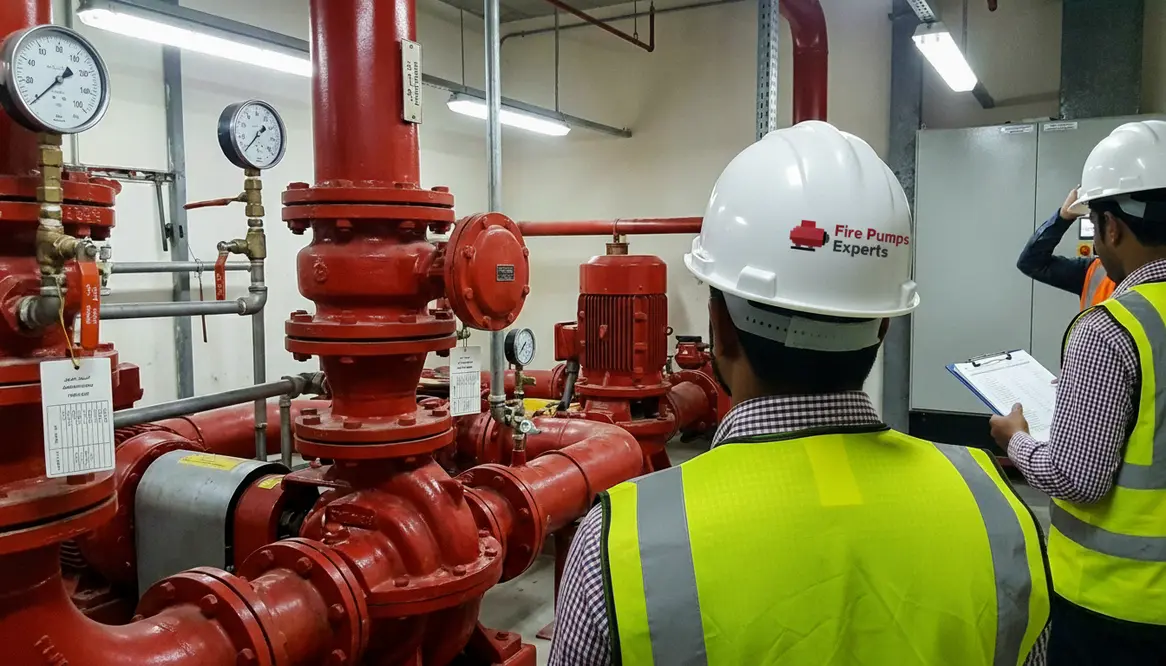
Installation is where good plans either shine or stumble. I pay close attention to the fire pump room because it must stay accessible, secure, ventilated, and protected. The room needs enough space for service work, safe operation, and equipment replacement. Also, the pump must sit on a proper base, with correct alignment, solid anchoring, and clean suction and discharge piping.
Supporting Systems That Keep The Pump Honest
- Reliable power supply for electric pumps
- Fuel supply and ventilation for diesel pumps
- Clear access for inspection and maintenance
- Proper drainage to manage leaks or test water
- Valve and gauge placement that allows easy reading
Meanwhile, the controller must be easy to reach and built for the site conditions. In industrial buildings, heat, dust, and vibration can cause trouble, so I make sure the equipment can handle the real environment, not a perfect brochure version of it.
Dual View: Compliance Checks And Performance Checks
Compliance Side
I verify that the pump system follows the approved Abu Dhabi requirements, the fire authority review path, and the project documents. This includes submittals, shop drawings, and test records. If the paperwork is weak, approval slows down. And yes, paperwork can feel like a villain in a slow drama, but it still matters.
Performance Side
I then check whether the pump actually performs under load. This means flow tests, pressure readings, automatic start behavior, and alarm responses. The pump should start when needed, stabilize quickly, and deliver the expected output. Moreover, the jockey pump should keep normal pressure steady so the main pump does not cycle for no reason. That small detail saves wear and keeps the system ready.
Why Testing And Maintenance Keep The System Honest
Even the best fire pump system needs regular testing. I do not treat testing as a box to tick and forget. Instead, I see it as the only way to prove the system still works after months of silence. Routine checks help find leaks, worn parts, battery issues, fuel problems, and control faults before they become expensive surprises.
For commercial and industrial facilities, maintenance should follow a clear schedule. That schedule should include weekly visual checks, monthly running tests, and periodic full performance tests. In addition, the site team should record every result. Good records help prove compliance and support faster troubleshooting. Without them, the building team ends up guessing, and guessing is not a safety plan.
What I Look For Before Final Approval
Before I call a fire pump setup ready, I review the full package from design to final test. I want to see correct sizing, proper installation, solid water supply, reliable controls, and clean test results. I also want the facility team trained on operation and routine checks, because a system is only as strong as the people watching it.
For anyone working on a commercial tower, warehouse, plant, or major property in Abu Dhabi, the goal is simple. Build the system right, test it hard, and keep it maintained. That is how you stay prepared without turning fire protection into a guessing game worthy of a bad sequel.
Understanding Key Abu Dhabi Requirements In Practice
In real projects, I see the same themes repeat whenever Abu Dhabi requirements are applied to fire pump systems. First, the water supply has to be credible. That means tank sizing, incoming mains pressure, and redundancy all have to line up with the hazard level. Second, the combination of sprinkler systems, hose reels, and standpipes needs to be coordinated instead of treated as separate worlds that ignore each other.
When these pieces work together, approvals move faster, site inspections go smoother, and the final handover does not turn into a late-night panic session. Ignoring the Abu Dhabi requirements usually has the opposite result, with redesigns, extra site work, and a lot of unplanned cost.
If you want a deeper technical reference point while still keeping things practical, you can review guidance on pump selection and fire systems design at https://firepumps.org. Just remember that local authority expectations and Abu Dhabi requirements always sit at the top of the priority list when you make the final design calls.
FAQ
Final Call To Action
If you manage a commercial or industrial property in Abu Dhabi, I recommend treating fire pump compliance as a priority, not a side task. Review your design, confirm your tests, and keep your records clean. If you want expert support with Abu Dhabi requirements for major properties, now is the time to act. Strong systems protect buildings, people, and operations. And in fire safety, that is the whole point.