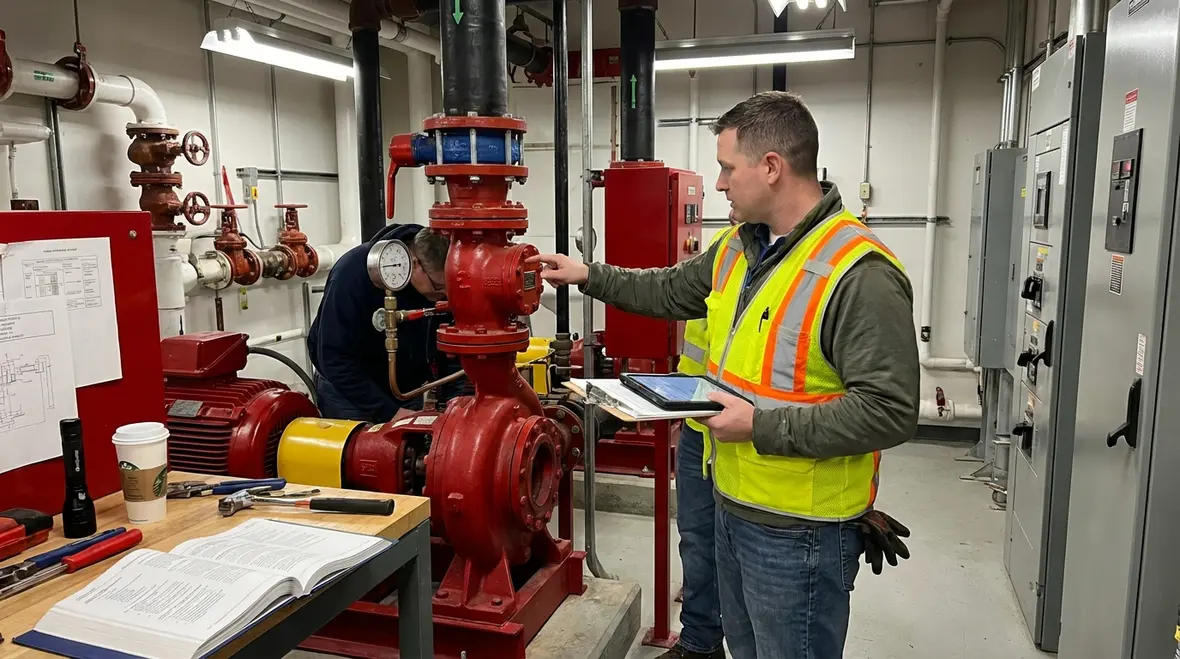
Annual Fire Pump Inspection Checklist for Building Safety
Annual Fire Pump Inspection Checklist: Why Skipping It Isn’t Worth the Explosion
Look, I know checking fire pumps might not sound like the most thrilling task in the maintenance world. It’s not exactly Marvel movie exciting—nobody puts on a cape to inspect pressure relief valves. But if you’re responsible for a commercial building, industrial facility or a high-rise playing hardball with gravity, then our annual fire pump inspection checklist isn’t just a to-do item. It’s your building’s insurance policy against catastrophe. Literal fire-cracking catastrophe.
So, grab your clipboard (or tablet if you’re fancy) and a good cup of coffee, and let’s walk through this together—with a tone as smooth as velvet and the kind of know-how that saves lives, property, and money. Spoiler alert: ignoring your fire pump is like refusing to charge your phone when it’s on 3%. Sure, you could risk it… but should you?
Let’s dive in.
How Fire Pumps Save the Day (When Checked on Schedule)
Think of a fire pump as your building’s Caped Crusader. When the sprinkler system lacks pressure, the pump swoops in to boost it—ensuring water flows where it needs to, fast. But unlike superheroes in movies, fire pumps don’t automatically wake up when danger hits. That’s why following the annual fire pump inspection checklist matters more than you might think. Without inspection, you’re counting on a cape that might have holes in it.
For commercial and industrial facilities, where fire suppression is mission-critical (because, you know, people and millions in infrastructure), inspections aren’t optional—they’re vital. A functioning system could mean the difference between an isolated incident and a five-alarm disaster that makes the evening news.
Why scheduled inspections aren’t negotiable
When pumps sit idle for months, seals dry out, batteries drain, controllers age, and corrosion whispers sweet nothings to anything made of metal. Routine inspections and testing wake the system up on purpose, under controlled conditions, instead of discovering its limits in the middle of a real emergency.
What’s on the Annual Fire Pump Inspection Checklist?
Let’s break down the meat and potatoes of what we’re actually checking. I’m not talking about just glancing at a box and calling it a day—we’re talking tactile, mechanical, “get-your-hands-dirty” evaluation.
Here’s where the dual column magic kicks in:
Mechanical Inspection
- Coupling alignment
- Noise and vibration levels
- Cooling and lubrication systems check
- Bearings wear assessment
- Valve operations
System & Control Inspection
- Control panel function tests
- Flow meter readings accuracy
- Pressure relief valve and gauge testing
- Alarm and signal system verification
- Controller event log review
So yes, it’s more than looking at flashing lights and saying, “Looks good.” Each item plays a role in telling us whether your system will leap into action—or awkwardly trip when the moment matters.
Don’t Wait for Smoke Signals: Schedule Proactively
Most people don’t think about fire pumps until they need them. That’s like only checking your smoke detectors after your toaster starts a grease fire. Proactive scheduling of your inspections ensures you’re ahead of the inevitable curve. And in commercial facilities, where regulations tighten faster than Bruce Banner’s shirts, compliance is more than mandatory—it’s survival.
Allowances vary by state, insurance, and local codes, but generally speaking, NFPA 25 lays it all out. And unless your building doubles as a spaceship, you need to keep your annual box checked—with certified documentation ready for fire marshals, auditors, and yes… even your nervous building owner.
Documentation your future self will thank you for
A solid annual fire pump inspection checklist doesn’t just prove you did the work; it tells the story of your system over time. Logs of test results, repairs, and upgrades become your receipts when an insurance carrier, AHJ, or risk manager wants proof that you didn’t leave safety to chance.
Common Fire Pump Fails (and How to Avoid Them)
Ever have one of those days where everything breaks at once? Imagine that, but with a fire breaking out on the 10th floor. Here are the common culprits you’ll want to catch early:
- Undetected leaks: Just like gossip, small leaks spread damage fast.
- Battery failure: You can’t start a fire pump with a dead battery, and jumper cables won’t cut it here.
- Poor water supply: A dry suction valve in the middle of a fire? Hard pass. Check your inflows.
- Obsolete controllers: If your fire pump’s controller has more in common with your Game Boy than modern systems, it’s time to upgrade.
Turning near-misses into non-events
Every issue you catch during an inspection is a catastrophe you get to cancel. Consider it the Netflix strategy, but for emergencies. Instead of watching disaster unfold live, you quietly “remove from list” before it ever has a chance to stream.
Choosing the Right Inspection Partner
You’ve got stakeholders, tenants, and an inbox that could use its own lifeguard. So adding “Evaluate fire pump vendors” to your to-do list might not spark joy. But choosing the right fire protection company makes the difference between meh service and gold-standard compliance.
Here’s what to demand from your fire protection vendor if you run a commercial or industrial property:
- NICET-certified technicians with experience in your infrastructure type
- Annual, monthly, and weekly service plans with digital reporting
- 24/7 emergency response (because fires don’t clock out at 5 PM)
- Proven knowledge of NFPA 20, NFPA 25, and local codes
- Real-time insights through cloud-based maintenance records
Yes, professionals cost more than that YouTube tutorial—but the ROI shows itself in cooler heads and smaller claims.
When to bring in a specialty fire pump team
If your fire pump serves high-rises, critical industrial systems, or complex mixed-use properties, partnering with a dedicated fire pump provider like Kord Fire’s fire pump inspection and maintenance services can take the guesswork out of compliance, testing, and long-term reliability.
How Often Should Fire Pumps Be Inspected?
The name of the game is frequency. While we’re focusing on the annual fire pump inspection checklist, there’s more to know. Weekly and monthly tasks should already be scheduled with your building’s maintenance crew, but annual inspections? Those are the big leagues.
Here’s a quick reference (you’re welcome):
- Weekly: Run the pump (Electric or Diesel) and do a quick visual once-over.
- Monthly: Inspect batteries, connections, and pressure relief valves.
- Annually: The deep dive. It’s showtime for the full checklist, complete testing, and compliance data logging.
Safety, longevity, and the bottom line
Regular inspections not only keep your facility safe—they also preserve equipment lifespan and keep your insurance premiums out of scary town. Pumps that are exercised, tested, and tuned tend to run cooler, last longer, and behave themselves when the sprinkler system calls their name.
FAQs About Annual Fire Pump Inspections
How long does an annual fire pump inspection take?
Usually 2 to 4 hours, depending on the complexity of your system.
Who is allowed to perform an inspection?
Only certified fire protection professionals compliant with NFPA standards.
Does my building really need one every year?
Yes. If it’s commercial or industrial, annual fire pump inspections are mandatory under NFPA 25.
Are there penalties for skipping annual inspections?
Absolutely. You could face fines, shutdown orders, or worse—total loss due to malfunctioning systems in an actual emergency.
What’s the cost of an inspection?
Pricing varies, but for large commercial sites, budget $750–$2,000. Think of it as buying peace of mind in bulk.
Final Thoughts: Build Smart, Inspect Smarter
By taking your annual fire pump inspection checklist seriously, you’re doing more than ticking boxes. You’re protecting livelihoods, preserving infrastructure, and maybe even saving lives. And all it takes is following what’s already spelled out. Let the experts do the heavy lifting while you take the credit for stellar management.
Ready to stay compliant without the chaos? Let FirePumps.org handle your annual inspection. Our certified team keeps your pumps in peak condition so your facility stays risk-free and audit-ready, all year round.