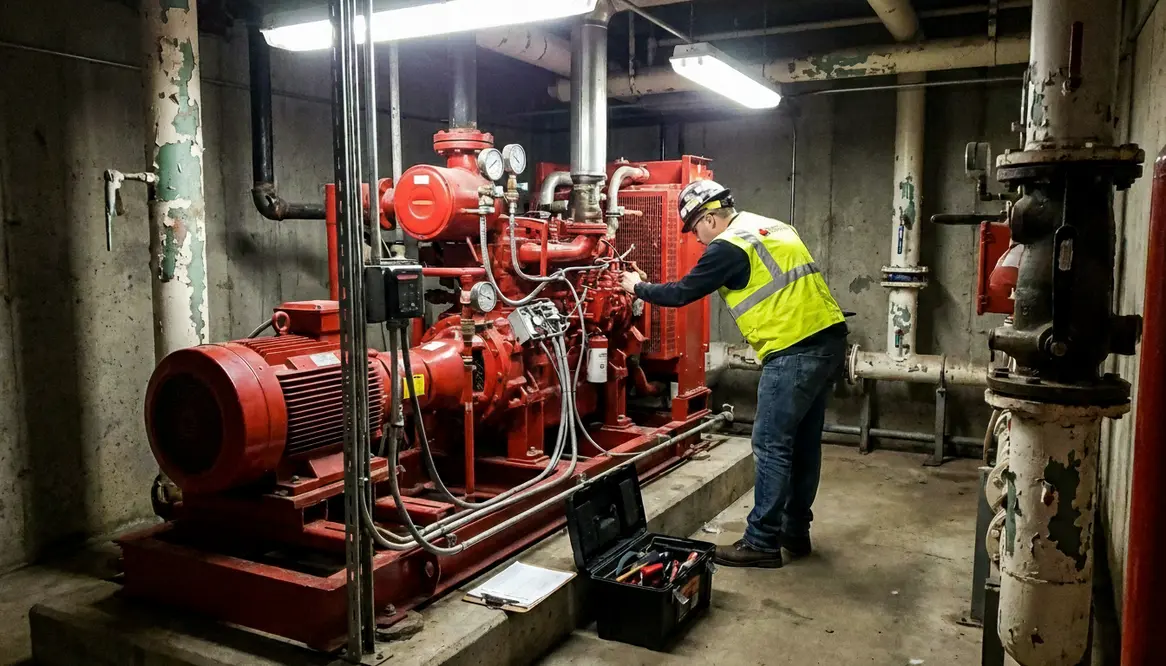
Fire Pump Troubleshooting and Maintenance Guide
I have seen many systems run flawlessly for years, and then suddenly fail when they are needed most. That is the quiet danger of fire protection systems. When we talk about fire pump troubleshooting, we are not just talking about fixing a machine. We are talking about protecting entire commercial buildings, industrial facilities, and the people inside them. And yes, while it may not sound as exciting as a summer blockbuster, the stakes are just as high. So let me walk you through the most common fire pump problems and, more importantly, how to avoid them before they ever get the chance to make headlines.
Need expert help with your fire pump system?
If you’re responsible for a commercial or industrial building, partnering with a certified team like Kord Fire’s fire pump service specialists can keep inspections, repairs, and testing on schedule so your system is ready when it counts.
Why Do Fire Pumps Fail When You Need Them Most?
It often comes down to neglect disguised as confidence. A fire pump sits quietly for months, sometimes years, and because nothing goes wrong, people assume everything is fine. However, mechanical systems do not reward assumptions.
Most failures happen because of overlooked maintenance, improper installation, or gradual wear that goes unnoticed. For example, controllers can fail due to electrical issues, while pumps themselves may seize from lack of regular testing. Meanwhile, valves that are left partially closed can quietly sabotage the entire system.
So while it may feel like your fire pump is just waiting patiently in the background like a loyal sidekick, it still needs attention. Batman had Alfred. Your fire pump has you.
Fire Pump Troubleshooting Starts With Power Supply Stability
In my experience, power issues are one of the most underestimated risks in fire pump systems. And yet, they are often the first domino to fall.
Electric fire pumps rely on consistent and reliable power. Even a brief interruption can prevent the system from starting. Therefore, backup generators and automatic transfer switches must be tested regularly. If they are not, you are essentially trusting your entire fire protection system to a coin toss.
Additionally, voltage irregularities can damage controllers over time. That damage builds slowly, almost invisibly, until one day the system simply does not respond.
To avoid this, I always recommend routine inspection of electrical connections, scheduled generator testing, and verifying that transfer switches engage without hesitation. It is not glamorous work, but neither is explaining why a system failed during an emergency.
Water Supply Issues That Quietly Undermine Performance
A fire pump without proper water supply is like a car without fuel. It may look impressive, but it is not going anywhere.
Many commercial and industrial facilities face issues such as clogged suction lines, insufficient water pressure, or air leaks. Over time, these problems reduce efficiency and can even damage the pump.
Moreover, sediment buildup inside pipes can restrict flow. This is especially common in older systems or facilities with inconsistent water quality. As a result, the pump has to work harder, which increases wear and shortens its lifespan.
Routine flow testing and inspection of suction conditions can prevent these issues. If there is one thing I have learned, it is that water will always find a way to surprise you. It is best to stay one step ahead.
Mechanical Wear and Tear Is Not Just “Normal Aging”
Now, let us talk about the physical components. Bearings, seals, and impellers do not last forever. And while some wear is expected, ignoring it is where trouble begins.
For instance, a worn seal may start as a minor leak. However, over time, that leak can lead to pressure loss or even system failure. Similarly, misaligned shafts can cause vibration, which slowly damages internal components.
Therefore, vibration analysis and routine inspections are essential. They allow you to catch small issues before they become expensive problems. Think of it as going to the doctor for a checkup instead of waiting for a dramatic movie style collapse.
Common Mechanical Issues
- Seal leaks
- Bearing wear
- Shaft misalignment
- Impeller damage
Preventive Actions
- Scheduled inspections
- Lubrication checks
- Alignment verification
- Performance testing
Control Panel Failures and Human Error
Even the most advanced fire pump system can be undone by a simple mistake. Control panels are the brain of the operation, and like any brain, they do not respond well to confusion.
Incorrect settings, disabled alarms, or outdated configurations can all lead to failure. In some cases, systems are left in manual mode after testing and never switched back. It happens more often than people like to admit.
That is why clear procedures and regular staff training are essential. When everyone understands how the system works, the chances of error drop significantly. Besides, no one wants to be the person who accidentally turned off the hero of the story.
How to Build a Reliable Fire Pump Maintenance Strategy
If there is one thing I always emphasize, it is consistency. A strong maintenance plan is not about reacting to problems. It is about preventing them entirely.
Start with routine testing. Weekly and monthly checks ensure that the system remains operational. Then, add detailed annual inspections to evaluate performance under real conditions.
Additionally, document everything. Maintenance logs provide valuable insight into patterns and recurring issues. Over time, this data becomes a powerful tool for improving reliability.
And finally, work with professionals who understand large scale commercial and industrial systems. These environments demand precision and expertise. Anything less is a gamble.
Where fire pump troubleshooting fits into your maintenance plan
A practical fire pump troubleshooting approach blends routine testing, clear documentation, and expert inspections. When you treat each weekly check, no-flow test, and annual performance review as part of a single strategy instead of disconnected chores, you dramatically cut the odds of unpleasant surprises.
FAQ: Quick Answers for Fire Pump Reliability
What is the most common fire pump problem?
Power supply failure and controller issues are among the most frequent causes of failure.
How often should fire pumps be tested?
Weekly no flow tests and annual flow tests are standard for commercial systems.
Can a fire pump fail without warning?
Yes, especially if maintenance and inspections are skipped.
Why is water supply critical?
Without proper flow and pressure, the pump cannot perform effectively during a fire.
Is professional servicing necessary?
Absolutely. Large facilities require expert level inspection and maintenance.
Conclusion: Stay Ready So Your System Never Has to Apologize
I always say that the best fire pump is the one you never have to think about because it simply works. However, that kind of reliability does not happen by accident. It takes planning, consistency, and a commitment to proper care. If you want your system to perform when it matters most, now is the time to act. Invest in expert support, stay proactive, and make sure your fire protection system is ready for anything.
Turning insight into action
Use these fire pump troubleshooting principles as a checklist: stable power, reliable water supply, healthy mechanical components, smart control panel practices, and a disciplined maintenance schedule. Put them into practice now, and your system will be far more likely to do its job later, when you need it most.