Japan Commercial Fire Pump Requirements Guide
A practical walkthrough of Japan fire pump expectations for towers, factories, hotels, malls, and other major properties.
Japan Fire Pump Requirements for Commercial Buildings
When I look at fire protection in a Japan commercial building, I see more than pipes, alarms, and metal boxes humming in the background. I see life safety, business continuity, and a legal duty that does not care how busy the office got this week. In Japan, fire pumps play a central role in keeping water pressure ready for sprinklers, standpipes, and other fire systems. So, if you manage a tower, factory, hotel, mall, or major property, you need to know what the rules expect, what inspectors look for, and where things can go sideways. And yes, “we thought it was fine” is not a compliance strategy. That one tends to age like milk.
In this guide, I will walk through the core Japan fire pump requirements for commercial buildings in a clear, practical way. I will keep it business casual, but I will not water it down. Let us get into the details.
What Japan fire pump rules mean for commercial buildings
Japan sets fire safety rules through national law, local fire prevention ordinances, and building use standards. For a commercial property, that means the pump must support the fire protection system with enough pressure and flow when the system needs it most. I always tell clients this: a fire pump is not just a backup device. It is the muscle behind the water supply.
In many large buildings, the pump serves sprinklers, hose reels, standpipes, or a mix of systems. Therefore, the pump must match the building’s height, floor area, and hazard level. A warehouse with dense storage will need a different setup than a mid rise office block. Also, if the building has zones with higher fire risk, the design must reflect that. The goal is simple. When a fire starts, water must reach the right place fast, and with enough force to do the job.
Connecting rules to Japan commercial risk profiles
Regulators look at how a Japan commercial property is actually used. An office tower with server rooms, restaurants, and underground parking presents a very different risk mix than a single tenant logistics hub. The fire pump has to keep up with peak demand in the most challenging corner of the site, not the calmest one.
That is why the best designs start with a realistic fire scenario: where heat, smoke, and water demand will stack up quickly. From there, rules on minimum flow, residual pressure, and redundancy start to make more sense. They are there to keep the worst day from turning into the last day of business.
How I check fire pump sizing and system design
Proper sizing matters. A pump that is too small will fail under demand. Meanwhile, a pump that is too large can create pressure problems and wear out the system faster. So, I start with the building load, the water supply source, the number of outlets, and the required operating pressure.
For commercial and industrial properties, the design should account for:
Key design factors checklist
Design factor
Flow demand
Pressure requirement
Water source capacity
System type
Building height
Why it matters
It tells the pump how much water it must move during a fire.
It makes sure upper floors and distant outlets still work.
It confirms the supply can feed the pump without failure.
Sprinkler, standpipe, or combined systems need different support.
Taller buildings need stronger pressure control.
Because of that, I always recommend a design review before installation. It is cheaper than tearing out the wrong pump later. That kind of mistake does not just hurt the budget. It hurts everyone’s mood.
Why Japan commercial buildings need strict installation standards
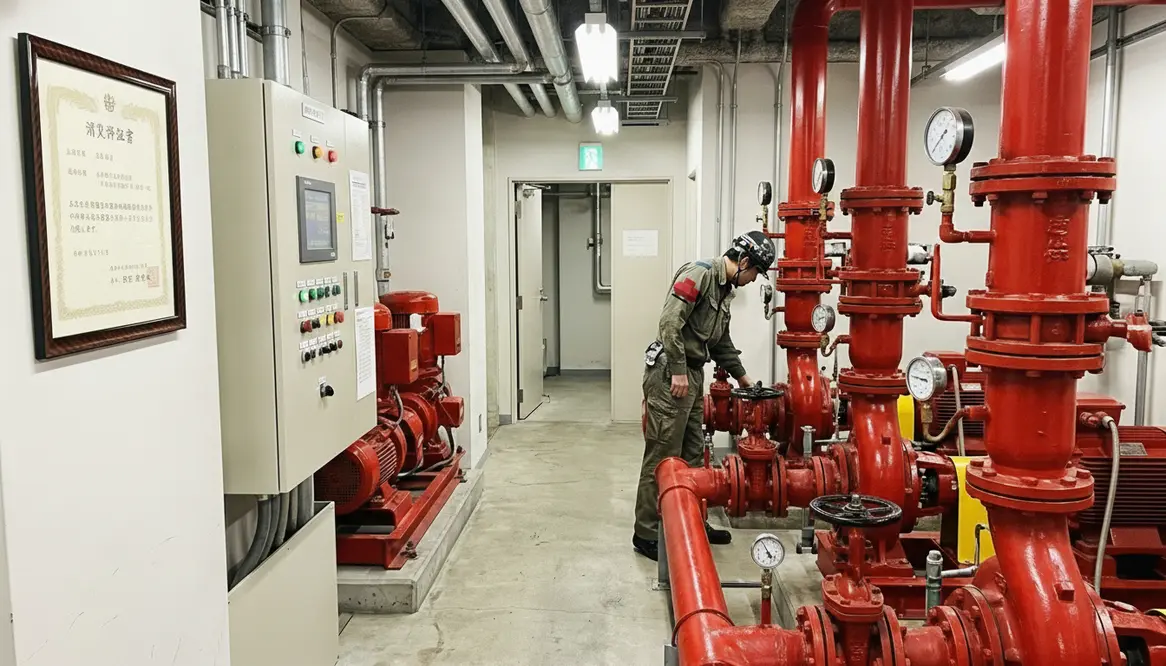
Installation is where good design either shines or stumbles. Japan expects fire pumps to be installed in a way that supports reliable operation, safe access, and easy inspection. So, the pump room should stay clear, dry, and protected from heat, flood, and damage. The power supply must also remain dependable, because a fire pump that cannot start is basically a very expensive paperweight.
I also look at valve placement, suction line layout, vibration control, and access for maintenance crews. In a busy commercial site, poor layout can slow repairs and block emergency checks. Moreover, the pump should have clear labeling and a simple path for testing. The more direct the setup, the better the chance of success when an emergency hits.
In larger properties, the fire pump often connects with a backup power source or emergency system. That matters because fire events do not pause for convenience. They tend to show up with terrible timing, like a villain in the final scene of a thriller.
Room layout details inspectors notice
- Clear approach to the pump and control panels without stored goods blocking access
- Enough working space for tools, testing hoses, and replacement parts
- Lighting, drainage, and ventilation that keep the pump usable year round
- Secure separation from everyday building traffic so no one “accidentally” shuts a valve or trips a breaker
What inspection and maintenance should look like
Japan fire pump requirements do not stop at installation. They continue through testing, inspection, and maintenance. I treat this as the real test of compliance. A system can look perfect on day one, but time, dust, vibration, and neglect will always try to win. They are persistent like a sequel nobody asked for.
For commercial buildings, I recommend regular checks on:
- pump start function
- pressure levels
- water supply condition
- control panels and alarms
- leaks, rust, and worn parts
- backup power readiness
In Japan, building owners and managers often work with fire safety specialists to keep records and confirm system readiness. That record trail matters. If an inspector asks for proof, “we remember doing it” will not carry much weight. Written logs, test results, and maintenance notes help show that the property takes fire safety seriously.
Recordkeeping habits that keep a Japan commercial site out of trouble
- Organized test reports showing dates, results, and corrective actions
- Maintenance logs tied to specific components and serial numbers
- Clear notes after any fire alarm activation, real or false, that involved the pump
- Copies of design changes so the maintenance team is not working from an outdated map
Where I recommend checking Japan commercial fire pump guidance
If you manage a large property, I suggest using trusted industry sources that focus on commercial and industrial fire systems. For a helpful starting point, I would review this Japan commercial fire pump compliance guide for major properties and industrial facilities at https://firepumps.org. It can help you align your system with the right performance and inspection expectations.
Also, when a building has mixed use, such as retail, office, and parking, I always advise a site specific review. That is because one rulebook rarely fits every zone perfectly. The pump must support the building as it truly operates, not as the original brochure promised.
Translating guidance into day‑to‑day decisions
The best way to use a Japan commercial fire pump guide is to treat it as a decision filter. When someone proposes a shortcut, a cheaper part, or a delay in maintenance, measure that idea against the performance targets and legal duties already on the books. If the shortcut cannot pass that test, it probably does not belong anywhere near your pump room.
FAQ: Japan fire pump requirements for commercial buildings
Conclusion
If you manage a Japan commercial building, I urge you to treat the fire pump as a core safety asset, not background noise. The right design, installation, and maintenance plan protects people, property, and operations. So, take a close look at your system now, confirm it meets the needs of your site, and work with a trusted fire protection expert. A solid fire pump plan today can save a business tomorrow, and that is a deal worth making.