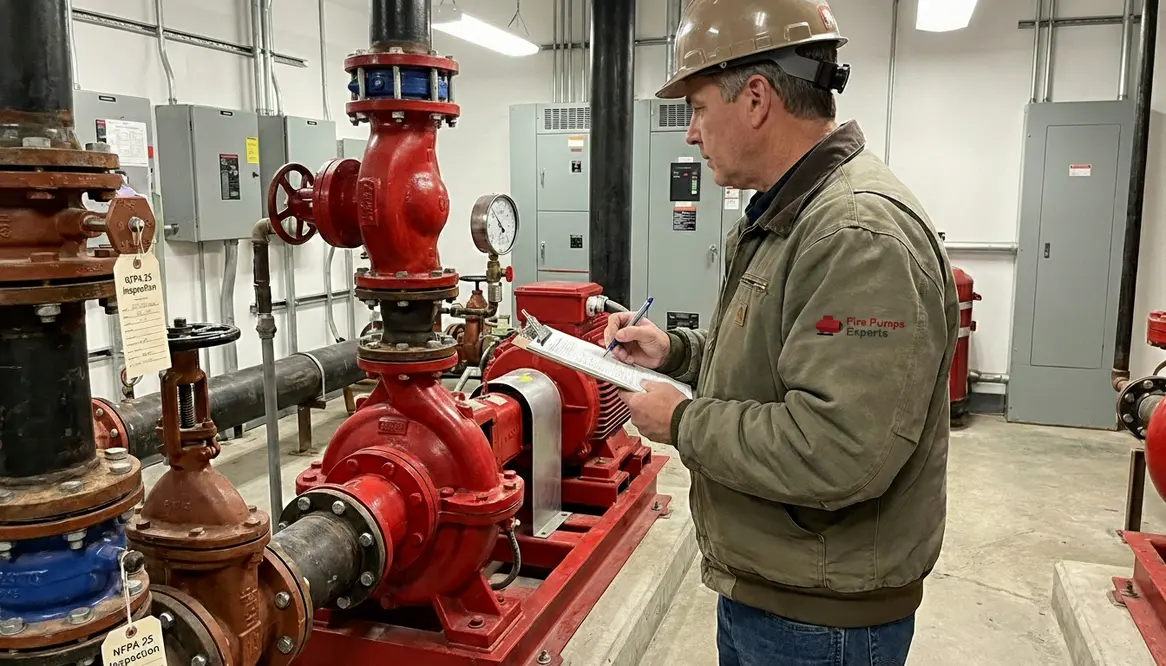
Fire Pump Compliance for Businesses NFPA Guide
I have seen a lot in the world of commercial properties, from towering high rises to humming industrial plants. And if there is one thing I never ignore, it is fire pump compliance for businesses. It is not glamorous. It will not win awards. But when everything goes sideways, it is the quiet hero in the background. Today, I want to walk you through what truly matters, without the fluff, without the panic, and maybe with a small chuckle or two along the way.
Fire pumps do not seek attention, but they demand respect. When they fail, they fail loudly. When they work, they quietly save everything that matters. That is why I treat fire pump compliance for businesses as one of the most important parts of any commercial or industrial safety strategy.
This guide is built for the real world: owners, facility managers, and safety leaders who want clarity, practicality, and zero theatrics. If you are responsible for a building, this is about giving you the confidence that your pump will run when everything else is going wrong.
Fire Pump Compliance for Businesses: What Actually Matters
Let me get straight to it. Compliance is not about checking a box. It is about making sure your fire pump system works when it is called into action. Because when a fire starts, there is no time for second guesses.
First, I always look at NFPA 25 standards. These govern inspection, testing, and maintenance. If you own or manage a commercial or industrial facility, you are expected to follow them. Not loosely. Not occasionally. Consistently.
Next, I make sure systems are tested regularly. Weekly churn tests and annual flow tests are not optional. Think of it like going to the gym. Skip too many sessions, and suddenly things do not work the way they should. And unlike a missed workout, the consequences here are far less forgiving.
Finally, documentation matters. If it is not recorded, it did not happen in the eyes of regulators. Keep logs clean, detailed, and accessible.
If you want a deeper technical breakdown of how NFPA 20 shapes design and installation for commercial fire pumps, resources like NFPA 20 fire pump system guidelines from Kord Fire Protection are worth keeping close.
How Often Should Fire Pumps Be Inspected and Tested?
I hear this question a lot, and I always answer it the same way. Frequently, and with purpose.
Weekly inspections ensure the pump starts and runs smoothly. Monthly checks go deeper, reviewing controller signals and system conditions. Then, annually, a full performance test confirms the pump delivers the required flow and pressure.
However, frequency alone is not enough. I focus on quality. A rushed test is like fast forwarding through a movie and claiming you watched it. Sure, you saw something, but you missed the plot.
Because of this, I recommend working with certified professionals who understand commercial systems. Industrial facilities, in particular, demand precision. The scale is bigger, the risk is higher, and the margin for error is razor thin. This is where serious fire pump compliance for businesses shifts from theory to practice.
Common Compliance Mistakes I See in Commercial Buildings
Now, here is where things get interesting. Over the years, I have seen patterns. Some of them would almost be funny if they were not so serious.
One common mistake is neglecting routine maintenance. Pumps sit idle, and people assume they will perform perfectly. That is a bit like expecting a car to start after sitting in a garage for five years. Spoiler alert, it probably will not.
Another issue is outdated equipment. Technology evolves, and older systems may not meet current standards. While they might still function, they may not comply with modern fire safety codes.
Then there is poor record keeping. Missing logs, incomplete reports, or inconsistent documentation can quickly turn a minor issue into a major compliance failure.
What I Check First
- Controller functionality
- Pressure readings
- Alarm signals
- Fuel levels for diesel pumps
What Often Gets Missed
- Valve positioning
- Battery condition
- Sensor calibration
- Detailed test documentation
As you can see, the details matter. And in this business, details are everything.
Understanding Codes Without Losing Your Mind
Let us be honest. Reading fire codes is not exactly a thrilling way to spend an afternoon. It is not Netflix. There are no plot twists. Unless you count discovering a compliance gap as a twist, which I do not recommend.
That said, I approach codes with a simple mindset. Focus on what applies to your facility. NFPA 20 covers installation. NFPA 25 covers ongoing maintenance. Local regulations may add another layer.
Therefore, I always align federal standards with local authority requirements. This ensures nothing slips through the cracks. Because while federal codes set the baseline, local jurisdictions often have the final say.
And yes, sometimes they disagree. Think of it as a family argument, except the outcome affects your building’s safety. That is precisely why structured, consistent fire pump compliance for businesses is non negotiable, no matter how simple or complex your property might seem on paper.
Fire Pump Compliance for Businesses in Large Facilities
When dealing with large scale properties, things become more complex. More pipes. More pressure zones. More opportunities for something to go wrong.
In these environments, I prioritize system integration. Fire pumps must work seamlessly with sprinklers, alarms, and backup power systems. If one component fails, the entire system can suffer.
Additionally, redundancy becomes essential. Many industrial facilities rely on backup pumps or dual power sources. This ensures continuous operation, even during power failures or mechanical issues.
I also emphasize training. Staff should understand basic system operations and know what to do during an emergency. While they are not expected to be experts, awareness can make a critical difference.
After all, a system is only as effective as the people managing it.
Bringing It Together Across Your Portfolio
If you manage multiple buildings or a large campus, treat fire pump compliance for businesses as a standardized program, not a one off task. Templates for logs, consistent testing schedules, and a clear escalation plan for deficiencies turn chaotic systems into something predictable and defensible.
FAQ: Fire Pump Compliance for Commercial and Industrial Properties
Some questions come up so often that it is almost a tradition at this point. Here are the ones that matter most.
Conclusion: Staying Ready When It Matters Most
In my experience, fire pump compliance for businesses is not about fear. It is about readiness. It is about knowing that when the moment comes, your system will respond without hesitation. If you manage a commercial or industrial facility, now is the time to act. Review your systems, schedule proper testing, and work with trusted professionals. Because in the end, preparation is not just smart. It is essential.
Treat your fire pump like the quiet backbone of your life safety strategy: rarely noticed, never thanked, but absolutely critical. Keep the standards close, your records tighter, and your team informed. When everything else feels uncertain, a compliant, well maintained fire pump is one thing you can control.