NJ Fire Pump Compliance for Mixed Use Buildings
I have spent enough time around fire protection systems to know one thing for certain. When it comes to mixed use developments in New Jersey, there is no room for guesswork. Somewhere between residential comfort, retail bustle, and commercial operations, the fire pump becomes the quiet hero. And yes, even when I think about school fire pump systems, I see the same principle at play. Reliability is not optional. It is expected. In New Jersey, it is enforced.
So let me walk you through what actually matters. Not the fluff. Not the copy and paste code summaries. The real world compliance tips that keep your building running and your inspections drama free.
Understanding New Jersey Fire Pump Requirements in Mixed Use Buildings
First things first, New Jersey does not play around with fire codes. The state follows NFPA standards closely, especially NFPA 20 for fire pumps. However, local jurisdictions often layer on their own expectations. Therefore, I always recommend treating the baseline code as the floor, not the ceiling.
Mixed use developments add complexity. You are not protecting a single occupancy. Instead, you are balancing different risk profiles under one roof. Residential units demand life safety. Retail spaces introduce variable fire loads. Meanwhile, commercial tenants often bring specialized hazards.
Because of this, your fire pump must be sized and configured to meet the most demanding scenario. Not the average. Not the cheapest. The worst case.
And yes, if you are thinking that sounds expensive, you are absolutely right. But so is failing an inspection when your certificate of occupancy is on the line. Choose your adventure wisely.
school fire pump systems and Lessons for Large Scale Compliance
I often look at school fire pump systems as a model of consistency. Schools require dependable coverage across large areas with predictable occupancy patterns. Similarly, mixed use buildings demand steady performance across multiple zones.
One key lesson here is zoning strategy. Instead of relying on a single blanket approach, I break the building into functional zones. Residential floors, retail levels, parking structures, and mechanical areas each have distinct needs.
Then, I align pump performance with those zones. This ensures proper pressure at the top floors without overwhelming lower level systems. It is a balancing act. Think of it like adjusting the volume on different speakers so the whole song sounds right.
Additionally, redundancy matters. If one component fails, the system should not collapse like a poorly written plot twist in a streaming series finale.
How Do I Keep a Fire Pump Compliant Year Round in NJ?
I get this question a lot, and the answer is simple in theory but demanding in practice. Consistency wins.
First, I stick to a strict inspection and testing schedule. Weekly churn tests, monthly checks, and annual flow testing are not suggestions. They are expectations. Moreover, documentation is just as important as the test itself. If it is not recorded, it might as well not have happened.
Second, I pay attention to the little things. Controllers, pressure sensors, and valves tend to cause issues long before the pump itself does. Catching those early prevents bigger headaches later.
Finally, I coordinate with local inspectors. In New Jersey, relationships matter. When inspectors see that you are proactive, they tend to work with you rather than against you.
Key Design and Installation Choices That Prevent Violations
Right Equipment Selection
I always choose pumps that match both current demand and future expansion. Mixed use developments evolve, and your system should not become obsolete the moment a new tenant moves in.
Proper Room Design
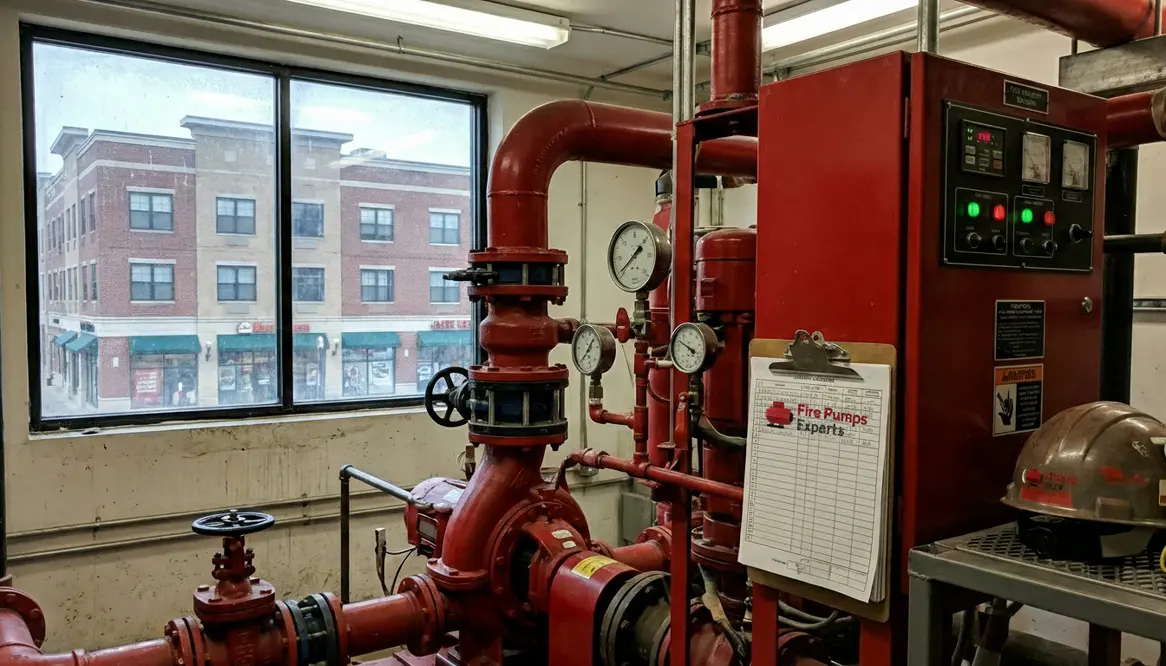
Fire pump rooms must meet strict requirements. Ventilation, drainage, and access are not afterthoughts. They are critical. I have seen more violations from poor room layout than from mechanical failure.
Power Supply Reliability
A fire pump without reliable power is just an expensive paperweight. Therefore, I ensure backup generators and transfer switches are tested and integrated properly.
Clear Labeling and Access
In an emergency, confusion wastes time. Clear signage and unobstructed access can make a real difference when seconds count.
Maintenance Strategies That Actually Work
Now, let me be honest. Maintenance is not glamorous. No one brags about a perfectly lubricated pump bearing at a dinner party. But it is where compliance lives or dies.
I focus on preventive maintenance rather than reactive fixes. This includes routine lubrication, alignment checks, and system flushing. Additionally, I keep spare parts on hand. Waiting for a critical component during an outage is not a strategy. It is a gamble.
Technology also helps. Remote monitoring systems allow me to track performance in real time. If something drifts out of range, I know before it becomes a violation.
And yes, sometimes the system will still surprise you. That is just part of the job. Fire pumps, like people, occasionally have bad days.
Common Compliance Mistakes I See in New Jersey Developments
Even experienced teams make mistakes. However, a few issues show up again and again.
First, undersized pumps. Developers try to cut costs upfront, only to pay more later in upgrades and penalties.
Second, poor documentation. Missing test logs or incomplete records can trigger compliance issues even when the system is functioning perfectly.
Third, ignoring tenant changes. When a new commercial tenant moves in with different hazards, the fire protection system must adapt. Otherwise, you are operating out of compliance without even realizing it.
Finally, delayed repairs. Small issues compound over time. What starts as a minor valve problem can evolve into a system wide failure.
FAQ Fire Pump Compliance in New Jersey
If you manage mixed use or educational properties, you already know that what applies to school fire pump systems often carries over to complex urban projects. The questions below come up constantly when owners and facility teams try to keep their systems ready for the next inspection.
Keep Your System Ready Before Inspectors Ever Ask
If there is one thing I have learned, it is this. Fire pump compliance is not about reacting. It is about staying ready. Mixed use developments in New Jersey demand systems that perform without hesitation. When you invest in proper design, consistent maintenance, and expert oversight, you avoid costly surprises.
If you manage a commercial, mixed use, or campus style property and want a deeper look at long term pump performance, resources like the fire pump service overview from Kord Fire Protection can help you benchmark your own program against industry best practice.
In the end, treating your building a bit like the most demanding school fire pump systems project you can imagine is not overkill. It is how you protect people, keep businesses open, and make sure your next inspection feels routine instead of dramatic.