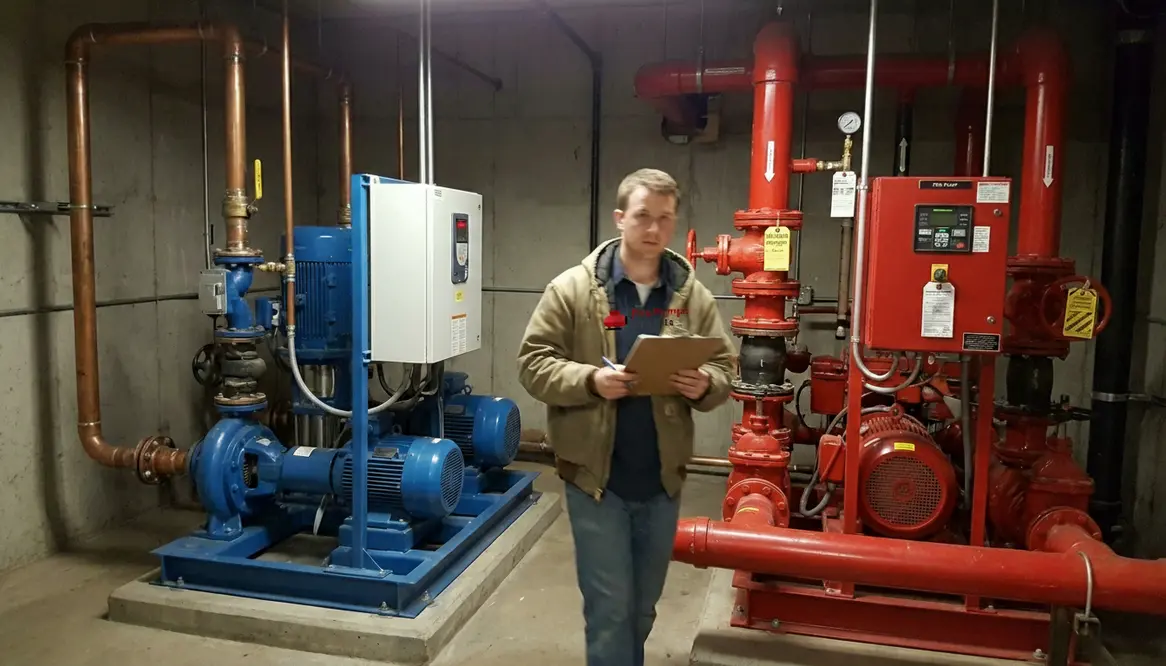
Booster Pump vs Fire Pump Differences Explained
I have spent enough time around mechanical rooms to know that not all pumps are created equal. And when someone brings up the booster pump vs fire pump debate, I lean in just a little closer. Because while they may look like cousins at a family reunion, they live very different lives. One keeps your building running smoothly day to day. The other waits patiently, like a superhero off duty, ready to act when everything is on the line.
So let me walk you through it. Slowly. Clearly. With just enough humor to keep you awake, but not enough to distract you from what matters.
Quick Snapshot: Where Each Pump Shines
- Booster pump: everyday water pressure comfort
- Fire pump: emergency-only, high-stakes protection
- Different codes, testing, and design standards
- Both critical, but for very different reasons
What is the difference between booster pump vs fire pump systems?
Let me answer this the way I would if we were standing next to a humming pump skid. A booster pump increases water pressure for daily use. Think sinks, cooling towers, and those upper floors that always complain first. A fire pump, on the other hand, exists for emergencies. It delivers high pressure water to fire protection systems when the primary supply just is not enough.
In other words, one supports comfort and operations. The other protects lives and property.
And yes, mixing them up is like calling a security guard when you need a barista. Both helpful. Wrong situation.
Booster Pumps At A Glance
- Daily pressure support for fixtures and equipment
- Focused on comfort, consistency, and efficiency
- Run frequently, adjust to demand changes
- Common in high rise and high demand facilities
Fire Pumps At A Glance
- Dedicated to fire protection systems
- Designed for rare, extreme operating conditions
- Run during testing or real emergencies
- Must meet strict fire and building codes
Understanding booster pumps in commercial buildings
Now, let us talk about booster pumps. These systems work quietly behind the scenes. However, their role is anything but small. In high rise buildings, hospitals, and industrial facilities, consistent water pressure is not optional. It is expected.
I often describe booster pumps as the unsung heroes of plumbing systems. They respond to demand changes in real time. When multiple fixtures open, pressure drops. The booster pump senses this and compensates immediately.
Moreover, modern systems use variable speed drives. This means they adjust output smoothly instead of running full blast all the time. As a result, facilities save energy and reduce wear.
And let me be honest. Nobody applauds a booster pump. Until the day it stops working. Then suddenly, it becomes the most popular machine in the building.
Where booster pumps make the biggest impact
- Tall buildings where top floors suffer from low pressure
- Facilities with cooling towers and heavy mechanical loads
- Campuses that rely on consistent pressure across multiple wings
- Hospitals and labs that cannot afford “Sorry, no water” moments
Fire pumps explained for large scale facilities
Fire pumps live a different kind of life. They wait. They test. They stand ready.
In commercial and industrial properties, fire pumps support sprinkler and standpipe systems. When pressure from the municipal supply drops below required levels, the fire pump activates. Instantly. No hesitation.
Additionally, these systems must meet strict codes and standards. Regular testing is not optional. It is required. Because when a fire event happens, there is no room for uncertainty.
I have seen fire pump rooms that feel almost sacred. Clean, organized, and quiet. Like a place where serious work happens. And it does.
Also, unlike booster pumps, fire pumps are not about efficiency. They are about reliability under extreme conditions. They are built to perform when everything else is failing.
If you want to see what serious fire protection looks like in practice, take a look at how a dedicated fire pump service provider structures testing, maintenance, and documentation. For example, systems like those supported by full-service fire pump maintenance and inspection programs show just how much thought goes into keeping these pumps ready for the one day they absolutely must perform.
Booster pump vs fire pump in real world applications
Here is where things get practical. Let me break it down in a way that sticks.
Booster Pump Side
Handles daily water pressure needs
Operates frequently throughout the day
Focuses on efficiency and consistency
Common in high rise offices, hotels, and campuses
Fire Pump Side
Activates only during fire events or testing
Designed for high pressure emergency delivery
Prioritizes reliability over energy savings
Essential for code compliant fire protection systems
Now, if you are managing a large facility, you likely need both. And they must work independently. Trying to combine their roles would be like asking your office printer to also function as your emergency generator. Ambitious. Not wise.
How to think about booster pump vs fire pump in design
- Treat the domestic water system and fire protection system as separate worlds.
- Size booster pumps for typical and peak demand profiles, not rare emergencies.
- Size fire pumps to satisfy code-driven fire flow, pressure, and duration requirements.
- Make sure controls, power supplies, and testing procedures reflect each pump’s true purpose.
Why proper selection and maintenance matters
Choosing between systems in the booster pump vs fire pump conversation is not about preference. It is about purpose. Each system must match the building’s demands and regulatory requirements.
Furthermore, maintenance plays a critical role. Booster pumps require routine inspection to maintain efficiency. Meanwhile, fire pumps demand scheduled testing, documentation, and compliance checks.
Skipping maintenance is tempting. I get it. Budgets exist. Priorities shift. However, when a system fails, the cost of inaction becomes very real.
And let me say this plainly. A neglected fire pump is not just a mechanical issue. It is a liability.
Maintenance mindset for both pump types
- Booster pumps: track efficiency, noise, vibration, and run hours; look for creeping energy costs and pressure complaints.
- Fire pumps: track test results, alarm history, power reliability, and any sign that starting or ramp-up is less than immediate.
- Document everything. When auditors or investigators show up, paper trails matter.
- Partner with specialists who understand both the nuance of operations and the rigidity of code requirements.
Common misconceptions I hear all the time
I have heard a few myths repeated often enough to deserve a moment of truth.
Some believe a booster pump can double as a fire pump. It cannot. The design standards and performance requirements are entirely different.
Others assume fire pumps run constantly. They do not. In fact, if they are running outside of testing or an emergency, something is wrong.
And then there is the idea that once installed, these systems take care of themselves. If only. Even the best equipment needs attention. Think of it like a classic car. Beautiful, powerful, and absolutely not maintenance free.
A quick myth check on booster pump vs fire pump
- Myth: One well sized booster pump can “cover” fire needs too.
Reality: Fire pumps follow entirely different rules, tests, and code criteria. - Myth: Fire pumps are always running in the background.
Reality: They should be quiet, still, and almost boring except during testing or fire events. - Myth: Once installed, both pump types are “set and forget.”
Reality: Pumps are mechanical, and mechanical things age, wear, and drift if no one is watching.
FAQ
Below are some of the most common questions people ask when they are trying to sort out the realities of booster pump vs fire pump systems in their buildings.
Final thoughts and next steps
If you are weighing the realities of booster pump vs fire pump systems in your facility, do not leave it to guesswork. The right design and maintenance plan protects operations and lives. At firepumps.org, we focus on commercial and industrial properties where performance matters most. Reach out, and let us make sure your systems are not just installed, but ready when it counts. Because when the moment comes, there are no second takes.