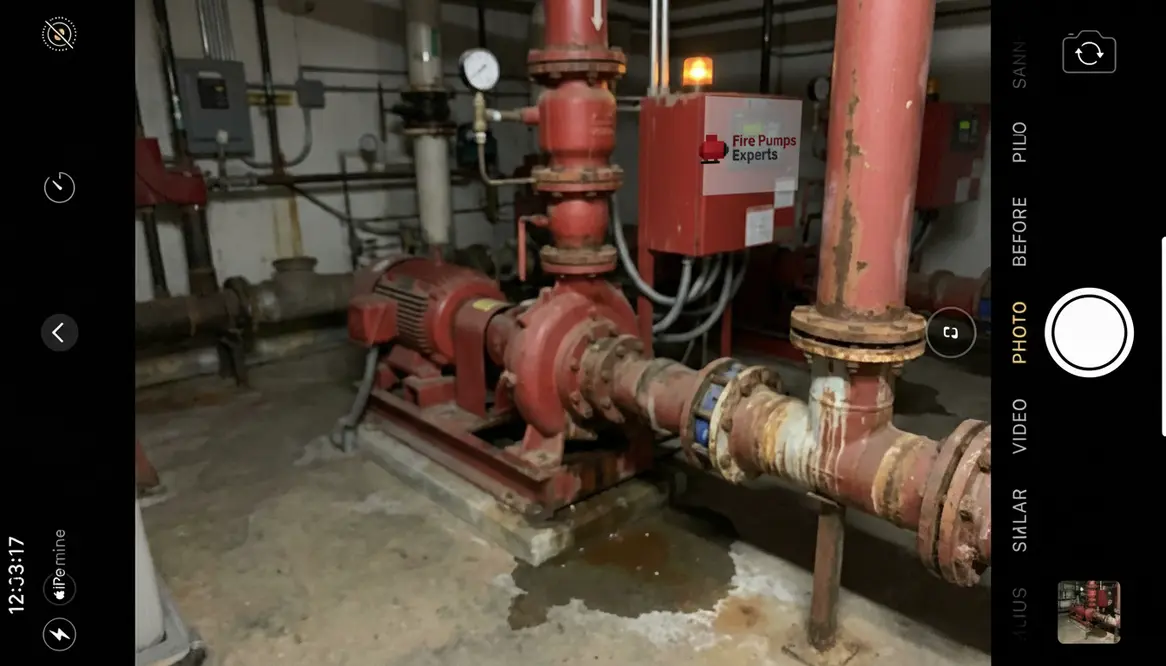
Fire Pump Warning Signs You Should Never Ignore
In a quiet mechanical room, your fire pump is either your best friend on the worst day of the year, or the reason an incident report turns into a career-defining headache. The difference comes down to whether you pay attention when it starts whispering.
I have walked through enough commercial facilities to know this truth: systems rarely fail without whispering first. Those whispers come in the form of fire pump warning signs. In large buildings, where safety is not a luxury but a mandate, those signals matter. Ignore them, and you are not just risking equipment, you are gambling with lives and liability. So today, I am going to slow things down, take a closer look, and help you recognize when your fire pump is asking for attention before it decides to demand it.
Think of these indicators as your early access pass to problems. Spot them, act on them, and your fire pump remains a reliable background character instead of the surprise headliner in an emergency report.
At a Glance: Key Fire Pump Warning Signs
- New or louder vibration and noise
- Pressure readings drifting or fluctuating
- Frequent start/stop cycling
- Small leaks near the pump or piping
- Alarms or odd behavior at the control panel
- Visible corrosion, rust, or worn components
What Are The Early Fire Pump Warning Signs You Should Never Ignore?
I always say the earliest clues are the quiet ones. First, listen. If your pump starts sounding like it is auditioning for a horror movie soundtrack, something is off. Unusual vibrations, rattling pipes, or a hum that feels stronger than usual are not personality traits. They are warnings.
Next, watch your pressure readings. A steady system should behave predictably. If gauges begin to drift or fluctuate, that is your system telling you it is struggling to maintain performance. Additionally, frequent start and stop cycles can signal deeper control or pressure issues. These are exactly the kind of fire pump warning signs that separate a routine walk-through from a serious intervention.
Finally, do not ignore small leaks. Water where it should not be is never a minor inconvenience in a commercial fire protection system. It is a preview of a bigger problem waiting backstage, the kind that turns subtle fire pump warning signs into obvious failures at the worst possible moment.
Early-Warning Sound & Pressure Checklist
- New rattling, grinding, or humming during churn tests
- Gauges that no longer sit steady at normal operating pressure
- Short cycling or frequent on/off starts without clear demand
- Damp spots or puddles near the base, glands, or flanges
Performance Drops That Quietly Signal Bigger Trouble
Sometimes the system still runs, which makes it easy to assume everything is fine. However, a drop in performance is one of the most overlooked indicators. I have seen pumps that technically operate but fail to deliver adequate flow during testing.
In large facilities, that gap can mean the difference between containment and catastrophe. If your pump takes longer to reach pressure or struggles during routine testing, it is not just aging. It is declining, and that decline is one of the most serious fire pump warning signs you can measure in hard data instead of guesswork.
Subtle Performance Clues
- Longer spin-up time to reach rated pressure
- Inconsistent test results compared with past records
- Operators needing to “help” the system with manual adjustments
Why It Matters
In large facilities, a “sort of working” pump is a liability. A fire does not negotiate. It demands that your system hit its numbers, every time, under pressure. Soft performance data today becomes a hard failure tomorrow.
Control Panel Behavior That Raises Red Flags
The control panel is the brain of your fire pump system. When it starts acting unpredictable, I pay attention. Flickering indicator lights, delayed starts, or alarms that seem to come and go like a bad sitcom character are all worth investigating.
Additionally, if the system logs frequent faults, do not treat them like background noise. Those logs are a narrative. They tell you what the system is experiencing in real time, and they often connect directly to mechanical or hydraulic fire pump warning signs elsewhere in the room.
Control Panel Red Flags
- Alarms that clear themselves but keep coming back
- Automatic starts that are slow or intermittently fail
- Unexplained changeover behavior on dual power sources
- Event logs showing repeated faults or abnormal operation
Ignoring control panel warnings is a bit like ignoring the check engine light. It might run for a while, but the ending is rarely satisfying.
Mechanical Wear You Can Actually See
I like to remind facility managers that not every issue requires a diagnostic report. Some of the most obvious fire pump warning signs are visible during routine inspections.
What I look for first
- Corrosion on pump components
- Loose or misaligned couplings
- Worn seals or gaskets
- Rust around fittings
Why it matters
- Corrosion weakens structural integrity
- Misalignment causes vibration and wear
- Seal failure leads to leaks and pressure loss
- Rust often signals moisture intrusion
These are not cosmetic issues. They are early chapters in a story that ends with system failure if left unchecked. Treat visible wear as the readable end of a much larger, mostly hidden list of fire pump warning signs inside the casing, piping, and drivers.
If you can see rust, leaks, and misalignment in a quick visual walk-through, imagine what you cannot see inside the pump, impeller, and bearings. Surface damage is your cue to stop assuming and start testing.
Why Delayed Maintenance Turns Small Issues Into Major Risks
I understand the temptation to delay maintenance. Budgets, schedules, competing priorities. It happens. However, in commercial and industrial properties, delay comes at a cost that compounds quickly.
For example, a minor seal issue can evolve into internal damage. A small pressure inconsistency can lead to full system inefficiency. And when inspections fail, the consequences extend beyond repairs into compliance violations and insurance complications.
How Small Problems Grow
- Leak → corrosion → component failure
- Minor vibration → bearing wear → pump replacement
- Occasional alarms → controller fault → no start during a fire
In other words, what starts as a manageable fix can snowball into operational downtime and serious liability. And no one wants their facility to become the cautionary tale at the next industry conference.
If you are already seeing multiple fire pump warning signs at once — pressure issues, noise, leaks, or panel alarms — that is your cue to stop patching and schedule a proper inspection, test, and service visit.
FAQ: Quick Answers About Fire Pump Issues
Even seasoned facility teams sometimes wrestle with when a quirk is harmless and when it is one of those fire pump warning signs that demands immediate action. Here are straight answers to the questions I hear most often.
Conclusion: Take Action Before The System Forces Your Hand
I have seen what happens when early signs are ignored, and it is never a pleasant story. Your facility deserves better than reactive decisions. Pay attention, act early, and bring in qualified professionals when needed. If your system is showing even subtle warning signs, now is the time to respond.
Do not wait for a real emergency to find out whether your pump and its controller can perform on demand. Partner with a fire protection team that understands design standards, testing requirements, and real-world performance. For owners and managers in California, working with a full-service provider like Kord Fire Protection keeps your fire pump, alarms, and sprinkler systems aligned with code, documentation, and practical reliability.
Visit firepumps.org and make sure your commercial fire protection system stays ready, reliable, and one step ahead of trouble.