BS EN 12845 Fire Pump Maintenance Guide
BS EN 12845 Fire Pump Maintenance Requirements Explained
When I talk about BS EN 12845 maintenance, I am talking about more than a box ticking task. I am talking about the quiet work that keeps commercial and industrial fire protection ready when it matters most. In a major property, a fire pump is not a nice to have. It is the muscle behind the sprinkler system, and if that muscle fails, the whole setup can stumble. So I take this seriously, and I keep the process practical, simple, and steady. No drama, no hero speech, just good upkeep that does its job before anyone notices trouble.
If the fire pump is the muscle, then BS EN 12845 is the training plan. It sets expectations, removes guesswork, and gives building owners a clear way to prove their system is not just installed, but cared for. My aim is to make that care routine, predictable, and calm, even when everything around the building is busy.
That is why a solid BS EN 12845 maintenance routine is not an optional extra. It is part of how a professional building is run, just like planned plant checks, safety drills, and compliance audits.
What BS EN 12845 maintenance means in real life
BS EN 12845 sets the standard for automatic sprinkler systems in commercial and industrial buildings, and the fire pump sits near the heart of that system. I treat maintenance as a planned routine that checks performance, power, water supply, alarms, valves, and control gear. The goal is simple. I want the pump to start fast, run clean, and deliver the right pressure when the system calls for it.
In practice, that means I do not wait for a fault light to flash like a warning in a suspense film. Instead, I check the pump before it becomes a headline. Regular inspection helps me catch leaks, low fuel, weak batteries, worn seals, and control faults early. That saves time, cost, and a great deal of stress.
The role of BS EN 12845 in keeping pumps honest
BS EN 12845 maintenance gives structure to all of this. It tells me when to test, what to record, and how to judge whether a pump is still fit for duty. It keeps everyone honest: owners, inspectors, and service teams. When the standard is followed properly, a fire pump is far less likely to surprise anyone at the worst possible moment.
What I check during each fire pump inspection
Pump room and physical condition
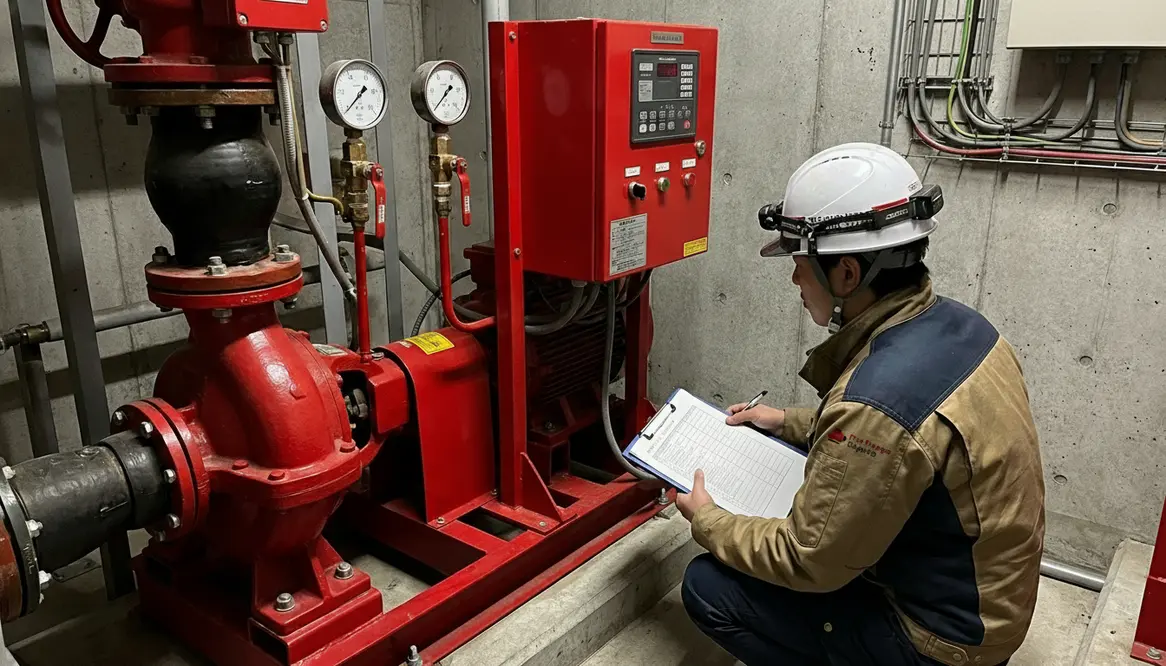
I keep the inspection process focused on the items that matter most. First, I look at the pump room itself. It must stay clean, dry, warm enough, and easy to access. Then I check the pump casing, driver, couplings, gauges, and alarms. After that, I confirm that valves sit in the right position and that no visible leak or damage has appeared.
Controls, power, and test runs
I also test the control panel. It should show clear status, no hidden fault, and no signs of wear that would turn a simple test into a small episode of industrial tragedy. Next, I check the power source, whether that means electric supply or diesel fuel support. If the pump uses diesel, I make sure the fuel is clean, the tank is full enough, and the batteries can start the set without hesitation.
Finally, I confirm that the pump can start and run under test conditions. A pump that only looks healthy is like a superhero in street clothes. The real test comes when it must perform.
How I handle weekly, monthly, and annual checks
I break the work into a clear cycle so nothing gets missed. Weekly checks usually focus on quick visual review, starting tests, and signs of trouble. Monthly checks go a little deeper, with closer attention to control gear, pumps, and support systems. Annual checks go further still, because I want a full view of condition, performance, and wear.
Here is the simple way I approach it:
Weekly
I inspect the pump room, check for leaks, confirm controls, and run a start test.
Monthly
I review batteries, fuel, pressure readings, and any warning signal.
Annually
I carry out a full service review, test output, and inspect parts that may need repair or replacement.
And yes, I record everything. Paperwork may not have the glamour of a blockbuster, but it is still the evidence that keeps the whole system accountable.
BS EN 12845 maintenance requirements for commercial and industrial sites
Commercial and industrial facilities need a sharper maintenance focus because the risk is higher and the systems are often more complex. A warehouse, factory, data centre, or major property building may depend on a pump that supports large sprinkler demand over a wide area. Therefore, I check flow, pressure, water source reliability, and pump readiness with more care.
I also pay close attention to downtime. In a busy site, every hour matters, so I plan maintenance to reduce disruption. That means I work with operations teams, schedule checks at the right time, and keep the system live where possible. If a problem appears, I act fast, because delay in this kind of building can turn a small issue into a very expensive one. Nobody wants that sequel.
Why the standard matters to owners and insurers
Insurers and regulators look for evidence that BS EN 12845 maintenance is part of the routine, not just a line in a policy. When logs are complete, tests are regular, and faults are closed out quickly, it becomes much easier to show that the system is trustworthy. That trust can affect premiums, compliance status, and how quickly a site bounces back after an incident.
Fire pump maintenance checklist for quick use
To keep things easy, I use a simple checklist that helps me stay on track:
- Check pump room access and condition
- Inspect for leaks, rust, vibration, and heat issues
- Test pump start and stop function
- Confirm pressure and flow readings
- Review electric supply or diesel system condition
- Test batteries, fuel, and control panel status
- Log faults, repairs, and service dates
This list helps me stay consistent. It also gives building teams a clear picture of what I found and what needs action next.
Putting BS EN 12845 maintenance into a real plan
All of this only works when it is turned into a live schedule. That means clear responsibilities, dates in a calendar, and a simple way to report issues. I build the plan so that no one has to guess what happens next if a reading looks wrong or a test fails. Action should be obvious, quick, and well recorded.
A strong plan also respects the site. Critical production, data processing, or healthcare work cannot simply stop every time someone wants to check a valve. So BS EN 12845 maintenance is woven around real operations, not forced through them. That balance is what keeps both safety and business performance where they should be.
FAQ
Need a dependable fire pump maintenance plan?
Need a dependable fire pump maintenance plan for your commercial or industrial site? I recommend acting now rather than waiting for a fault to make the decision for you. A well kept system protects people, property, and operations, and it gives real peace of mind. If you manage a major building, now is the time to review your inspection routine, tighten your records, and keep your pump ready for the moment it counts.
If you want a deeper technical reference alongside this practical view, you can explore resources such as https://firepumps.org, then match that knowledge with a site specific BS EN 12845 maintenance schedule that actually fits the way your building runs.