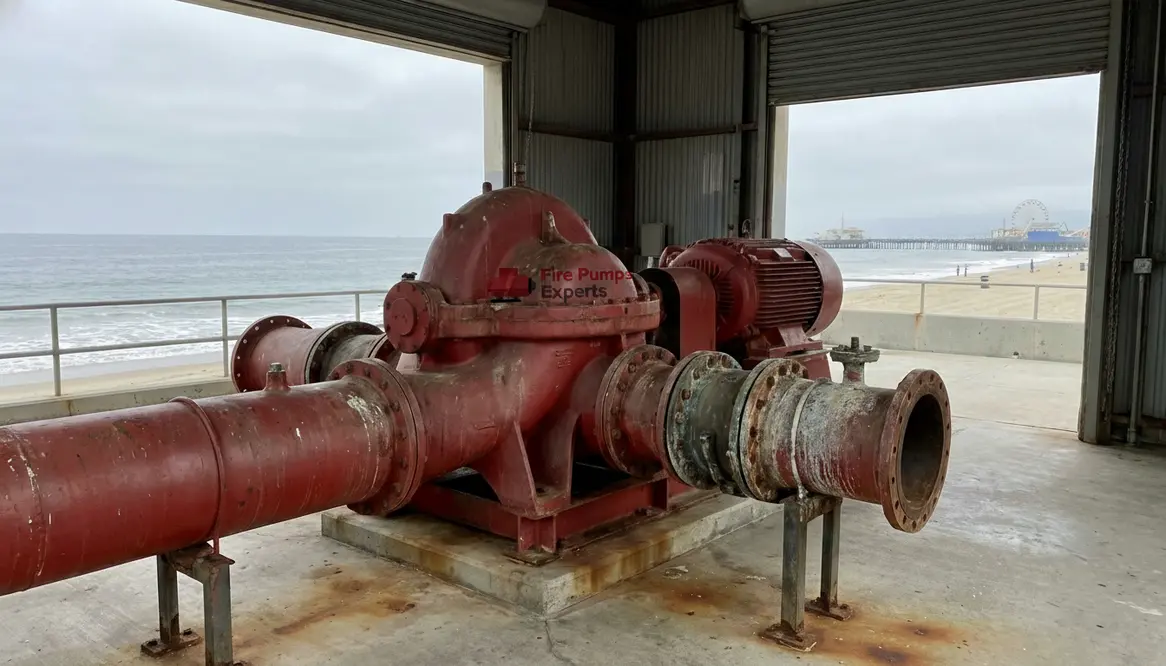
Coastal Fire Pump Santa Monica Design Guide
I have spent enough time around coastal infrastructure to know this truth: the ocean is beautiful, but it is not gentle on equipment. When I approach a project involving a coastal fire pump Santa Monica facility, I think less about shiny specs and more about survival. Salt air creeps, moisture lingers, and systems either adapt or quietly fail when no one is watching. So today, I will walk you through how I approach fire pump selection for coastal commercial and industrial properties in Santa Monica, with a calm hand and maybe a raised eyebrow or two.
What makes coastal fire pump Santa Monica systems different?
Right away, I treat coastal environments as a different species. Not a cousin. Not a sibling. A whole different animal. The salt laden air accelerates corrosion, and that changes everything.
Because of this, I prioritize materials that resist corrosion. Bronze fittings, stainless steel components, and protective coatings are not luxuries. They are necessities. Otherwise, your pump ages faster than a movie villain exposed to sunlight.
Additionally, I look closely at enclosure ratings. Coastal wind carries moisture into places you would not expect. So, I specify sealed motor housings and proper ventilation systems that reduce internal condensation.
Finally, I consider long term reliability over upfront cost. A cheaper pump may look good on paper, but in Santa Monica, the ocean always collects its debt.
Choosing the right pump type for large coastal facilities
Now, let me be clear. Not every fire pump fits every building. A high rise commercial property does not behave like a sprawling industrial complex. So I match the pump type to the demand profile.
For most large scale properties, I lean toward:
Horizontal split case pumps because they handle high flow rates efficiently and allow easier maintenance.
Vertical turbine pumps when water sources require deeper access, especially near coastal wells or reservoirs.
End suction pumps for smaller industrial applications where space is tight but performance still matters.
However, I do not stop at type selection. I examine system curves, peak demand scenarios, and redundancy requirements. Because in fire protection, “almost enough” is just another way of saying “not enough.”
Material durability and corrosion control strategies
Here is where things get serious. And a little personal. I have seen beautifully engineered systems crumble because someone ignored corrosion protection. It is like buying a luxury car and skipping oil changes. Bold move. Short story.
So I take a layered approach:
- Protective coatings on casings and piping slow down salt exposure.
- Cathodic protection helps control electrochemical corrosion in metal components.
- Sealed electrical systems prevent moisture intrusion that can quietly destroy controls.
Moreover, I always plan for inspection access. Because if you cannot see it, you cannot fix it. And in coastal environments, hidden problems do not stay hidden for long.
Power supply reliability in Santa Monica coastal zones
Power is the heartbeat of any fire pump system. And along the coast, reliability can get… interesting. Between storms, grid fluctuations, and environmental wear, I never assume perfect conditions.
Therefore, I often recommend diesel driven pumps as a backup or even primary solution. They operate independently of the electrical grid, which adds a layer of resilience.
At the same time, when electric pumps are used, I specify robust transfer switches and backup generators. Because when a fire event occurs, the system does not get a second chance. This is not a dress rehearsal. It is opening night.
coastal fire pump Santa Monica compliance and codes
I always anchor my decisions in compliance. Not because it is glamorous, but because it is non negotiable. Santa Monica follows strict fire protection standards, including NFPA 20 requirements.
However, coastal conditions often push me to exceed minimum code. I coordinate with local authorities, review site specific risks, and build systems that perform beyond baseline expectations.
In other words, I do not design for passing inspection. I design for surviving reality.
Key Design Focus
- Corrosion resistant materials
- Reliable pump type selection
- Redundant power systems
- Environmental sealing
Operational Priorities
- Consistent pressure delivery
- Ease of maintenance
- Long service life
- Code compliance and beyond
Maintenance planning that actually works
Let me say this plainly. Even the best pump will fail without proper maintenance. And coastal systems demand more attention than inland setups.
So I build maintenance into the design phase. I specify accessible layouts, monitoring systems, and testing schedules that teams can realistically follow.
Additionally, I recommend frequent inspections for corrosion, seal integrity, and electrical performance. Because catching a small issue early is far cheaper than explaining a system failure later. Trust me, those conversations are never fun.
FAQ about fire pump systems in coastal Santa Monica facilities
Final thoughts and next steps
If you are planning or upgrading a system, do not treat coastal challenges as minor details. They define the entire design. I approach every coastal fire pump Santa Monica project with durability, reliability, and foresight in mind. If you want a system that performs when it matters most, work with specialists who understand the environment, not just the equipment. Reach out, start the conversation, and build something that lasts.