Secure Facility Fire Pump San Jose Design Guide
I have spent years walking through facilities where security is tighter than a drum and the margin for error is close to zero. In places like San Jose, where innovation meets high stakes infrastructure, fire protection is not just a checkbox. It is a system that must perform under pressure, every single time. That is where a secure facility fire pump San Jose strategy comes into play. And trust me, when alarms sound, nobody wants a system that behaves like it is buffering on bad Wi Fi.
Why High Security Facilities Demand More Than Standard Fire Pump Design
High security facilities are not your average commercial buildings. Think data centers, biotech labs, and government sites. These environments operate around the clock, and therefore, their fire protection systems must do the same without hesitation.
Because of this, I always emphasize redundancy and reliability first. A standard setup might pass inspection, but it will not necessarily handle layered risks like restricted access zones or sensitive equipment. In addition, these facilities often require isolated systems that prevent cross contamination or unauthorized control.
As a result, the design must account for both physical threats and system integrity. It is a bit like building a vault that can also put out a fire. Not exactly a weekend DIY project.
What Makes a Secure Facility Fire Pump San Jose Design Different?
Controlled access and isolation
When I design for secure environments in San Jose, I approach it with a different mindset. First, I consider access control. Not everyone should be able to walk up and adjust a fire pump controller. That sounds obvious, yet you would be surprised.
Next, I focus on system isolation. A dedicated fire pump system prevents interference from other building operations. Furthermore, integrating backup power sources ensures performance even during outages, which is critical in facilities that cannot afford downtime.
Monitoring that never blinks
Then comes monitoring. Advanced systems allow real time tracking and alerts, so issues get addressed before they escalate. It is like having a security guard who never sleeps, except this one actually enjoys alarms.
How Do I Design for Reliability in Critical Infrastructure?
Layered redundancy
I start with layered redundancy. That means installing multiple pumps, backup controllers, and independent power feeds. If one component fails, another steps in immediately. Consequently, the system continues running without interruption.
After that, I carefully select materials and components rated for long term durability. High security facilities often operate under strict environmental controls, so every piece must perform consistently under those conditions.
Testing without chaos
Moreover, I plan for routine testing without disrupting operations. This allows facility managers to verify performance without risking downtime. It is a bit like rehearsing a fire drill with a Broadway cast. Everything must go smoothly, even behind the scenes.
Balancing Security Protocols with Fire Safety Compliance
This is where things get interesting. Security protocols often limit access, while fire safety demands quick response. At first glance, these goals seem to clash. However, with thoughtful design, they can work together.
I integrate controlled access points that allow authorized personnel to respond quickly without compromising security. In addition, I ensure that all systems comply with NFPA standards and local San Jose regulations.
Because compliance is non negotiable, I also coordinate closely with inspectors and facility managers. This keeps everything aligned and avoids last minute surprises. And let us be honest, surprises are great for birthdays, not for fire system inspections.
Secure Facility Fire Pump San Jose Layout Strategies That Actually Work
Placement matters
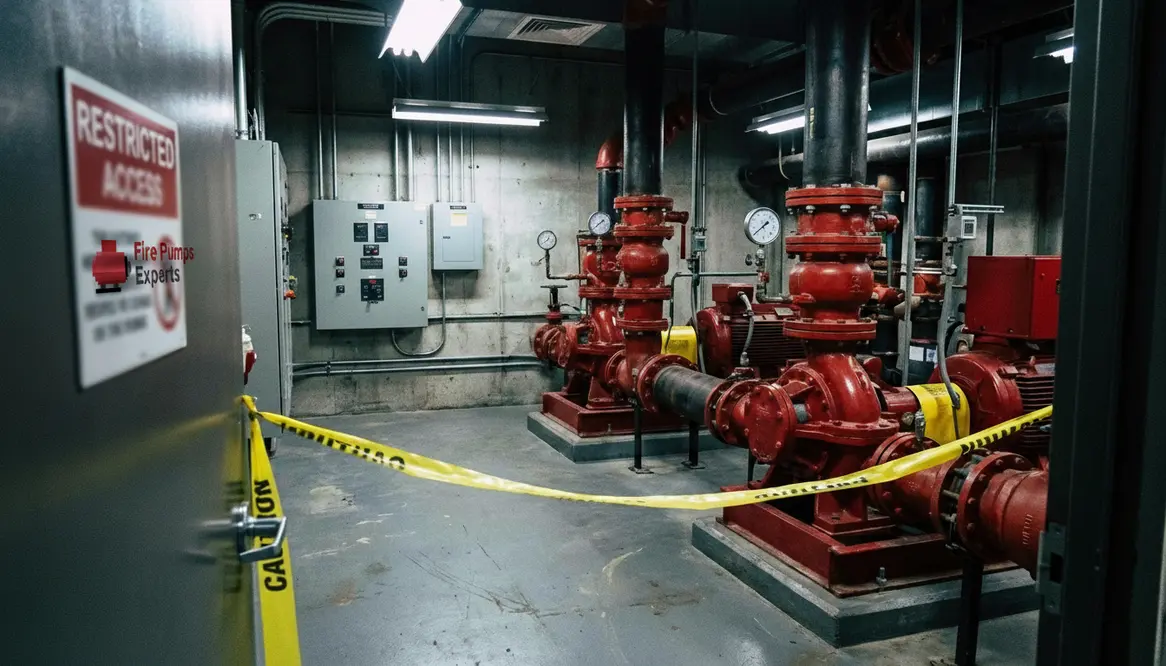
I position fire pumps in protected, restricted areas that still allow maintenance access. This reduces tampering risks while keeping service practical.
Dedicated power supply
I always include independent power sources, often with generator backup. Therefore, the system remains operational during outages.
Advanced monitoring
Smart controls provide real time data and alerts. As a result, issues get flagged before they become emergencies.
Redundant components
Multiple pumps and fail safe controls ensure continuous operation. If one fails, another takes over instantly.
A well planned secure facility fire pump San Jose layout ties all of this together, helping high security buildings keep both resilience and access under precise control.
Common Pitfalls I Avoid in High Security Fire Pump Systems
One mistake I often see is underestimating system complexity. Designers sometimes treat high security facilities like standard buildings. That approach rarely ends well.
Another issue is poor integration with existing infrastructure. When systems do not communicate properly, response times suffer. Consequently, risks increase.
I also avoid cutting corners on testing and commissioning. A system that looks good on paper means nothing if it fails under real conditions. It is like owning a sports car that only drives well in your imagination.
In critical environments, a secure facility fire pump San Jose project lives or dies on details like integration, redundancy, and disciplined commissioning.
FAQ
Conclusion
Designing fire pump systems for high security facilities in San Jose is not just about meeting code. It is about building resilience, ensuring safety, and protecting what matters most. If you are planning or upgrading a facility, I can help you create a system that performs when it counts. Reach out today, and let us make sure your fire protection is as secure as the rest of your operation with a secure facility fire pump San Jose plan that actually matches your risk profile.