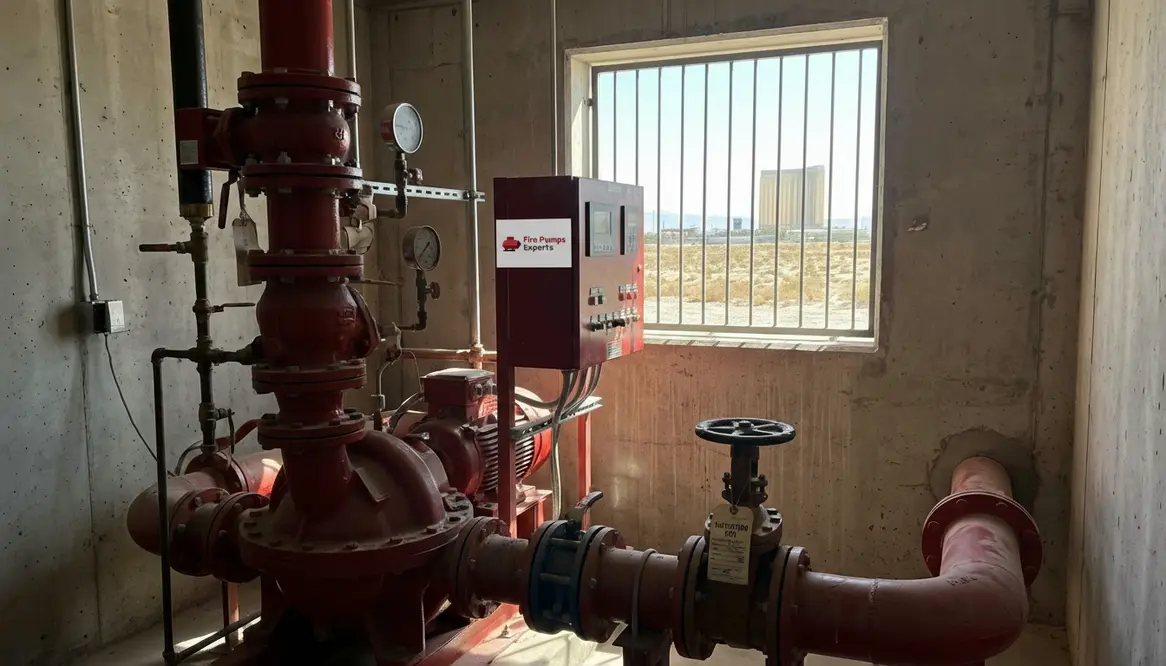
Desert Climate Fire Pump Maintenance Las Vegas
I have spent enough time around commercial buildings in Las Vegas to know one thing for certain. The desert does not play fair. Heat settles in, dust finds its way into everything, and systems that look strong on paper start to sweat under pressure. That is exactly why desert climate fire pump maintenance is not just a line item. It is a survival strategy. In a city that runs on spectacle and scale, facility managers carry a quiet responsibility. When fire protection systems fail, there is no encore.
What makes fire pumps different in Las Vegas facilities?
Fire pumps in Las Vegas do not live the same life as those in cooler, more forgiving climates. Instead, they deal with extreme temperature swings, mineral heavy water, and long idle periods followed by sudden demand. Because of this, I always treat them less like equipment and more like athletes. They need conditioning, not just occasional attention.
Moreover, commercial and industrial properties tend to run complex systems. High rise hotels, manufacturing plants, and large campuses rely on consistent pressure. Therefore, a fire pump here is not just backup. It is the backbone of the fire protection system.
And let me be honest. If your pump fails during an emergency, no one is going to care that it passed inspection six months ago. That is like saying your car ran great before the engine light came on in the middle of the desert.
Why desert conditions change the rules
The combination of scorching summers, low humidity, and dust storms means even a textbook installation can struggle without a plan built around desert climate fire pump maintenance. Heat dries out elastomers, bakes electrical components, and pushes cooling systems to their limits. Dust rides in on every draft, waiting to settle inside controllers, vents, and moving parts.
If you pretend this is a mild coastal environment, you will get mild coastal results. Las Vegas is not that kind of city, and your fire pump will remind you of that at the worst possible time.
Desert climate fire pump maintenance that actually works
I have seen maintenance plans that look impressive on paper but fall apart in practice. In Las Vegas, I focus on consistency and realism. First, heat impacts lubrication and seals faster than expected. So, I check those more often than standard schedules suggest.
Next, dust is not just a nuisance. It builds up in controllers, clogs vents, and slowly reduces efficiency. Therefore, regular cleaning is not optional. It is part of keeping the system alive.
Additionally, water quality matters. Mineral buildup can affect performance over time. Because of this, I monitor flow and pressure trends closely. If something shifts, I investigate early rather than waiting for a failure.
It is not glamorous work. No one makes movies about properly maintained fire pumps. But if they did, it would probably be a slow burn thriller where nothing goes wrong. Which, in my world, is the perfect ending.
Tuning maintenance to Las Vegas realities
Truly effective desert climate fire pump maintenance in Las Vegas means stretching beyond minimum codes and generic checklists. It means building in extra attention during heat waves, checking ventilation in cramped pump rooms, and confirming that every sensor, relay, and controller can still do its job after baking through another record-setting summer.
How often should I test a commercial fire pump in Las Vegas?
I get this question a lot, and the short answer is more often than you think. Weekly churn tests are standard, but in this climate, I pay closer attention to performance patterns during those tests.
However, annual flow testing is where the real story shows up. This is when I can see if the pump still delivers under pressure. If it struggles here, it will not magically perform better during a fire.
Also, I never treat testing as a box to check. I treat it as a conversation with the system. It tells me what is working, what is wearing out, and what needs attention before it becomes a problem.
Reading the story behind the test data
Numbers from weekly churn tests and annual flows are not just for a report. They form a pattern. In a desert environment, even small downward trends can reveal overheating, mineral restriction, or controller fatigue long before a failure. Treating this as part of desert climate fire pump maintenance turns your testing program into an early warning system.
Common mistakes I see in large Las Vegas properties
Some mistakes show up so often they almost feel like tradition. Unfortunately, they are the kind of tradition that costs money and creates risk.
Here is what I see most often
- Ignoring early warning signs such as small pressure drops or unusual noise
- Delaying repairs because the system still runs
- Overlooking controller environments where heat quietly damages components
- Assuming compliance equals readiness when real world conditions say otherwise
On the other hand, the best facility managers stay curious. They ask questions, review data, and act before issues grow. That approach saves more than equipment. It protects people and property.
A smarter way to think about risk
When you look at every minor alarm, odd vibration, or temperature spike through the lens of desert climate fire pump maintenance, the pattern changes. Those “small” issues stop being background noise and start becoming early chapters in a failure story you can still rewrite.
In a city where downtime is expensive and reputations travel fast, quiet reliability is worth more than a shiny report that ignores reality.
Side by side look at proactive vs reactive maintenance
| Proactive Approach | Reactive Approach |
| Regular inspections adjusted for desert conditions | Maintenance only after visible issues |
| Tracks performance trends over time | Relies on single point inspections |
| Addresses heat and dust impact early | Deals with damage after it spreads |
| Reduces downtime and emergency costs | Leads to surprise failures |
I prefer the left column. It is less exciting, but then again, so is a building that does not catch fire.
Desert climate fire pump maintenance and long term reliability
Longevity is not an accident. It is built through small, consistent actions. In Las Vegas, that means adapting maintenance schedules to reality, not just code minimums.
For example, I pay attention to how systems behave during peak summer months. If performance dips even slightly, I adjust. Likewise, I ensure backup power integration is tested under real conditions. Because when the grid falters, the fire pump cannot hesitate.
Furthermore, I treat documentation as a tool, not paperwork. Clear records help me spot trends and make smarter decisions. Over time, that creates a system that is not just compliant but dependable.
And dependable systems are quiet. They do their job without drama. Kind of like a good bass line in a song. You may not notice it, but everything falls apart without it.
If you want a deeper look at design and compliance standards that support this kind of reliability, explore this overview of how NFPA 20 regulates fire pump systems and influences long term performance expectations.
FAQ about fire pumps in Las Vegas facilities
How does heat affect fire pumps?
Heat accelerates wear on seals, lubrication, and electrical components, which can reduce performance over time.
How often should inspections happen?
Weekly and monthly checks are standard, but desert conditions often require closer monitoring.
What is the biggest risk factor?
Ignoring small performance changes that signal larger issues.
Do all commercial properties need fire pumps?
Not all, but large buildings and industrial facilities typically require them for adequate pressure.
Can dust really impact system performance?
Yes, dust buildup can affect cooling, airflow, and electrical reliability.
Keep your system ready before it is tested
If you manage a large commercial or industrial property in Las Vegas, now is the time to take your fire pump seriously. I encourage you to look beyond basic compliance and invest in a maintenance approach built for the desert. The right strategy keeps your system reliable, your property protected, and your stress level lower when it matters most. Reach out to professionals who understand these conditions and keep your fire protection system ready every day.