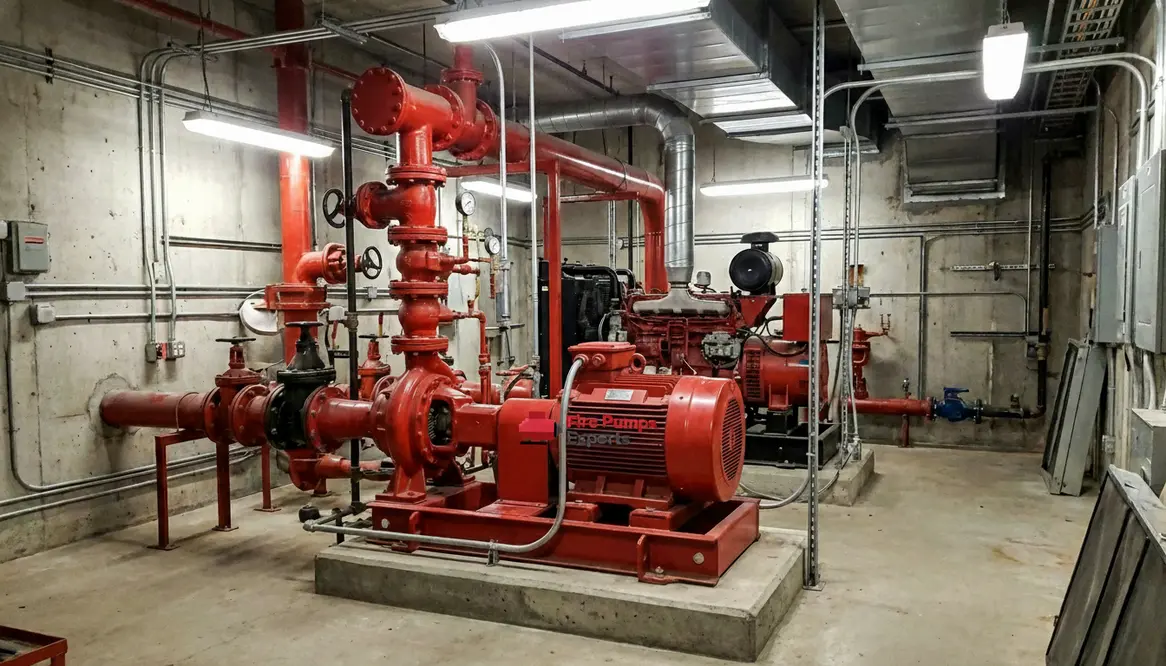
Commercial Property Fire Pump Solutions Guide
I have spent enough time around mechanical rooms to know one thing for certain. When things go wrong, they do not whisper. They roar. That is why I always come back to one core idea: commercial property fire pump solutions are not just equipment, they are insurance policies that actually show up when called. In office towers, retail centers, and mixed use properties, the right system stands between a close call and a headline no one wants to read. And yes, while fire pumps are not exactly the Avengers, they do assemble fast when trouble hits.
Why fire pump systems matter in large commercial buildings
First, let me say this plainly. Gravity alone is not your friend in a high rise. Water pressure drops, distances increase, and suddenly your sprinkler system feels like it is sipping instead of spraying. That is where fire pump systems step in.
Pressure, coverage, and real-world risk
In office buildings, I see long vertical runs that demand consistent pressure across many floors. Meanwhile, retail spaces often require wide coverage with quick response times due to open layouts and heavy foot traffic. Mixed use properties combine both challenges, which is about as fun as juggling flaming torches while riding a unicycle.
Therefore, a properly designed pump system ensures reliable water flow exactly where it is needed. It also supports compliance with fire codes, which, trust me, are not written for light reading.
How do I choose the right fire pump for my property?
I get this question often, and the answer is not one size fits all. Instead, I look at three factors right away.
- Building height and layout determine how much pressure is required. Taller structures need stronger systems.
- Water supply reliability tells me whether we rely on municipal pressure or need a more robust backup.
- Occupancy type influences risk levels and system design priorities.
Additionally, I consider whether the system needs electric, diesel, or dual drivers. Electric pumps are efficient, but diesel units shine when power reliability becomes questionable. Think of it as choosing between a sports car and an off road truck. Both are great, but only one handles a storm without complaining.
If you want a deeper dive into code requirements and design standards, the NFPA 20 overview at Kord Fire Protection’s fire pump systems guide gives useful context on how compliant installations are supposed to perform.
Designing for office, retail, and mixed use environments
Now, this is where things get interesting. Each property type brings its own quirks, and ignoring them is like wearing dress shoes to a hiking trail. Technically possible, but deeply uncomfortable.
Office buildings
I focus on vertical pressure zones, redundancy, and quiet operation. No one wants a board meeting interrupted by a pump that sounds like a jet engine warming up.
Retail & mixed use
Here, flexibility is key. I plan for varying tenant needs, higher foot traffic, and shared infrastructure. Systems must adapt without compromising performance.
As a result, I often recommend scalable configurations. These allow property owners to expand or adjust without ripping everything out later. Because nothing says regret like replacing a perfectly good system five years too soon.
Commercial property fire pump solutions that actually scale
I have seen properties grow faster than expected. New tenants move in, usage increases, and suddenly the original system feels undersized. That is why scalable commercial property fire pump solutions are worth serious attention.
What makes a system truly scalable?
- Modular pump arrangements that let you add capacity without starting from scratch.
- Controllers sized and configured to handle future loads, not just today’s minimums.
- Room layouts that leave actual space for future equipment, not just theoretical space on paper.
To achieve this, I prioritize modular designs. These allow additional pumps or components to integrate smoothly. I also look at control systems that can handle increased demand without requiring a full overhaul.
Moreover, I always plan for maintenance access. Because if technicians cannot reach the equipment easily, small issues tend to become big ones. And big ones tend to come with invoices that make people stare into the distance for a while.
Maintenance and reliability are non negotiable
Let me be clear. A fire pump system that is not maintained is like a smoke detector without batteries. It looks helpful, but it is quietly letting you down.
Testing that is worth the calendar reminders
I recommend routine testing, including flow tests and controller checks. Additionally, I ensure all components meet current standards and operate under real world conditions. This is not the time for guesswork.
Documentation that actually helps you
Furthermore, documentation matters. Clear records help identify trends, predict failures, and support compliance inspections. In other words, paperwork may not be glamorous, but it keeps everyone out of trouble.
Common mistakes I help clients avoid
Over the years, I have seen patterns. Some are harmless. Others are expensive.
- Undersizing systems leads to poor performance during critical moments.
- Ignoring future expansion forces costly upgrades later.
- Skipping regular testing increases the risk of system failure.
- Overcomplicating designs creates unnecessary maintenance challenges.
Instead, I aim for balance. The system should be strong, reliable, and straightforward. Think of it as the strong silent type. It does its job without needing applause.
FAQ
Before getting into specifics, it is worth repeating that commercial property fire pump solutions only work as intended when they are designed, installed, and maintained as a complete system, not as a lone piece of hardware in a mechanical room.
Conclusion
When I look at a building, I do not just see walls and floors. I see systems working quietly behind the scenes, ready for the unexpected. The right fire pump setup protects people, property, and peace of mind. If you are planning, upgrading, or reassessing your system, now is the time to act. Explore tailored commercial property fire pump solutions that fit your building’s demands and ensure your protection is ready when it matters most.
In office towers, sprawling retail centers, and busy mixed use properties, thoughtful design and ongoing care turn mechanical room hardware into a reliable safety net. Commercial property fire pump solutions should give you confidence on the worst day your building will ever face, not questions you have to answer in the middle of an emergency.