EN 12845 vs UL FM Fire Pump Requirements Guide
EN 12845 vs UL/FM Fire Pump Equipment Requirements can feel like a quiet war between two standards, but I see it more like two different maps leading to the same goal: reliable fire protection for commercial and industrial buildings. In my work, I have found that the right choice depends on where the building sits, what the local code asks for, and how the fire pump must perform under pressure. So, before anyone starts shopping for shiny equipment like it is a luxury car, I break it down by approval, testing, design, and long term fit.
In this guide, I will walk through the real differences, where each standard makes sense, and how to choose without getting lost in a sea of paperwork and steel. Because yes, fire protection can be serious, but it does not have to feel like a tax form with a hose attached.
What EN 12845 means for fire pump equipment
EN 12845 sets the rules for automatic sprinkler systems used in many commercial and industrial facilities. When I look at fire pump equipment under this standard, I focus on dependable water supply, system type, and clear performance at the needed flow and pressure. The standard often expects strong system reliability, and that means the pump set must support the whole sprinkler network without drama.
In practice, I pay close attention to pump sizing, driver type, and how the water source behaves during a fire event. If the tank, town supply, or reservoir cannot keep up, the system loses its edge. That is why EN 12845 is not just about the pump itself. It is about the full chain, from source to sprinkler head, working as one clean system.
How UL and FM equipment requirements differ
UL and FM are not system design standards in the same way EN 12845 is. Instead, they focus on product approval and performance testing. That means the pump, controller, motor, diesel engine, and accessories must meet strict listing or approval rules. In plain terms, the gear must earn its badge before it gets on the job.
Here is the short version: EN 12845 tells me how the fire protection system should perform, while UL and FM tell me whether the equipment itself has passed the test. That difference matters a lot. A pump can be built well, but if the project requires listed or approved equipment, then the paperwork becomes just as important as the metal. Bureaucracy, the final boss nobody asked for.
Dual view of the comparison
On one side, EN 12845 leans toward system design and installation rules for sprinkler based fire protection. On the other side, UL and FM focus on equipment approval, testing, and product consistency. So when I compare EN 12845 vs UL/FM Fire Pump Equipment Requirements, I am really comparing a design code with product approval standards.
That difference shapes every project choice, from pump frame to controller selection. And yes, it can decide whether a project sails through review or gets sent back for round two.
Which standard fits my building project?
I start with the project location, because location sets the rules of the game. If the building sits in Europe or a region that follows EN based rules, then EN 12845 often leads the process. If the project sits in North America or a market that asks for listed equipment, then UL and FM usually take the front seat.
Next, I look at the building use. Large warehouses, factories, distribution centers, data heavy plants, and major property complexes need more than generic protection. They need a fire pump setup that matches the hazard level, water demand, and insurance needs. In some cases, the authority having jurisdiction may require both a performance aligned design and approved equipment. That is where careful planning saves time, money, and a few gray hairs.
I also consider service support, spare parts, and local maintenance skills. A fire pump system is not a one time purchase. It is a long term asset. If a site cannot service the equipment quickly, then even the best rated pump starts to look a little less heroic.
What equipment details matter most in EN 12845 vs UL/FM Fire Pump Equipment Requirements?
When I compare EN 12845 vs UL/FM Fire Pump Equipment Requirements, I focus on the parts that affect real world performance. These details usually decide whether a system is ready for code review and ready for an actual emergency.
Key equipment points I check
First, I verify pump capacity and pressure. The pump must deliver the required flow at the needed head, with room for system losses. Then, I review the driver, whether electric or diesel, because each one has different control and backup needs. After that, I inspect the controller, alarms, starting method, and monitoring features. Finally, I confirm that all parts work together as one approved package, not as a patchwork of random parts hoping for the best. That is not engineering. That is a sitcom.
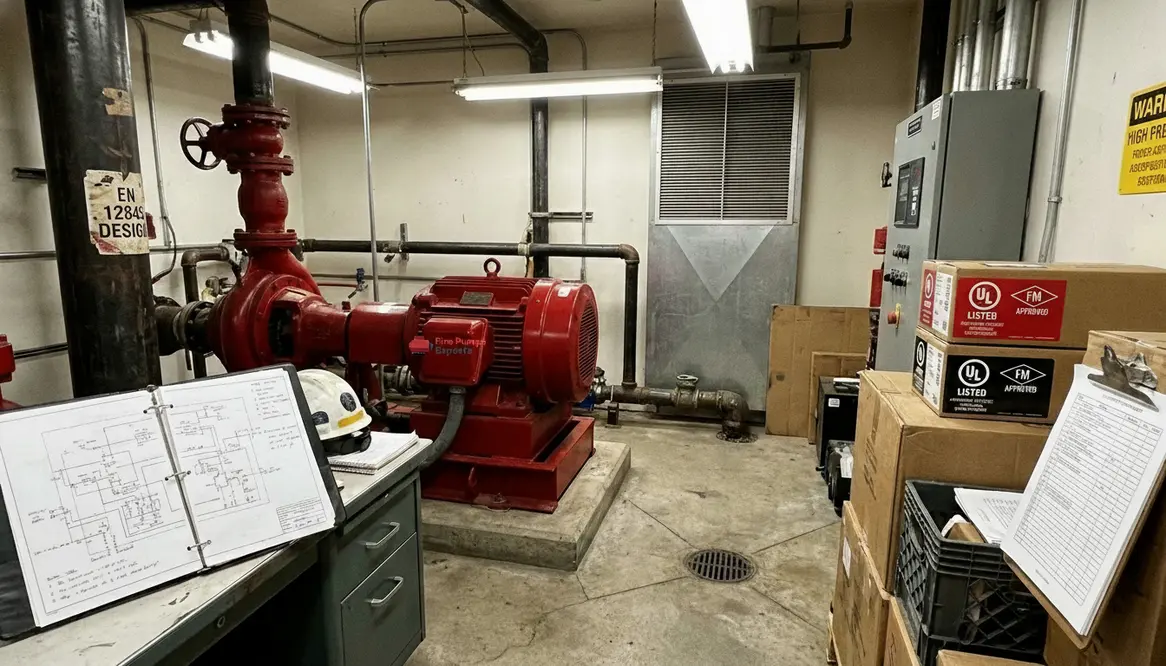
Fire pump rooms also need proper access, ventilation, drainage, and space for maintenance. In large commercial and industrial buildings, these basics matter more than people think. A great pump in a bad room is like putting a superhero in flip flops. It still looks bold, but it will not last long.
How I choose the right path for a commercial or industrial site
I do not treat EN 12845 vs UL/FM as a fight with one winner. Instead, I treat it as a decision tree. First, I confirm the code basis for the project. Then I check the insurer’s needs, the local authority’s rules, and the client’s long term operating plan. After that, I match the fire pump equipment to the exact approval path.
For major properties, I also think about expansion. A site may grow, change occupancy, or add storage height later. So I prefer a setup that can handle future needs without forcing a full redesign. That saves time, reduces risk, and keeps the system useful for years.
If you want a deeper look at approved pump solutions, I recommend reviewing this commercial fire pump solutions resource for more guidance on equipment choices and project support.