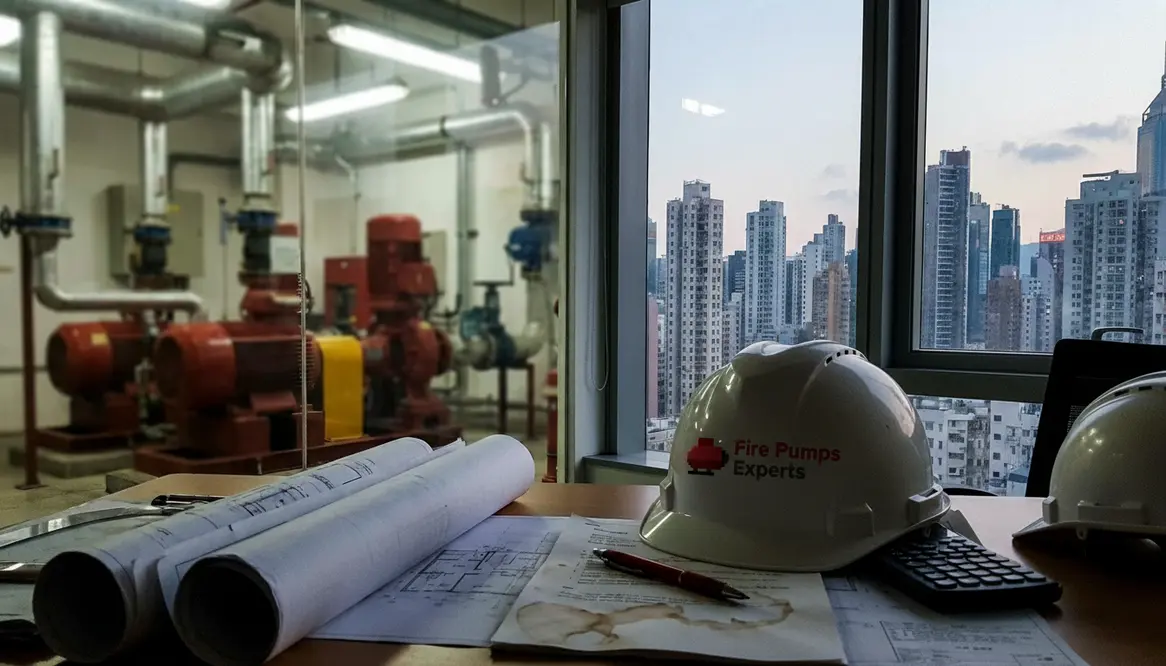
Fire Pump Budgeting for AHJ Approval in Cities
I have spent years walking into plan review meetings where the room feels quiet, but the expectations are loud. When it comes to fire pump budgeting, most project teams focus on cost first. However, in major cities, the Authority Having Jurisdiction, or AHJ, is not thinking about your spreadsheet. They are thinking about performance, reliability, and whether your system will work on the worst day imaginable. So while you fine tune your numbers, they are fine tuning their red pen. And yes, they will use it.
Why fire pump budgeting looks different in big-city AHJ territory
In smaller jurisdictions, you might get away with a clean set of drawings and a tight cost breakdown. In major metros, AHJs want to know exactly how your fire pump will behave when pressures sag, power flickers, and demand spikes. That tension between “What does it cost?” and “Will it absolutely work?” is where smart fire pump budgeting earns its keep.
How do AHJs in major cities actually evaluate fire pump approvals?
In cities like New York, Los Angeles, and Chicago, AHJs operate with a level of scrutiny that can feel almost cinematic. Think less casual inspection, more courtroom drama. First, they verify compliance with NFPA 20, but they do not stop there. They look at how your design behaves under real world conditions.
For example, they want to see accurate hydraulic calculations that reflect actual building demand. Then, they check whether your selected pump curve truly matches system needs, not just what was easiest to source. Additionally, they evaluate redundancy. If one component fails, what happens next?
Because of this, fire pump budgeting must account for more than equipment cost. It must include design precision, review cycles, and potential revisions. Otherwise, you risk delays that cost far more than the pump itself.
Big-city AHJ priorities that quietly shape your budget
- Realistic, defensible hydraulic modeling tied to actual building use.
- Verified water supply conditions, not just optimistic assumptions.
- Documented redundancy and failure scenarios for critical components.
- A clear narrative in your submittals that shows how the system behaves under stress.
Design details that make or break approval
I have seen solid projects stumble over small details. Not because the teams lacked skill, but because they underestimated how closely AHJs examine design intent.
Hydraulics, piping, and layout discipline
First, suction and discharge piping layouts matter. If the configuration introduces unnecessary friction loss, expect questions. Next, controller placement must be accessible and compliant. No one wants to see a controller tucked away like it is hiding from responsibility.
Moreover, electrical coordination often becomes a sticking point. AHJs want clear documentation showing power reliability, including backup sources where required. And yes, they will notice if your drawings look like they were rushed at 2 a.m. with cold coffee and regret.
Budgeting for design quality, not just equipment
Therefore, aligning your fire pump budgeting with high quality design upfront helps avoid expensive redesigns later. That means paying for careful coordination, not just a low equipment quote.
When your plans look deliberate, disciplined, and clearly coordinated, AHJs respond differently. They see a team that takes performance as seriously as they do.
Common red flags AHJs catch immediately
Some issues trigger almost instant rejection. And while they may seem obvious, they appear more often than you would think.
- Overestimated performance curves that do not match manufacturer data
- Inadequate water supply verification especially in dense urban zones
- Missing test header details or poorly located testing provisions
- Improper room ratings where fire pump rooms lack required protection
Additionally, documentation gaps raise concerns fast. If submittals feel incomplete, AHJs assume the system might be too. That assumption rarely works in your favor.
A quick self-check before you submit
- Do your pump curves align exactly with current manufacturer data?
- Is your water supply analysis conservative enough for a skeptical reviewer?
- Are test headers, flow paths, and access points clearly drawn and labeled?
- Does the pump room meet rating, access, drainage, and ventilation expectations?
Balancing compliance with realistic project costs
On one side, I have project owners focused on budgets. On the other, AHJs focused on safety margins. Somewhere in the middle is where successful projects live.
To bridge that gap, I recommend integrating compliance early into cost planning. Instead of treating AHJ feedback as a final hurdle, treat it as part of your design process.
This approach keeps fire pump budgeting grounded in reality. It also reduces change orders, which no one enjoys explaining in a meeting.
At the same time, investing in higher quality components often pays off. Reliable pumps, smart controllers, and well designed layouts reduce long term risk.
And while it may feel like spending more upfront, it prevents costly retrofits later. As I like to say, you can pay now or pay dramatically later. The AHJ will make sure of that.
Aligning fire pump budgeting with lifecycle performance helps owners see that they are not just buying a line item; they are buying fewer future headaches.
Why major cities demand more than the basics
Urban environments introduce complexity that smaller jurisdictions rarely face. High rise buildings, mixed use spaces, and dense infrastructure all increase system demands.
Because of this, AHJs often enforce stricter interpretations of codes. They may require additional safety factors, enhanced monitoring, or more rigorous testing protocols.
Furthermore, they expect coordination across multiple systems. Fire pumps must integrate seamlessly with alarms, sprinklers, and emergency power. If one piece feels disconnected, approval becomes unlikely.
So while national standards provide a baseline, major cities raise the bar. And frankly, they have good reason to do so.
Where your pump strategy meets real-world conditions
In practice, that means your design should anticipate grid instability, aging infrastructure, fluctuating demand, and tight urban footprints. Thoughtful fire pump budgeting banks on testing, monitoring, and resilient system architecture, not just a nameplate rating.
If you want a sense of how real-world service, testing, and inspection play out once the system is live, it is worth studying how specialists like Kord Fire handle fire pump systems in the field. That lens makes the AHJ’s expectations feel far less abstract.
What I focus on to get approvals faster
Over time, I have learned that success comes from preparation, not persuasion. I focus on clarity, accuracy, and completeness from the start.
First, I ensure that all calculations are transparent and easy to follow. Then, I coordinate closely with electrical and structural teams to eliminate conflicts. Additionally, I review submittals as if I were the AHJ. If something feels unclear, I fix it before it becomes a comment.
And yes, I build time into fire pump budgeting for revisions. Because even the best plans benefit from a second look.
A simple workflow that AHJs appreciate
- Start with conservative assumptions and clearly state them.
- Show your work: calculations, curves, and coordination diagrams that anyone can follow.
- Pre-coordinate with all disciplines and resolve clashes before submittal.
- Reserve budget and schedule for at least one meaningful revision round.
This is where fire pump budgeting becomes a project control tool, not just a cost sheet. You are buying time, clarity, and goodwill with the reviewer.
FAQ
Conclusion
If you are planning a commercial or industrial project in a major city, do not treat approvals as an afterthought. Build your strategy around compliance from day one. When you align smart design with realistic fire pump budgeting, you reduce risk and keep your timeline intact. If you want guidance that speaks the language of both engineers and AHJs, now is the time to act. Let’s make your next approval smooth, predictable, and maybe even a little enjoyable.