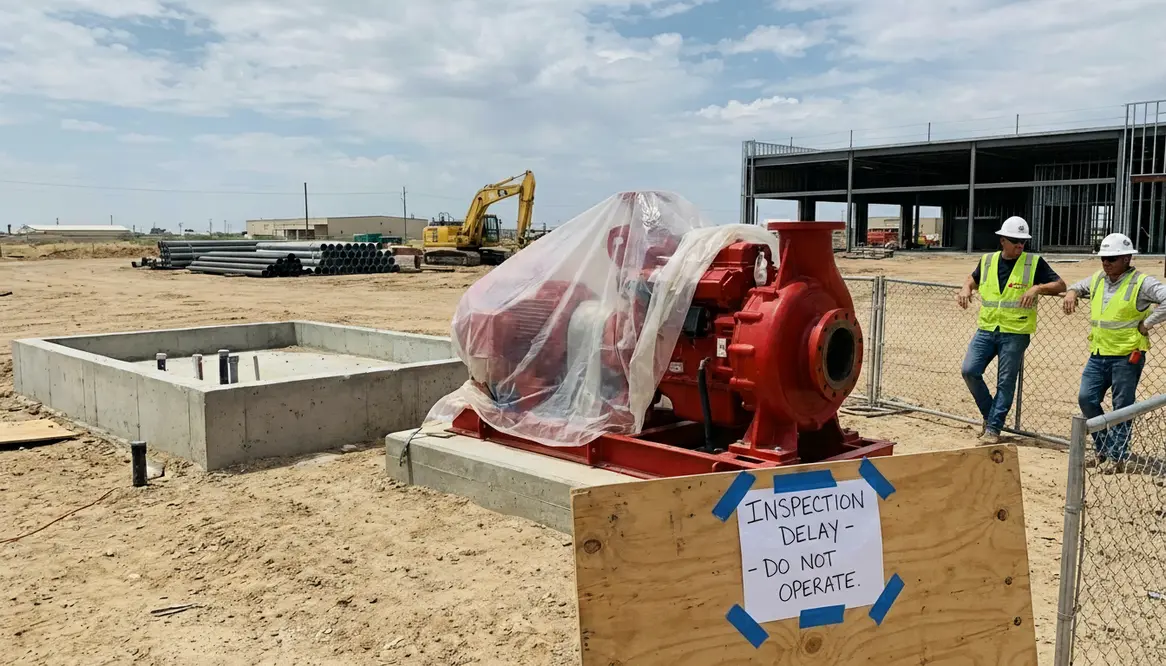
Fire Pump Code Compliance Bakersfield Delays
I have seen it happen more times than I care to count. A commercial build in Bakersfield is moving along just fine, schedules are tight but manageable, and then suddenly, everything slows to a crawl. The culprit is often not the steel or the concrete. It is fire pump code compliance. And yes, this is where construction project delays quietly creep in, like an uninvited guest who refuses to leave. When fire protection systems fall out of step with code, inspections stall, approvals hang in limbo, and timelines stretch. So let us walk through this with clarity and just a touch of humor, because frankly, paperwork alone should not be this dramatic.
Why Bakersfield Fire Pump Compliance Matters
In Bakersfield, fire pump systems do more than satisfy a checklist. They keep commercial and industrial buildings inspection-ready and occupancy-friendly. When they lag behind code, construction project delays are almost guaranteed to follow.
A Local Partner For Fire Pump Systems
If your project needs expert support on pump sizing, testing, and documentation, a specialized fire pump service provider like Kord Fire’s fire pump systems team can help keep your Bakersfield timelines intact.
Understanding Fire Pump Code Compliance in Bakersfield
In Bakersfield, fire pump systems must align with California Fire Code, NFPA 20, and local amendments. I treat these codes less like suggestions and more like the rules of gravity. Ignore them, and things fall apart quickly.
Fire pumps serve one purpose. They ensure water flows with enough pressure when everything else fails. However, compliance is not just about installing a pump. It involves proper sizing, electrical reliability, seismic bracing, and precise testing protocols. Moreover, inspectors expect documentation that proves every component works as designed.
Because of this, I always emphasize early coordination. When engineers, contractors, and fire authorities stay aligned, projects move smoothly. Otherwise, even a small oversight can trigger schedule setbacks that ripple across the entire build.
Key Compliance Pillars In Bakersfield Builds
- Code alignment with California Fire Code, NFPA 20, and local standards.
- Mechanical and electrical reliability under worst-case operating conditions.
- Seismic bracing and anchorage tailored to Bakersfield’s risk profile.
- Testing, commissioning, and crystal-clear documentation.
How Fire Pump Issues Trigger Construction Project Delays
Let me be direct. Fire pump compliance issues are not loud problems. They are quiet, stubborn ones. They show up during final inspections, right when everyone is ready to celebrate.
For example, I have seen projects halted because of incorrect controller settings or missing test headers. These are not massive failures. Yet, they are enough to stop occupancy approvals cold.
As a result, construction project delays often come down to three things.
- Design gaps where plans do not match field conditions.
- Installation errors that fail inspection standards.
- Documentation issues that leave inspectors unconvinced.
And while it might feel like overkill, fire inspectors are not being picky. They are ensuring that when a real emergency hits, the system performs without hesitation. Nobody wants a fire pump that behaves like a WiFi signal during a storm.
Where Timelines Quietly Slip
By the time a noncompliant pump shows up on the inspector’s radar, crews are demobilizing, tenants are eyeing move-in dates, and every extra day on site hurts. This is how construction project delays turn from minor hiccups into expensive rescheduling efforts.
What Do Bakersfield Inspectors Actually Look For?
I get this question a lot, and the answer is both simple and detailed.
Core Performance Checks
- Automatic start and reliable run sequence.
- Ability to maintain required pressure and flow.
- Stable operation under sustained load.
Details That Trip Teams Up
- Insufficient equipment clearances.
- Incorrect pipe configurations or valves.
- Poor or missing labeling.
- Incomplete acceptance test results or maintenance records.
Inspectors focus on functionality, reliability, and compliance with code. They want to see that the fire pump starts automatically, maintains pressure, and sustains operation under load. However, they also look at the small details that many teams overlook.
These include proper clearances, correct pipe configurations, and accurate labeling. Additionally, they review acceptance test results and maintenance documentation.
If even one of these elements falls short, approvals can stall. Therefore, I always advise teams to think like inspectors before the inspection even begins. It saves time, money, and a fair amount of stress.
Planning Ahead to Avoid Costly Setbacks
Now here is where things get interesting. The best way to avoid delays is not faster work. It is smarter planning.
Upfront Coordination
I bring fire protection engineers into early design meetings. This ensures the fire pump system integrates cleanly with the building infrastructure.
Accurate Equipment Selection
Choosing the right pump and controller avoids performance issues later. Oversized or undersized systems both create problems.
Pre Testing and Verification
I recommend internal testing before official inspections. This catches issues while fixes are still easy.
Clear Documentation
Organized records make inspections smoother. Inspectors appreciate clarity more than guesswork.
Because of these steps, projects move forward with confidence. And frankly, confidence is a rare and valuable thing on a construction site.
Fire Pump Compliance for Large Commercial and Industrial Buildings
When dealing with large scale facilities, the stakes rise significantly. High rise buildings, industrial plants, and major commercial properties demand robust fire protection systems.
In these environments, fire pumps must handle greater loads and more complex layouts. Therefore, redundancy, backup power, and system monitoring become essential. I often compare it to a blockbuster movie. You do not just need a lead actor. You need a full cast working in sync.
Moreover, local conditions in Bakersfield, including seismic considerations, add another layer of complexity. Proper anchoring and vibration control are not optional. They are critical.
By addressing these factors early, teams reduce the risk of schedule disruptions and avoid the kind of surprises that turn timelines into wishful thinking.
Why Early Compliance Prevents Bigger Problems Later
There is a simple truth I have learned over the years. Fixing problems early is always cheaper and faster than fixing them late.
When fire pump systems meet code from the start, inspections become routine instead of stressful. Approvals move quickly, and project timelines stay intact. On the other hand, late stage corrections often require rework, new approvals, and sometimes even redesigns.
And let us be honest. Nobody wants to explain to stakeholders why a nearly finished building cannot open because of a pump that refuses to cooperate. That is not the kind of plot twist anyone enjoys.
FAQ: Fire Pump Code Compliance in Bakersfield
Keep Your Project Moving Without Delays
If you are managing a commercial or industrial project in Bakersfield, fire pump compliance is not just another task on the list. It is a critical path item that can shape your entire timeline. I help teams align design, installation, and inspection requirements so nothing slips through the cracks. Reach out today, and let us keep your project moving forward without unnecessary setbacks, missed deadlines, or those all too familiar construction project delays.
Handled early and correctly, fire pump code compliance becomes the reason your Bakersfield job walks calmly through final inspections instead of stumbling into last-minute construction project delays.