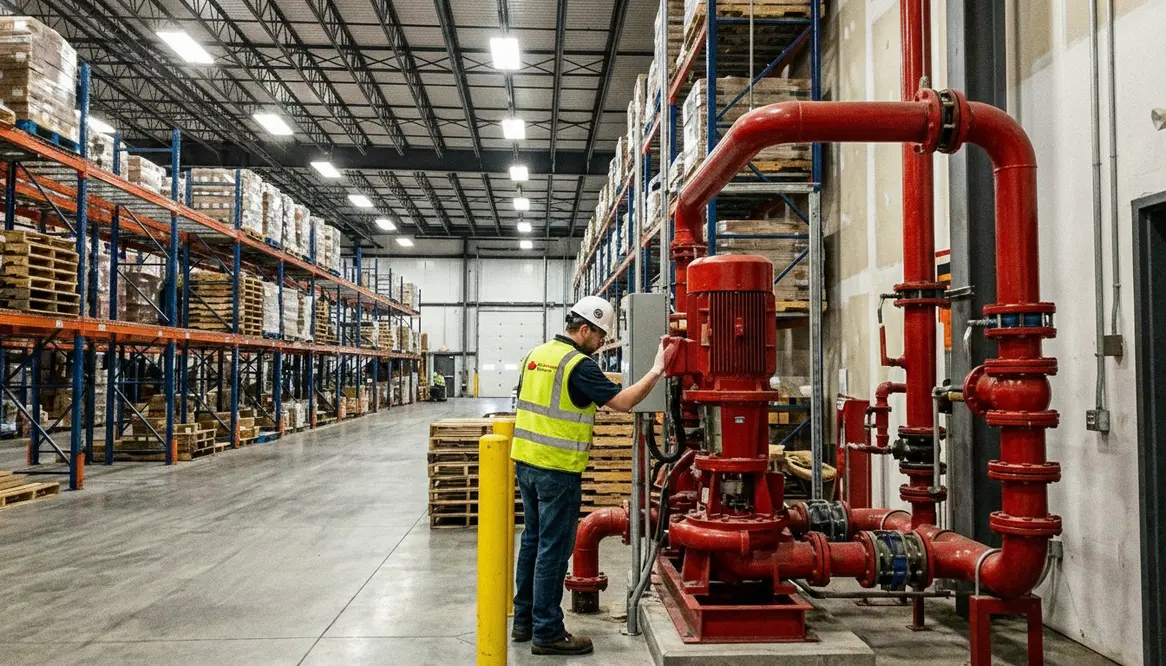
Fire Pump Design for Code Environments in Warehouses
I have spent years walking through cavernous warehouses where the hum of machinery meets the quiet expectation of safety. And right at the heart of that expectation sits one critical element: fire pump design for code environments. In major metro areas, where regulations are as dense as traffic at rush hour, designing and maintaining compliant fire pump systems is not just a box to check. It is a responsibility. One that, if ignored, tends to introduce itself at the worst possible moment. And trust me, fire does not send a calendar invite.
Metro warehouse realities
Urban warehouses rarely have the luxury of excess space, simple layouts, or generous water supply. Instead, they juggle stacked inventory, tight footprints, and inspectors who know every line of the local fire code by heart.
Why the fire pump becomes the pivot point
Sprinklers, alarms, standpipes, and suppression systems all depend on one thing: reliable water supply and pressure. That is why fire pump design for code environments is never just a technical decision; it is the backbone of the entire protection strategy.
What does fire pump compliance actually mean in metro warehouses?
Let me answer this plainly. Fire pump compliance means your system meets local fire codes, national standards like NFPA, and the unique demands of high density urban infrastructure. However, warehouses in cities like New York, Los Angeles, or Chicago face added pressure. Limited water supply, vertical storage, and tighter inspection cycles all raise the stakes.
Because of that, I always look at compliance as a living process. It involves correct sizing, proper installation, and routine testing. And yes, paperwork too. Lots of it. The kind that makes you wish your printer had a frequent flyer program.
Key pieces of compliance
- Correct pump selection and sizing for the hazard, rack heights, and density of storage.
- Verified performance against NFPA and local amendments, documented with real flow test data.
- Installation and layout that keeps equipment accessible for inspection, testing, and maintenance.
- Routine testing and record keeping that prove the system works on more than just paper.
Moreover, metro jurisdictions often interpret codes differently. So a system that passes in one city might fail in another. That is why aligning your fire pump system with both national and local expectations is essential from day one.
Fire pump design for code environments in dense urban infrastructure
Designing for a wide open industrial park is one thing. Designing for a packed metro warehouse is another story entirely. Here, I focus on precision.
Water supply constraints
Municipal systems in large cities can fluctuate, so I account for pressure variability and worst case scenarios. In practice, that means designing fire pump design for code environments that can still deliver required flow and pressure even when the city supply is having a bad day.
Building height and storage
High rack storage and multi level configurations demand stronger, more reliable pump performance. Tall buildings, mezzanines, and dense storage all push system demand upward, and the pump has to be ready to match that without hesitation.
Additionally, redundancy becomes a serious conversation. In major facilities, a backup pump is not a luxury. It is insurance against downtime. Because when a system fails during an emergency, there is no pause button.
And let us not forget space. Urban warehouses rarely have extra room. So every component must fit efficiently without sacrificing accessibility. It is a bit like playing Tetris, except the stakes are significantly higher.
For owners and operators looking for real world support with selection, testing, and maintenance, partnering with a team that specializes in fire pump systems is essential. A good example is the service approach described in Kord Fire’s fire pump systems and maintenance services, where inspection, repair, and performance testing are all aligned with current codes and practical field conditions.
How I navigate inspections, permits, and local authority expectations
If you have ever dealt with city permitting offices, you know it can feel like starring in your own procedural drama. However, I have learned that preparation changes everything.
My playbook for metro approvals
- I start by aligning documentation with local fire department requirements, not just generic templates.
- Then, I coordinate early with Authorities Having Jurisdiction. This step alone can save weeks of delays.
- After that, I ensure acceptance testing meets both NFPA standards and local amendments, with results captured in clean, inspector friendly reports.
Furthermore, regular inspections keep systems compliant long after installation. I recommend scheduled testing that mirrors real world conditions. Because a system that only works on paper is about as useful as a screen door on a submarine.
Common compliance mistakes I see in major warehouse properties
Even experienced operators slip up. And in metro environments, small mistakes can snowball quickly.
Undersized or outdated pumps
One common issue is undersized pumps. Facilities expand, storage increases, but the original system remains unchanged. That mismatch creates risk. When fire pump design for code environments is treated as a one time decision instead of a lifecycle process, growth quietly outruns safety.
Maintenance and system integration
Another frequent problem is neglected maintenance. Pumps need regular testing, lubrication, and calibration. Skipping those steps is like expecting your car to run forever without an oil change. Spoiler alert, it will not. I also often see poor integration with alarm and sprinkler systems. These components must work together seamlessly. If they do not, response times suffer.
Finally, outdated documentation can derail inspections. Keeping records current is not glamorous, but it is essential. Think of it as your system’s resume. And no one wants to show up to an interview with a resume from 2008.
Balancing performance, cost, and long term reliability
Now, let us talk strategy. Because compliance is not just about meeting code today. It is about sustaining performance over time.
Performance Focus
I prioritize systems that handle peak demand without strain. This includes selecting pumps that maintain pressure consistency and respond quickly during activation.
Cost Awareness
At the same time, I balance upfront investment with lifecycle costs. Efficient systems often reduce maintenance expenses and energy use over time.
Meanwhile, reliability ties it all together. A well designed system should operate smoothly for years with proper upkeep. That is why I emphasize quality components and thoughtful layout from the start. In practice, that means treating fire pump design for code environments as a long term risk management tool, not just a line item in a construction budget.
Why fire pump design for code environments drives long term safety
When I step back and look at the bigger picture, I see one truth. Compliance is not about avoiding penalties. It is about protecting people, property, and operations.
The silent guardian in a busy warehouse
In major metro warehouses, risks multiply quickly. High inventory value, dense layouts, and constant activity create a complex environment. Therefore, a properly designed fire pump system becomes a silent guardian. Always ready. Never in the spotlight until it matters most.
And yes, while it may not be the most exciting topic at dinner parties, it is one of the most important investments a facility can make. Right up there with coffee. And possibly just as essential.
FAQ
Conclusion
When I work with warehouse operators in major metro areas, I focus on building systems that stand the test of time and scrutiny. If your facility needs expert guidance on fire pump design for code environments, now is the moment to act. Reach out, assess your system, and make sure it is ready when it counts. Because in this line of work, preparation is not optional. It is everything.