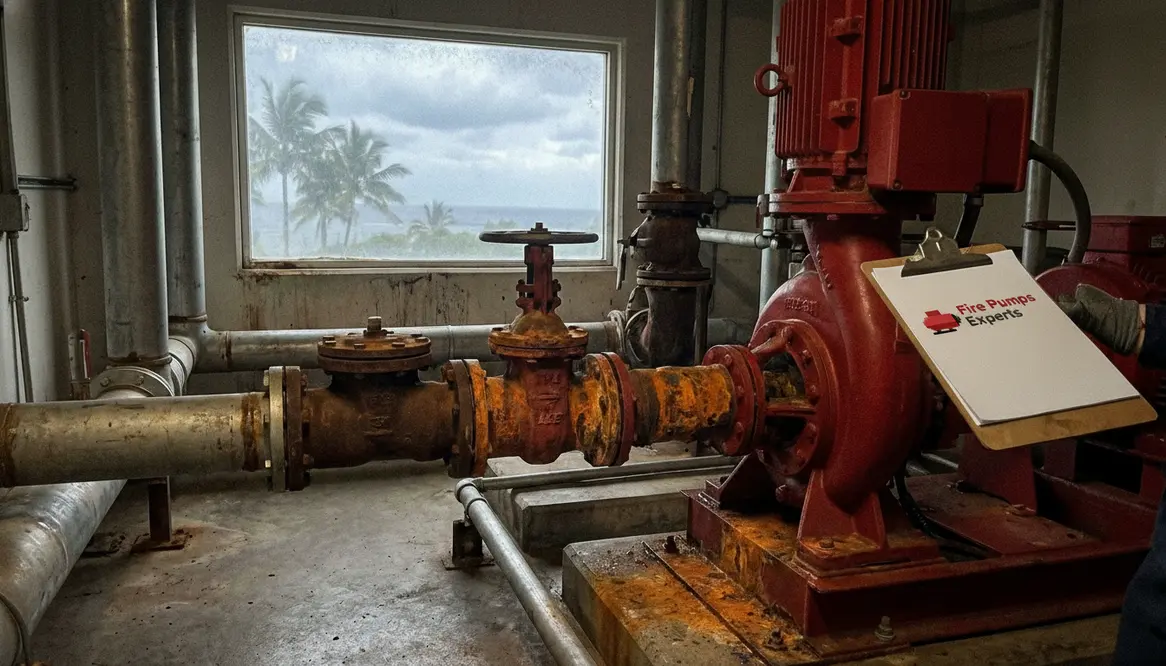
Fire Pump Inspection Miami Coastal Corrosion Risks
How ocean air, salt, and South Florida humidity quietly shape the reliability of your fire pump systems long before an alarm ever sounds.
I have spent a good part of my career walking through large mechanical rooms that hum like quiet engines beneath the city. And in Miami, those rooms tell a special story. Salt rides the wind here. Moisture hangs in the air. Metal ages faster than it should. That is why conversations around fire pump inspection and testing requirements miami coastal corrosion matter more than most people think.
In commercial towers, hospitals, ports, and industrial campuses, a fire pump is not just another machine. It is the last line of defense when everything else goes wrong. However, near the ocean, corrosion quietly works in the background like a villain in a slow moving movie. So today I want to walk you through how inspections, testing, and coastal conditions collide in Miami. Think of it as a behind the scenes tour of a system that only gets attention when alarms start screaming.
For property professionals, understanding how Miami’s salt air affects fire pumps is not a “nice to have” topic. It is a reliability discussion that lives right alongside insurance costs, life safety, and business continuity. If the fire pump fails when the building needs it most, the damage is never just mechanical.
This is where the details of fire pump inspection and testing requirements miami coastal corrosion become more than box-checking. Done well, they turn into your best defense against the combination of salt, humidity, and time.
Why Miami Buildings Face Unique Fire Pump Risks
Miami is beautiful. Palm trees sway, the water sparkles, and tourists walk around like they are in a music video. But for mechanical equipment, the environment can feel more like an action movie survival test.
Salt in the air accelerates corrosion. It settles on valves, pump casings, controllers, and pipe joints. Over time, that thin invisible layer begins to break down metal surfaces. As a result, components weaken faster than they would inland.
Large commercial properties feel this impact the most. High rise office towers, distribution hubs, healthcare campuses, hotels, and manufacturing facilities rely on fire pumps that must perform instantly. Yet corrosion does not care about emergency readiness.
Because of that reality, inspection routines in coastal South Florida must be stricter and more consistent than in many other cities. If a property manager assumes their system will behave like one installed in Arizona, well… that is a plot twist nobody wants.
Therefore facility leaders in Miami focus on reliability testing, corrosion monitoring, and preventive maintenance. In other words, they treat the pump room less like a storage closet and more like the engine room of a ship.
Fire Pump Inspection and Testing Requirements Miami Coastal Corrosion Risks Explained
I often get asked what the rules actually require. People imagine a complicated maze of regulations. In truth, the process is very structured when you understand the basics.
Fire pumps in commercial and industrial buildings must follow inspection and testing practices built around NFPA 25 standards and local Miami enforcement. However, coastal conditions mean the stakes are higher.
Here is the general rhythm of proper maintenance.
- Weekly visual inspections confirm pump readiness, controller status, and valve positions.
- Weekly churn tests run the pump briefly to confirm it starts and maintains pressure.
- Monthly inspections check gauges, alarms, and fuel systems for diesel driven units.
- Annual flow testing measures the pump’s ability to deliver full rated water output.
- Comprehensive system review examines controllers, relief valves, and sensing lines.
Now here is where Miami adds its own flavor. Salt exposure can affect electrical contacts, steel casings, and even sensing lines inside controllers. Consequently inspectors must look beyond the checklist and watch for corrosion patterns.
I like to say a good technician reads equipment the way a doctor reads a patient. A little rust here. A slightly sticky valve there. Small clues often reveal bigger problems, especially when fire pump inspection and testing requirements miami coastal corrosion are viewed as a living process instead of a static rulebook.
What Does Coastal Corrosion Actually Do to Fire Pump Systems
When people hear corrosion, they picture a rusty pipe and move on. In reality, coastal corrosion behaves more like a chain reaction.
First, salt particles attach to exposed metal. Then humidity keeps those particles wet. After that, oxidation slowly eats away at surfaces. Eventually parts that should move smoothly begin to resist.
Inside a fire pump system this can affect several critical areas.
Mechanical Components
- Pump casings develop surface pitting
- Couplings weaken and vibrate
- Shaft seals degrade faster
- Bearings experience early wear
Control and Electrical Systems
- Controller contacts corrode
- Sensor wiring loses reliability
- Pressure switches drift out of calibration
- Starter components stick during activation
Now imagine a real emergency. Sprinklers activate. Water demand spikes. The fire pump controller sends the start signal. If corrosion has quietly damaged a connection or mechanical part, that moment becomes the worst time to discover it.
That is why inspections in coastal regions must look deeper than simple operational checks. In Miami, every visit to the pump room is also a chance to read how the ocean has been treating your equipment since the last test.
How Do I Know If My Commercial Fire Pump Is At Risk From Salt Air
That question comes up often from facility managers who oversee large buildings near Biscayne Bay or along the coast. The answer usually reveals itself through patterns.
First, I look at the pump room environment. If ventilation pulls in outside air constantly, salt particles likely enter the room. Next, I examine exposed steel hardware and piping. Early rust spots can act like warning lights.
Another clue appears during annual flow testing. Corroded internal parts may cause pressure readings to drift below design expectations. The pump still runs, but its performance quietly declines.
Finally, electrical panels tell their own story. A light green or white film on terminals signals salt exposure. And when I see that, I know corrosion has already begun its slow work.
At that point, preventive action becomes critical. Otherwise the system could face reliability problems later, especially in cities where fire pump inspection and testing requirements miami coastal corrosion style conditions are simply part of everyday weather.
Fire Pump Inspection and Testing Requirements Miami Coastal Corrosion Strategy for Large Facilities
When I work with industrial properties, hospitals, and major commercial towers, I encourage a layered strategy. Miami’s environment demands it.
First, inspections must happen consistently and without shortcuts. Skipping weekly churn tests might feel harmless. However, pumps that sit idle too long tend to develop mechanical resistance.
Second, corrosion control should be part of maintenance planning. Protective coatings, climate control in pump rooms, and sealed electrical enclosures all reduce salt exposure.
Third, annual flow testing should never be treated like a formality. This test reveals real performance under pressure. It tells us whether the pump still delivers the water volume a high rise or industrial complex requires.
Finally, documentation matters. Reliable facilities track inspection data year after year. That history allows technicians to spot trends early. A small performance drop today might prevent a major failure tomorrow.
And honestly, keeping those records organized saves property managers from some very uncomfortable conversations with inspectors. Nobody enjoys explaining missing paperwork while standing next to a pump the size of a refrigerator.
If you want a deeper look at what professional fire pump service and documentation can provide, take a look at this overview of fire pump systems and inspections from a full-service fire protection company.
FAQ About Fire Pump Inspections in Miami
Even seasoned facility managers throw these questions on the table when the topic of fire pump inspection and testing requirements miami coastal corrosion comes up during budget season or capital planning meetings.
Keeping Miami Buildings Ready When It Matters Most
In a coastal city, equipment faces challenges most people never see. Salt air moves quietly. Corrosion works slowly. Yet emergencies move fast. That is why understanding fire pump inspection and testing requirements miami coastal corrosion is essential for major facilities that protect thousands of people and millions in assets.
If you manage a large commercial or industrial property in Miami, now is the time to review your fire pump inspection program. Schedule professional testing, track corrosion risks, and make reliability a priority. When the system is called into action, it should perform like a hero in the final scene of an action movie. No drama. Just results.