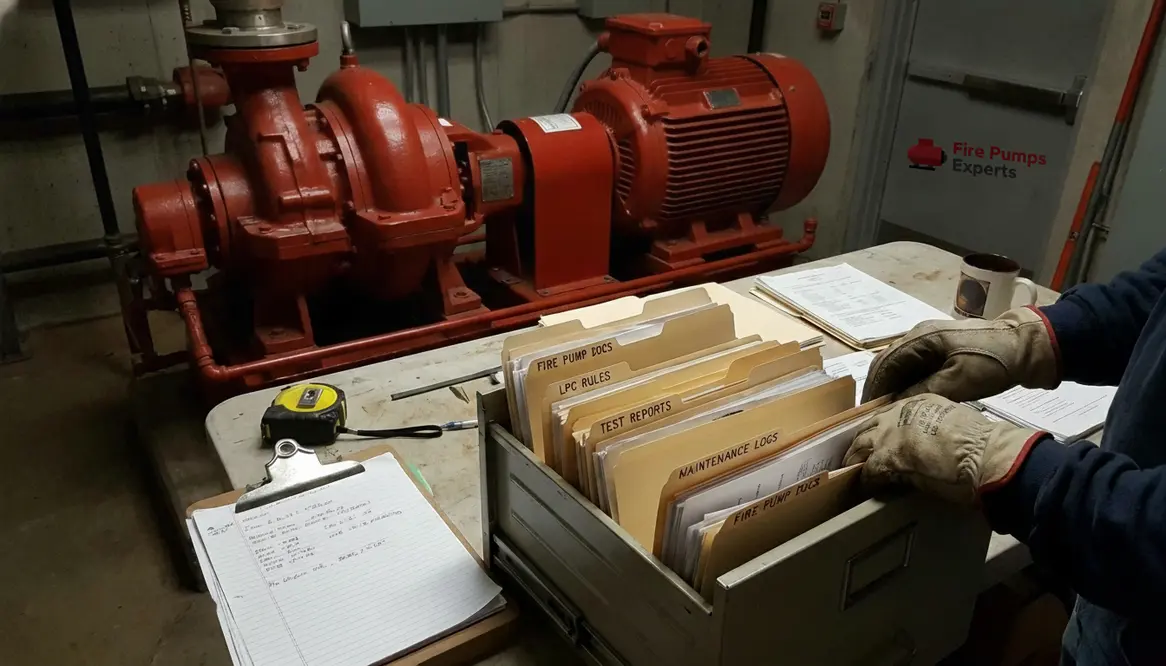
Fire Pump LPC Rules Documentation Requirements Guide
A practical walkthrough of the records, structure, and habits that keep fire pump documentation ready for the toughest inspection day.
Fire Pump Documentation Requirements Under LPC Rules: What I Keep in the File and Why It Matters
I have seen more than one fire pump room treated like a dusty storage closet for old paperwork and forgotten dreams. That is a mistake. Under LPC Rules documentation, the records tied to a fire pump are not just nice to have. They help prove the system is installed, tested, maintained, and ready when a commercial or industrial facility needs it most. In a major property, that paper trail can save time, reduce confusion, and keep people from arguing with a fire marshal on a very bad day.
So, I focus on the documents that show the fire pump works as designed, that the right checks happened on time, and that any issue got fixed fast. In other words, I treat the paperwork like part of the safety system itself. Because when the pump needs to perform, the file should not look like it was assembled during a caffeine emergency.
What LPC Rules documentation must show
I start with the basics. LPC Rules documentation should clearly show the fire pump’s identity, location, type, capacity, driver details, and the standards used for design and installation. It should also show who signed off on the work and when. If the pump serves a large warehouse, tower, plant, or mixed use commercial property, I make sure the records match the actual equipment on site. A mismatch here is like labeling a jet engine “miscellaneous metal.” Not ideal.
Then I look for proof that the system fits the site risk. That means design drawings, hydraulic data, pump curves, power supply details, and acceptance test results. These records help show the pump can meet demand under real fire conditions. Furthermore, they give owners and facility teams a clear baseline for future checks.
Fire pump records I keep for compliance
I keep the file tight, but complete. The main goal is simple: if someone asks, I can show the life story of the fire pump without launching a scavenger hunt.
Key records I keep
- Design drawings and approved plans
- Manufacturer data sheets and cut sheets
- Installation records and commissioning notes
- Acceptance and performance test results
- Weekly, monthly, and annual inspection logs
- Maintenance and repair reports
- Fault reports and corrective action records
- Certificates, approvals, and any third party sign off
These documents tell a full story. First, they show the pump was installed right. Next, they show it was tested right. After that, they show it kept getting the attention it needed. That matters because a fire pump in a commercial property or industrial plant can sit idle for long stretches, and silence is not the same thing as safety.
How I organize the fire pump file in a commercial facility
I use a simple system that anyone on the team can follow. That way, if I am away, the next person does not need a treasure map or a cryptic clue from a Netflix mystery series.
Two column view for a clean file system
Document type
- Design and approval records
- Test reports
- Inspection logs
- Repair records
- Certificates and approvals
Why I keep it
- Show the system was planned for the building
- Prove the pump worked as expected
- Track routine checks over time
- Show what failed and how I fixed it
- Support compliance during audits and site reviews
I also label each file by date and system name. Then I keep the latest copy easy to reach, while older records stay archived in order. Moreover, I prefer digital and paper backups for major properties, because power outages and spilled coffee both have a habit of showing up uninvited.
What inspectors and auditors want to see
When inspectors review LPC Rules documentation, they usually want fast proof that the fire pump is under control. They look for current records, not loose notes or half finished spreadsheets. They want evidence of routine testing, clear maintenance history, and any actions taken after a failure or low performance result.
Therefore, I make sure the file answers these questions before anyone asks them. Has the pump been tested at the right intervals? Did pressure and flow stay within the required range? If not, did I record the issue, fix it, and retest? This is where strong documentation protects the owner. It shows due care, reduces delay, and helps keep the facility ready for review.
Also, I like to keep references close to hand. For a useful guide on fire pump systems for commercial and industrial sites, I would point to commercial fire pump resources for major properties. It helps connect the paperwork to the actual equipment and the real world conditions these systems face.
FAQ
These are the questions I hear most often when people start tightening up their LPC Rules documentation for fire pumps in commercial and industrial properties.
Conclusion: Keep the file ready before the alarm ever sounds
I treat fire pump paperwork as a living safety record, not a box to tick and forget. Strong LPC Rules documentation helps me prove the system is ready, protect the building, and reduce stress during inspections. So, if you manage a commercial, industrial, or major property site, now is the time to tighten the file, check the logs, and close the gaps before they become costly problems. A clean record today makes a calmer, safer tomorrow.