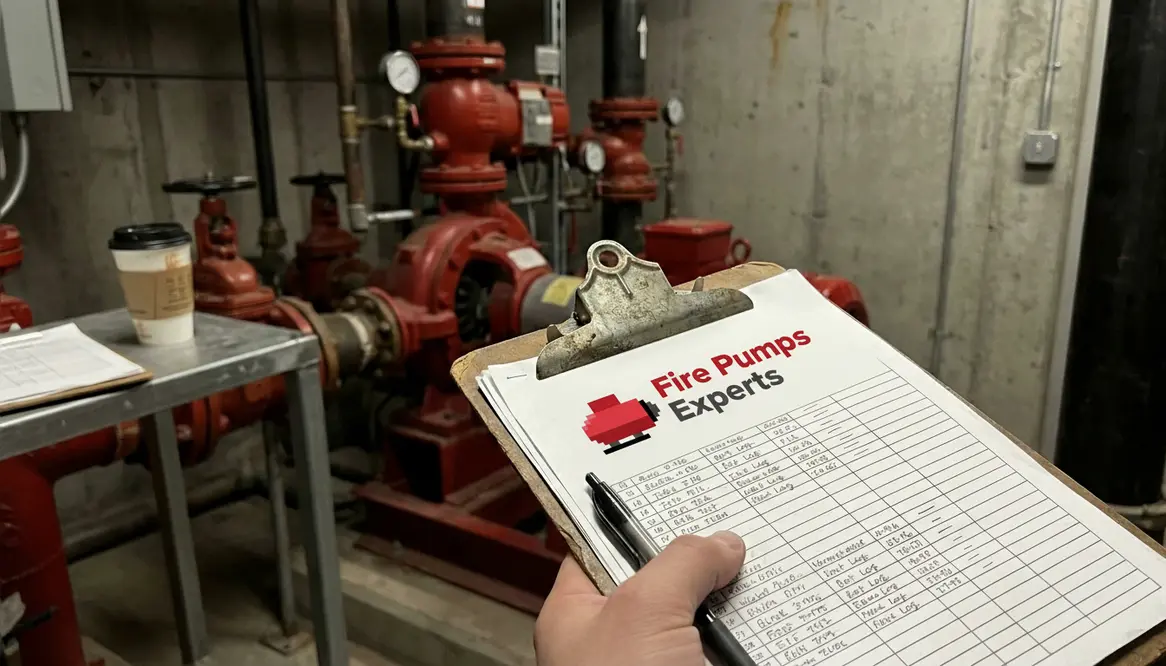
Fire Pump Maintenance Records Glendale Compliance Guide
A practical guide for Glendale property managers who would rather keep their fire marshal smiling than scrambling for missing paperwork.
I have always believed that a well maintained fire protection system is a lot like a good drummer in a band. You rarely notice it when everything is working, yet the moment it stops, the whole performance falls apart. That truth becomes very real when we talk about fire pump maintenance records Glendale facilities rely on to prove their systems are ready when the unexpected happens.
Across Glendale’s commercial towers, manufacturing plants, distribution centers, and large property complexes, fire pumps quietly stand guard behind the scenes. However, inspections and tests alone are not enough. Documentation matters just as much. In fact, inspectors, insurance carriers, and safety managers all depend on accurate records to confirm compliance. Without them, even a perfectly functioning system can look suspiciously incomplete. And let’s be honest. Paperwork may not be glamorous, but when a fire marshal asks for proof, it suddenly becomes the star of the show.
So today I want to walk through how maintenance documentation works, why it matters so much for major facilities, and how Glendale property managers can stay compliant without turning their office into a mountain of clipboards and coffee stained reports.
Why Maintenance Documentation Matters for Large Facilities
First, let me paint a picture. Imagine a fire inspector strolling into a commercial high rise in Glendale. He asks for documentation of weekly churn tests, annual flow testing, and recent repairs. If the facility manager responds with a confident smile and a well organized log, the conversation moves quickly. If not, well… the mood in the room changes faster than a plot twist in a crime drama.
Maintenance records serve three major purposes.
- Proof of compliance. Authorities require documented inspections according to NFPA 25 standards.
- Operational tracking. Maintenance teams use records to identify trends or performance issues.
- Liability protection. Accurate logs demonstrate responsible safety management if an incident occurs.
Furthermore, commercial and industrial facilities face higher expectations than smaller properties. Large distribution centers, hospitals, and manufacturing plants depend on high capacity pumps that protect thousands of square feet of valuable assets. Therefore, every inspection and test must be recorded clearly and stored for review.
In other words, if the fire pump is the engine of a building’s fire protection system, documentation is the dashboard that proves the engine still runs.
Fire Pump Maintenance Records Glendale Inspectors Expect to See
Let us talk about what inspectors actually look for, because this part surprises many property managers. They are not simply checking that a pump exists. They want evidence of consistent maintenance activity over time.
The standard documentation normally includes several layers of testing and inspection records.
- Weekly churn test reports showing pump operation without water flow
- Monthly visual inspections of valves, controllers, and gauges
- Annual flow test documentation measuring pump performance under demand
- Battery and controller checks for diesel or electric systems
- Repair logs and corrective actions if performance issues appear
Additionally, each record should include the technician name, date, measured results, and confirmation that equipment returned to normal condition. Glendale inspectors appreciate details. A vague note that says “checked pump” does not inspire much confidence.
I often tell facility managers to think of these reports like a medical chart for the building. A doctor would not simply write “patient seems fine.” They record vital signs, test results, and observations. Fire pump records work the same way.
How Glendale Commercial Properties Stay Compliant Without the Paper Chaos
Now here is the good news. Staying compliant does not mean drowning in binders thicker than a fantasy novel series.
Many commercial facilities in Glendale now use structured record systems that combine digital tracking with professional service reporting. As a result, documentation becomes easier to manage and easier to present during inspections.
Below is a simple breakdown of how successful facilities organize their records.
Operational Strategy
- Maintain weekly and monthly inspection logs
- Store all reports in a centralized compliance folder
- Schedule annual flow tests in advance
- Track repair history and replacement parts
- Document technician certifications
Compliance Advantages
- Faster fire marshal inspections
- Clear proof for insurance audits
- Early detection of pump performance decline
- Reduced downtime for critical systems
- Better budgeting for equipment upgrades
Meanwhile, digital service platforms allow maintenance providers to upload reports immediately after testing. That means facility managers can retrieve documents with a few clicks instead of digging through a drawer that looks like it survived a hurricane.
And yes, if you have ever tried to find a three year old inspection report five minutes before a compliance meeting, you know exactly what I mean.
How Often Should Fire Pumps Be Tested in Glendale?
That question comes up constantly, especially from property managers overseeing large campuses or industrial operations. Fortunately, the answer is straightforward because national standards guide the schedule.
According to NFPA 25 requirements, fire pump testing typically follows this pattern.
- Weekly churn test operation to confirm the pump starts properly
- Monthly visual inspections of components and valves
- Annual full flow performance testing
- Periodic controller, battery, and fuel system inspections
However, Glendale facilities often add additional monitoring because the stakes are higher. For example, a large logistics center might test controllers more frequently due to constant operational demands.
Furthermore, detailed logs must accompany every test. These documents become the backbone of compliant fire pump maintenance records Glendale inspectors evaluate during building safety reviews.
Think of it like maintaining a fleet of emergency vehicles. You would not simply check the engine once a year and hope for the best. Regular verification keeps the system ready when the alarm sounds.
The Hidden Risks of Poor Documentation
Now let me share a reality that rarely appears in glossy safety brochures. Poor documentation can create serious operational and financial risks for commercial properties.
First, missing records often trigger compliance violations during inspections. Even if the pump works perfectly, the absence of proof raises questions about maintenance practices.
Second, insurance carriers may scrutinize incomplete records after a fire event. If documentation gaps exist, coverage disputes can appear faster than plot holes in a superhero movie sequel.
Third, maintenance teams lose valuable diagnostic history. Over time, pump performance data reveals patterns such as declining pressure or motor strain. Without that history, technicians must troubleshoot blindly.
For Glendale’s large industrial properties, that scenario can mean expensive downtime and delayed fire protection readiness.
Simply put, records transform maintenance from guesswork into informed system management.
Building a Culture of Fire Protection Accountability
While technology helps, the real foundation of compliance comes from mindset. Facilities that maintain strong documentation habits treat fire protection as a core operational responsibility rather than a once a year checklist.
In practice, that culture includes several important habits.
- Assigning a dedicated fire protection coordinator
- Scheduling inspections well before deadlines
- Partnering with certified fire pump service professionals
- Maintaining clear digital and physical documentation backups
- Reviewing inspection reports for performance trends
Consequently, teams stay ahead of potential issues instead of reacting during emergency inspections.
I often compare this mindset to maintaining an aircraft. Pilots do not wait for turbulence before checking the engines. They monitor systems constantly because preparation keeps everyone safe.
Large Glendale facilities deserve that same level of vigilance.
FAQ About Fire Pump Maintenance Records
These quick answers help clarify how fire pump maintenance records Glendale facilities rely on actually function day to day.
Keeping Glendale Facilities Ready When It Matters Most
At the end of the day, fire protection is not just about equipment. It is about preparation, discipline, and proof that systems will perform when seconds matter. Reliable documentation keeps facilities compliant, keeps inspectors satisfied, and most importantly keeps buildings and people protected.
If your commercial or industrial property needs expert guidance managing inspection schedules and documentation, a dedicated fire protection partner can help you maintain compliant records and dependable fire protection systems across Glendale. Because when safety is on the line, the details deserve professional attention.
For an example of how a qualified provider approaches inspections, testing, and documentation, explore Kord Fire Protection’s overview of their fire pump service and inspection process. Studying a structured service model like this can help you benchmark and strengthen your own internal approach to fire pump maintenance records Glendale teams depend on when inspectors arrive.