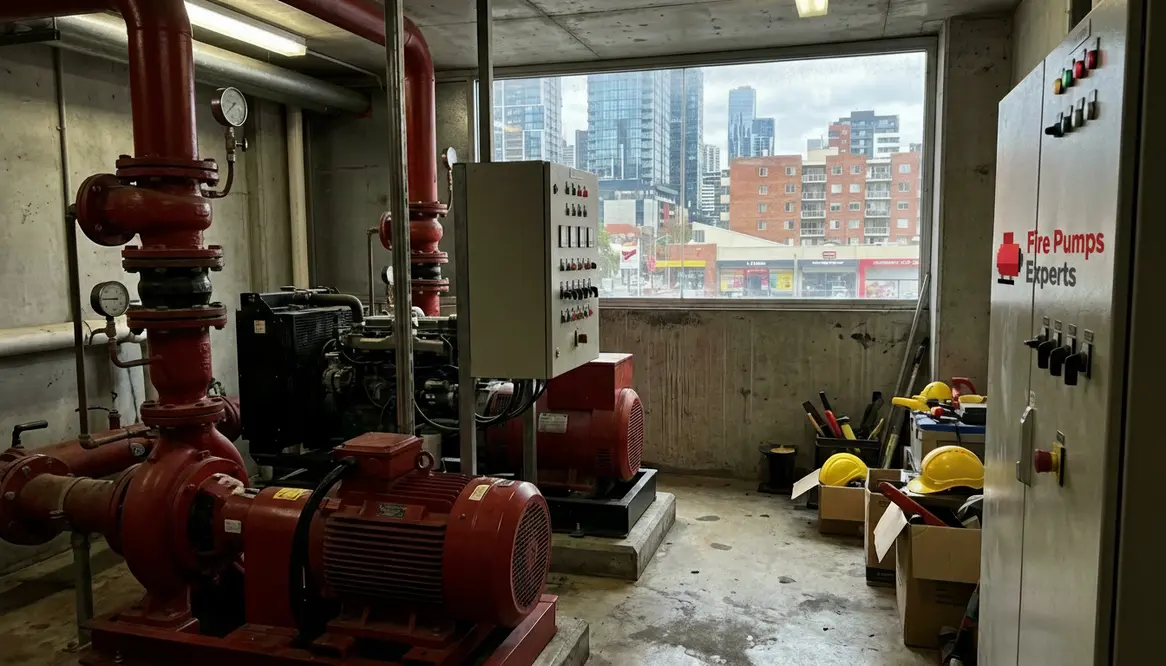
Fire Pump Mixed Use Australia Systems Guide
I have spent years walking through plant rooms, basements, and rooftops across Sydney, Melbourne, and Brisbane, listening to the quiet hum that keeps buildings safe. In the world of fire pump mixed use Australia, there is no room for guesswork. These systems sit at the heart of complex commercial and industrial properties where offices, retail, and residential towers share walls, risks, and responsibilities. And while they rarely get applause, they are the closest thing a building has to a superhero. No cape, just pressure and timing.
What makes fire pump systems critical in mixed use developments?
In mixed use developments, everything overlaps. You have retail foot traffic downstairs, corporate offices mid level, and sometimes hospitality or logistics operations layered in between. Because of that, fire risk behaves differently. It moves faster, spreads unpredictably, and demands a coordinated response.
That is where I see fire pump systems step in with quiet authority. They ensure consistent water pressure across vast floor areas, even when demand spikes. Moreover, they support sprinkler systems, hydrants, and hose reels simultaneously. Without that reliability, even the best designed fire strategy starts to wobble.
And honestly, relying on gravity alone in a 40 level building is like expecting your morning coffee to brew itself. Admirable optimism, but not practical.
Designing fire pump mixed use Australia systems for complexity
Design is where things either come together beautifully or fall apart in slow motion. I always approach these systems with a clear mindset. Every building tells a different story, and the fire pump setup needs to match that narrative.
First, I look at zoning. Mixed use developments often require separate pressure zones to ensure even coverage. Then, I consider redundancy. Because if one pump fails, another must take over without hesitation. After that, I examine peak demand scenarios, not just average use.
Additionally, Australian standards require strict compliance, and rightly so. However, I have seen projects that technically meet code yet struggle in real world conditions. That is why I push for designs that go beyond minimum requirements.
It is a bit like casting a movie. You do not just hire actors who can read lines. You hire the ones who can carry the story when things get intense. Fire pumps need that same level of performance under pressure.
How do fire pumps perform under real operational stress?
Here is the truth. Systems do not fail during inspections. They fail during chaos. So I always think about worst case scenarios.
When multiple sprinkler zones activate, when hydrants are in use, and when power fluctuations occur, the fire pump system must respond instantly. Therefore, performance testing becomes essential. I have seen facilities run simulations that mimic full load conditions, and the difference is night and day.
Moreover, maintenance plays a huge role. Even the best system will degrade without regular servicing. Seals wear down, controllers drift, and diesel backups need attention. So I always say, a fire pump system is not a set and forget asset. It is more like a high performance engine. Ignore it, and it will remind you at the worst possible moment.
Key components I prioritize in modern systems
Reliability first
- Electric and diesel pump redundancy
- Automatic transfer switches
- Independent water supply assurance
- High quality control panels
Performance focus
- Pressure stability across zones
- Fast system response time
- Energy efficient operation
- Smart monitoring integration
While these elements may sound technical, they all serve one purpose. Keeping people safe while protecting high value commercial assets. And in major Australian cities, where property value climbs as fast as the skyline, that protection matters.
Fire pump mixed use Australia compliance and local standards
Compliance in Australia is not just a box ticking exercise. It is a layered system of national standards, local codes, and performance expectations. I always align designs with AS 2941 and related fire safety regulations. However, I also factor in site specific challenges such as water authority requirements and building height classifications.
Furthermore, local councils and fire authorities often have their own interpretations. So I stay proactive. Early consultation saves time, money, and a fair bit of stress.
It reminds me of navigating airport security. You can follow the rules, but if you miss one detail, suddenly you are unpacking everything in front of a very unimpressed audience.
Future trends shaping fire protection in urban developments
Things are changing, and I find that exciting. Smart monitoring systems now allow real time tracking of pump performance. Therefore, facility managers can spot issues before they become failures.
Additionally, sustainability is entering the conversation. Energy efficient pumps and optimized system designs are becoming more common. While safety remains the top priority, reducing operational costs is a close second.
I also see more integration with building management systems. That means faster diagnostics and coordinated emergency responses. In a way, these systems are becoming less like standalone equipment and more like part of a connected ecosystem.
And yes, it is starting to feel a bit like Tony Stark designed your plant room. Minus the AI sarcasm. Usually.
Where fire pump mixed use Australia systems fit into the bigger picture
In the middle of all this technology, planning, and compliance, the role of fire pump mixed use Australia solutions often gets underestimated. Yet when a building brings together retail, commercial, and residential spaces, these systems become the common thread holding the fire strategy together.
From podium shopping centres with towers above to large logistics hubs paired with office suites, a well planned fire pump mixed use Australia configuration turns a chaotic risk profile into something predictable and manageable.
FAQ
Below are some of the questions that come up most often when owners and facility managers start reviewing their protection strategy for complex fire pump mixed use Australia projects.
Final thoughts and next steps
When I look at modern developments, I see ambition reaching skyward. However, ambition needs structure, and safety systems provide that foundation. If you are planning or upgrading a commercial or industrial property, now is the time to evaluate your fire protection strategy. Work with specialists who understand the nuances of fire pump systems in complex environments. Because when it matters most, performance is not optional. It is everything.
If you want to explore reference material, you can start with resources such as https://firepumps.org, then bring those ideas back to your own site and team so the next upgrade to your fire pump mixed use Australia installation is grounded in both compliance and real world performance.