Fire Pump Residential Towers Australia Design Guide
I have spent years around tall buildings, and I can tell you this much: when you stand beneath a multi storey residential tower in Australia, you are really looking at a vertical city. And like any city, it needs protection. That is where fire pump residential towers Australia design steps in, quietly waiting in the background like a good bodyguard who never asks for applause. Today, I will walk you through how I approach fire pump systems for these towering structures, and yes, I promise to keep it more engaging than watching paint dry on a sprinkler pipe.
How do I design fire pump systems for tall residential buildings in Australia?
I start with one simple truth: water does not like climbing. Gravity is not impressed by your architectural ambitions. Therefore, I design fire pump systems that overcome this stubborn fact with precision and reliability.
First, I calculate the required flow and pressure based on building height, hazard classification, and local codes such as AS 2419 and NCC requirements. Then, I consider the worst case scenario. Because let us be honest, fires rarely show up at convenient times or locations.
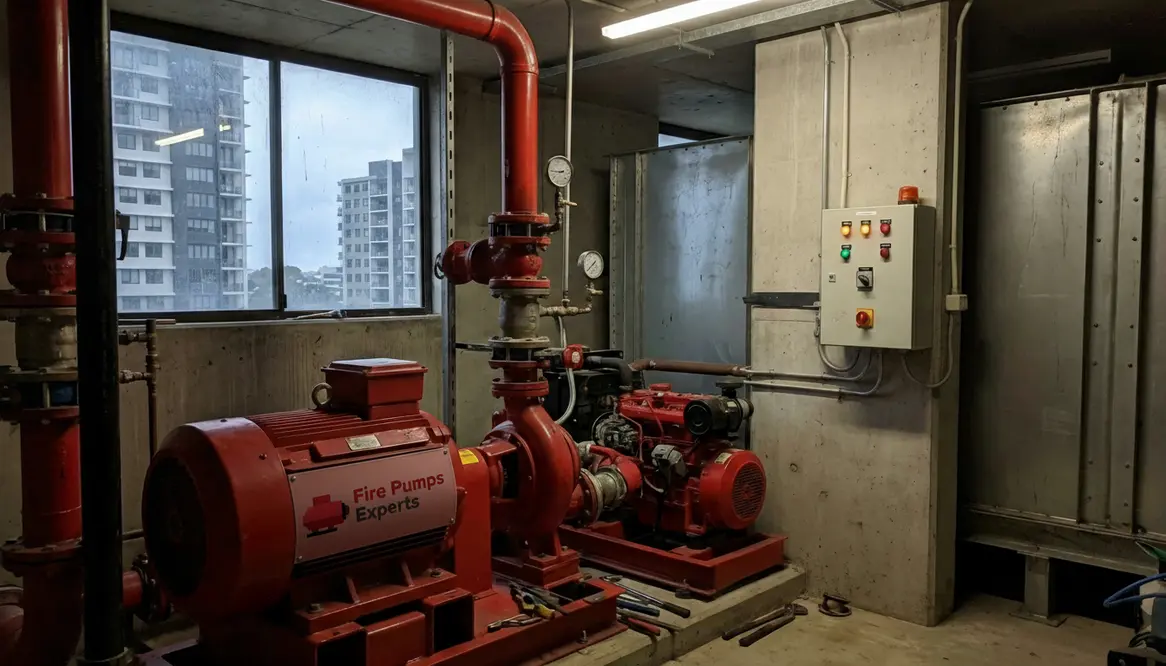
Next, I select pumps that can maintain pressure across multiple levels. Typically, I use a combination of duty and standby pumps, ensuring redundancy. Because if one pump decides to take the day off, the other needs to step in like a seasoned understudy.
Finally, I align the system with fire brigade intervention points. After all, the system must work with firefighters, not against them.
Understanding pressure zoning in fire pump residential towers Australia
As buildings rise higher, pressure becomes both a friend and a problem. Too little pressure, and water never reaches the upper floors. Too much, and you risk damaging pipes or turning a sprinkler head into a tiny rocket launcher.
So, I divide the building into pressure zones. Each zone operates within safe limits, supported by booster pumps or pressure reducing valves. This approach ensures consistent performance across all levels.
Moreover, zoning improves system control. If an incident occurs on level 20, I do not need to stress level 2. It is a bit like having separate playlists for different moods. You do not blast heavy metal during a meditation session. Usually.
Core components I rely on for performance and compliance
Every reliable system shares a few essential parts. I choose each carefully, because cutting corners here is like bringing a spoon to a sword fight.
Pump units
Electric and diesel pumps provide redundancy and flexibility.
Controllers
They manage automatic start and monitor system health.
Water storage
Dedicated tanks ensure supply even during outages.
Pipework
Sized correctly to reduce friction loss and maintain flow.
Valves
Isolation and control valves allow maintenance without full shutdown.
Monitoring systems
Remote alerts keep operators informed in real time.
Additionally, I always ensure compliance with Australian Standards. Because while creativity is welcome in design, compliance is not optional. It is the law, and frankly, a very sensible one.
Why redundancy is non negotiable in high rise systems
If there is one hill I will gladly stand on, it is this: redundancy saves lives. I design systems with backup power, backup pumps, and fail safe controls.
For example, I often include diesel driven pumps alongside electric ones. So, if the power grid fails during a fire, the system keeps running. It is like having both coffee and tea in the morning. You are prepared for any mood.
Furthermore, I test these systems under real conditions. Not theoretical scenarios. Real flow, real pressure, real performance. Because assumptions have no place in fire protection.
Smart design considerations for Australian high rise environments
Australia presents unique challenges. Climate, water supply variability, and urban density all play a role.
Therefore, I account for temperature extremes that can affect pump performance. I also consider water authority requirements, which can vary between states.
In coastal cities, corrosion becomes a concern. So, I specify materials that can handle the environment. Because no one wants their fire system aging faster than a banana in the sun.
Additionally, I integrate systems with building management platforms. This allows real time monitoring and faster response. In modern towers, smart systems are not a luxury. They are expected.
Common mistakes I avoid in fire pump design
I have seen enough designs to know where things go wrong. And trust me, they go wrong in surprisingly creative ways.
One common mistake is undersizing pumps. It might look fine on paper, but in practice, it fails under demand. Another issue is poor layout, leading to pressure loss and inefficient flow.
Also, ignoring maintenance access is a classic oversight. If technicians cannot reach the equipment easily, maintenance gets delayed. And delayed maintenance is just trouble waiting patiently.
So, I design with the full lifecycle in mind. Installation, operation, and long term upkeep all matter equally.
FAQ about fire pump systems in residential towers
Conclusion
Designing fire pump systems for multi storey residential towers is not just about meeting codes. It is about creating a system that performs under pressure when it matters most. If you are planning or upgrading a major property, I encourage you to take a closer look at your fire protection strategy. Work with specialists who understand complexity, compliance, and long term reliability. Because when safety is on the line, good enough is never good enough.