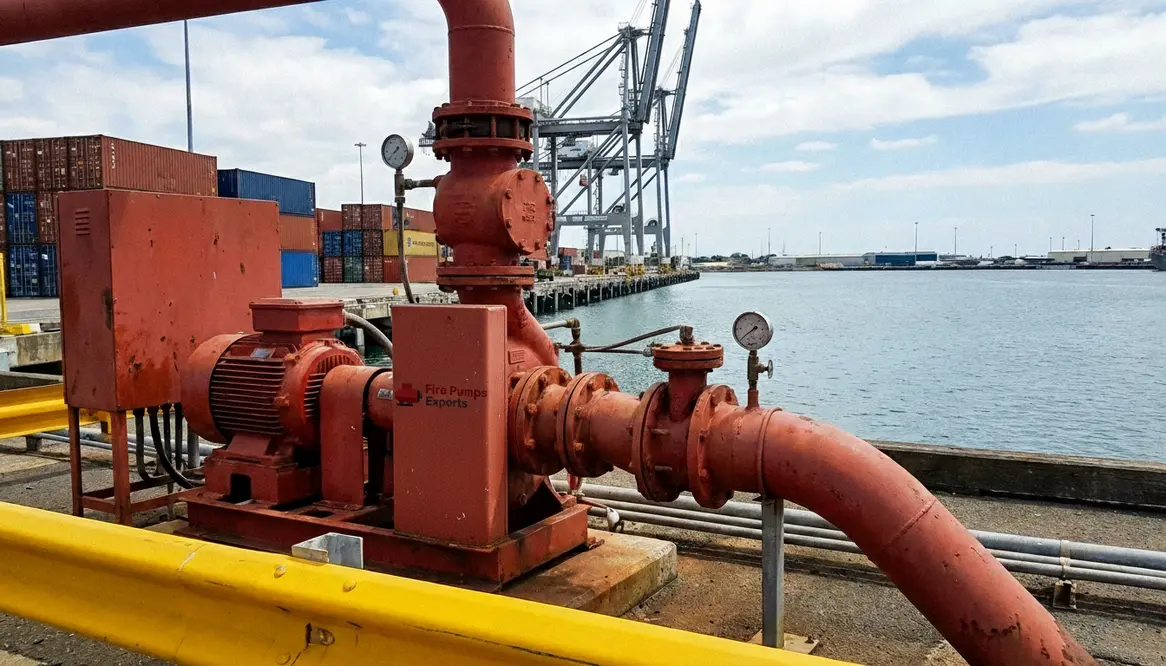
Port Fire Pump Systems Australia Selection Guide
I have spent years around waterfront infrastructure, and I can tell you this much right away: when it comes to port fire pump systems Australia, there is no room for guesswork. In cities like Sydney and Melbourne, where ports hum day and night, fire protection is not just compliance. It is survival. And yet, choosing the right fire pump often feels like trying to pick the best coffee in Melbourne. Everyone has an opinion, and most of them are strong.
So let me walk you through it, calmly and clearly, with a bit of honesty and maybe a chuckle or two along the way.
What Makes Fire Pump Selection Different for Ports in Sydney and Melbourne
Ports are not your typical commercial sites. They are sprawling, complex, and constantly moving. Containers stack high, fuel flows through pipelines, and heavy equipment operates around the clock. Because of this, I always start by looking at risk density and layout.
In Sydney, space constraints and older infrastructure often require retrofitting solutions. Meanwhile, Melbourne’s larger port areas allow more flexibility but introduce longer pipe runs and pressure challenges. Therefore, the pump must deliver consistent pressure across wide distances.
Additionally, saltwater exposure plays a major role. Corrosion is not just a nuisance. It is a silent saboteur. So I always recommend materials and coatings designed for marine environments. Otherwise, your shiny new pump could age faster than a banana in the sun.
How Do I Choose the Right Fire Pump Capacity for a Port Facility?
I get this question a lot, and the answer is refreshingly straightforward. I start with hazard classification, then calculate flow and pressure requirements based on the worst case scenario.
For port facilities, that usually means high demand systems. Think large monitors, hydrants, and sometimes foam systems. Consequently, I lean toward pumps that can handle high flow rates without breaking a sweat.
Moreover, redundancy is non negotiable. If one pump fails, another must take over instantly. Because in a port, downtime is not just inconvenient. It is expensive and dangerous.
And yes, I always remind clients that bigger is not always better. Oversizing a pump can lead to inefficiencies and unnecessary costs. It is like bringing a firehose to water your houseplants. Impressive, but not exactly practical.
Key Components I Always Prioritize in Port Fire Pump Systems Australia
When I evaluate port fire pump systems Australia, I focus on reliability, durability, and control. These are not optional features. They are the backbone of the system.
Here is how I break it down:
Mechanical Strength
I look for pumps built with corrosion resistant materials and robust seals. Marine environments demand it.
Driver Type
Diesel engines are often preferred because they operate independently of electrical failures. And let’s be honest, power outages do not send calendar invites.
Control Systems
Modern controllers provide real time monitoring and automatic start. This ensures immediate response when every second counts.
Maintenance Access
If a system is hard to service, it will not get serviced properly. Accessibility is key.
Each of these elements works together. If one falls short, the entire system feels it.
Design Considerations for Large Scale Port Infrastructure
Designing for ports requires a big picture mindset. I always consider hydraulic efficiency first. Long pipe runs can cause pressure drops, so I account for friction losses early in the design.
Then there is zoning. Large ports often need multiple pump zones to maintain adequate pressure throughout the site. This ensures that even the farthest hydrant performs as expected.
Another factor is integration. Fire pumps must work seamlessly with existing fire protection systems, including alarms and suppression networks. Otherwise, you end up with a system that looks great on paper but struggles in real life.
And yes, compliance matters. Australian standards set strict guidelines, and for good reason. They ensure consistency and safety across all major infrastructure.
Common Mistakes I See and How to Avoid Them
Over the years, I have seen a few recurring mistakes. Some are small. Others are… memorable, for all the wrong reasons.
First, underestimating demand. This leads to pumps that cannot meet peak requirements. Secondly, ignoring environmental factors like salt exposure. That is a shortcut to early failure.
Another issue is poor installation. Even the best pump will fail if installed incorrectly. Alignment, foundation, and piping all matter.
Finally, skipping routine testing. Fire pumps are not decorative pieces. They need regular checks to ensure they perform when called upon. Think of it as a rehearsal before the big show, except the stakes are much higher.
FAQ: Fire Pump Selection for Port Facilities
The right choices for port fire pump systems Australia often come down to understanding site-specific risks, environmental exposure, and how all components work together when it matters most. These common questions tend to come up whenever ports are upgrading their protection.
Final Thoughts and Next Steps
Choosing the right fire pump is not just a technical decision. It is a commitment to safety, reliability, and long term performance. If you are planning or upgrading port fire pump systems Australia, I encourage you to work with specialists who understand the scale and complexity of port infrastructure. The right system will protect assets, operations, and lives. And in this line of work, that is the only outcome that really matters.