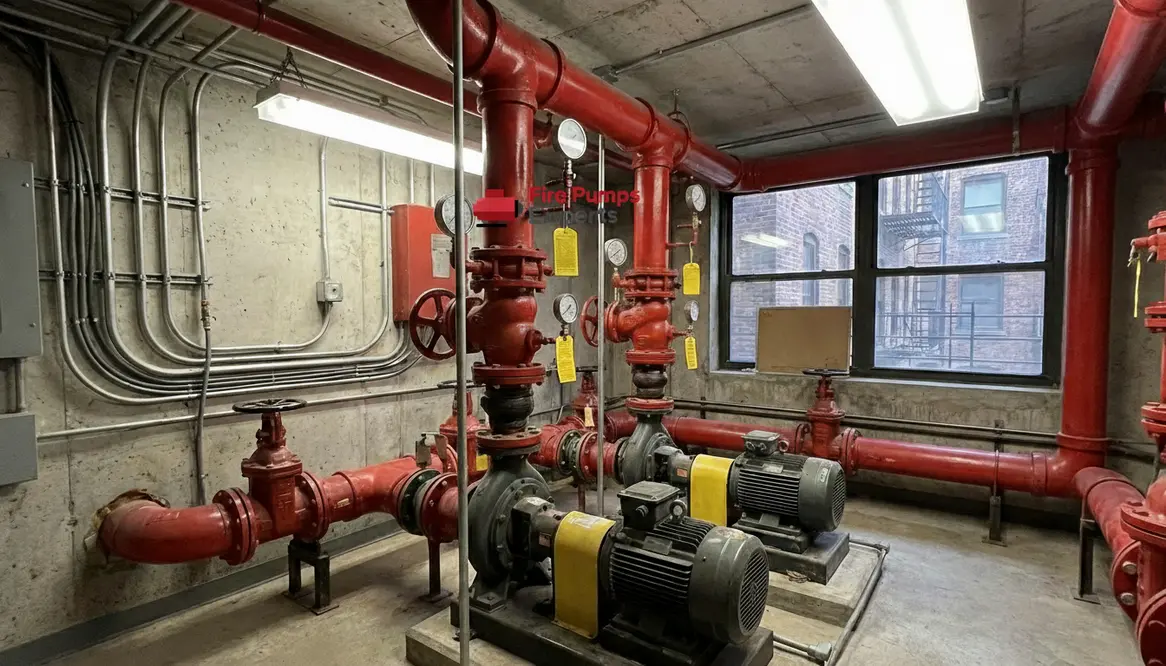
Fire Pump Projects in New York, Chicago, and Boston
I have spent years around fire protection systems, and if there is one thing I have learned, it is this: not all cities play by the same rules. A Las Vegas fire pump inspection might feel straightforward under dry skies and predictable infrastructure. However, when I step into New York, Chicago, or Boston, the story changes fast. These cities demand more attention, more planning, and frankly, a bit more respect. And yes, they will humble you if you come in thinking one size fits all.
So, let me walk you through why these major markets require a sharper eye, a steadier hand, and maybe a strong cup of coffee before you even open the plans.
Big City Fire Pump Reality Check
Fire pump projects in New York, Chicago, and Boston do not politely follow the same pattern as that comfortable Las Vegas fire pump inspection you might be used to hearing about. They fight back with height, age, weather, and layers of local requirements that demand respect, patience, and a very detailed game plan.
From Straightforward to Highly Specific
Instead of one template that fits every market, each of these cities forces you to rethink assumptions. The same fire pump logic that glides through a smoother Las Vegas fire pump inspection has to be reworked when high rises, historic districts, lake driven pressures, and brutal winters enter the scene.
Why Do Fire Pump Projects in New York, Chicago, and Boston Require Specialized Planning?
These cities are layered like a good mystery novel. Old infrastructure sits beside modern systems, and neither wants to cooperate without a proper introduction. In New York, for example, I deal with vertical challenges. Buildings stretch skyward, and fire pumps must deliver pressure that feels almost heroic.
Meanwhile, Chicago brings water supply variables thanks to its proximity to Lake Michigan and fluctuating municipal pressure. Boston, on the other hand, mixes historic preservation with modern fire codes. That combination can feel like trying to install a high performance engine in a classic car without scratching the paint.
As a result, I cannot rely on standard approaches. Instead, I adapt designs, anticipate resistance from aging infrastructure, and coordinate closely with local authorities. Otherwise, the project stalls faster than a sitcom reboot nobody asked for.
Urban Density Changes Everything
In these cities, space is a luxury. I have walked into mechanical rooms that felt more like storage closets with ambition. Therefore, every fire pump installation must account for tight footprints, limited access points, and complex routing.
Additionally, transporting equipment becomes its own operation. Getting a pump into a high rise in Manhattan is not just delivery. It is choreography. Timing, permits, street closures, and coordination all matter.
Because of this, I often plan logistics as carefully as the system itself. A well designed fire pump system means nothing if it cannot physically reach its destination.
New York Focus
High rise pressure demands
Strict code enforcement
Complex retrofits
Chicago and Boston Focus
Variable water supply
Cold weather concerns
Historic building constraints
Code Compliance Is Not Just a Checklist
I have learned that code compliance in these المدن is more like a conversation than a checklist. Inspectors expect precision, and they often interpret standards with local nuance.
For instance, while a fire pump system evaluation similar to a Las Vegas fire pump inspection might pass with clear documentation, cities like Boston often require deeper verification. They want proof that systems integrate with legacy infrastructure.
Moreover, Chicago inspectors pay close attention to redundancy and reliability during winter months. Frozen components are not just inconvenient. They are unacceptable.
Therefore, I approach compliance as an ongoing process. I engage early, clarify expectations, and document everything. Because in these cities, assumptions can cost time and money.
Water Supply and Pressure Are Never Predictable
Here is where things get interesting. In theory, water supply should be consistent. In reality, it behaves more like a moody actor.
New York systems often depend on a mix of municipal supply and gravity tanks. Chicago introduces lake based variables. Boston can surprise me with pressure drops tied to older distribution systems.
So, I test aggressively. I model different demand scenarios. I build in safety margins that might seem excessive elsewhere but feel necessary here.
Because when a system activates, there is no room for guesswork. It either performs or it does not. And trust me, nobody wants to explain a failure during an emergency.
Coordination with Stakeholders Is Half the Battle
I never work alone on these projects. Engineers, contractors, facility managers, and inspectors all play critical roles. Therefore, communication becomes my most valuable tool.
In large commercial and industrial properties, downtime is expensive. Every adjustment must be planned to avoid disruption. Additionally, building owners expect systems that meet code without compromising operations.
So, I hold regular coordination meetings, align expectations, and resolve conflicts early. It sounds simple, but in cities where schedules move fast, even small delays can ripple outward.
Think of it like assembling a cast for a blockbuster film. Everyone must hit their mark, or the whole production falls apart. The same care you would bring to a critical Las Vegas fire pump inspection needs to be multiplied when juggling dense schedules and complex fire pump upgrades in these major markets.
Behind the scenes, I also lean on trusted resources for broader water based system strategy. One useful overview is the NFPA 25 maintenance breakdown from Kord Fire Protection, which explores testing and upkeep for fire pumps and related equipment in depth at https://kordfire.com/nfpa-25-overview-complete-water-based-fire-protection-systems-maintenance-breakdown/. It is the kind of reference that helps keep big city projects grounded in solid standards.
Climate and Age Add Hidden Challenges
Boston and Chicago winters do not play around. Freezing temperatures can damage pumps, pipes, and control systems. Therefore, I design with insulation, heating, and redundancy in mind.
At the same time, many buildings in these cities are decades old. Integrating new fire pump systems into aging infrastructure requires creativity and precision.
I often encounter undocumented modifications, outdated materials, and limited access points. However, instead of forcing solutions, I adapt. I respect the building while upgrading its safety.
Because at the end of the day, these systems protect lives and assets. That responsibility deserves more than a quick fix.
FAQ: Fire Pump Projects in Major Cities
Conclusion
When I approach fire pump projects in New York, Chicago, or Boston, I bring more than tools. I bring strategy, patience, and a deep respect for complexity. If you manage a commercial or industrial property in these المدن, now is the time to act. Let us evaluate your system, align it with local demands, and ensure it performs when it matters most.
Maybe you are comparing your own infrastructure to something as seemingly simple as a Las Vegas fire pump inspection and wondering whether your setup could survive the scrutiny of a dense East Coast or Midwest market. That question alone is a good reason to bring in experienced eyes before the next code cycle, tenant improvement, or expansion forces your hand.
Because preparation today prevents problems tomorrow, and peace of mind is always worth the effort.