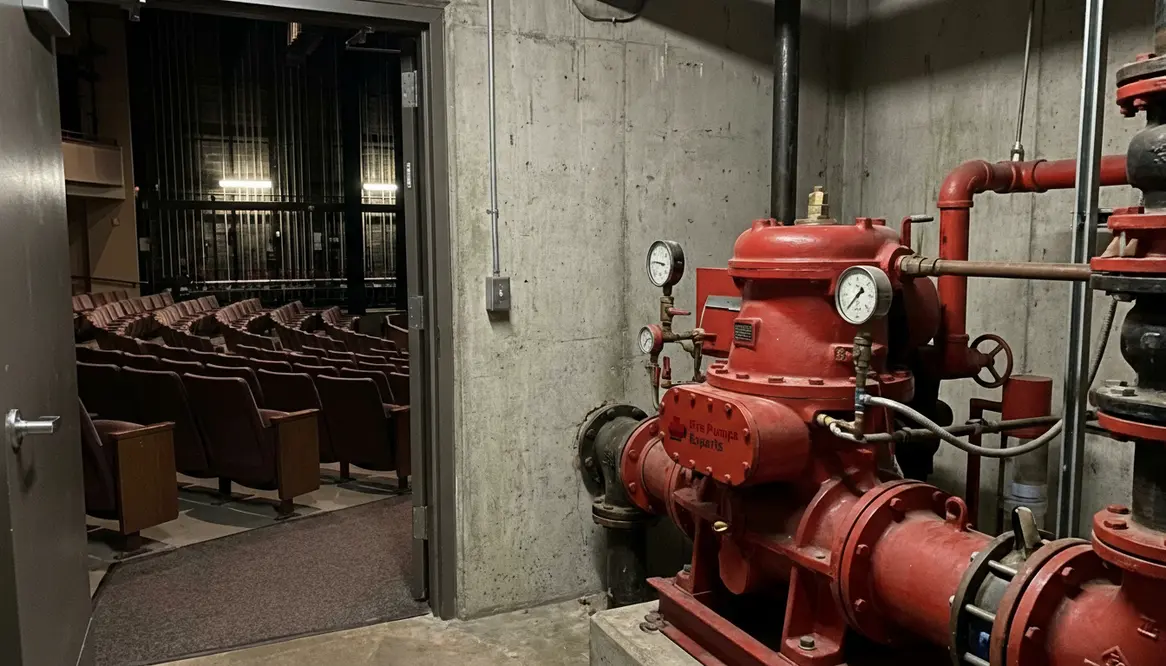
Fire Pump Requirements for Public Auditoriums Guide
I have stood in enough large venues to know one simple truth. When the lights dim and the crowd leans forward, safety should never fade into the background. It should stand quietly behind every seat, every aisle, every exit sign. That is where Fire Pump Requirements for Public Auditoriums come into play. Within the first moments of an emergency, these systems decide whether a situation stays controlled or turns into chaos. So today, I will walk you through fire safety for large assembly venues in a way that feels less like a manual and more like a conversation you actually want to stay in.
Why fire safety in large venues feels like directing a blockbuster
When I think about large assembly spaces, I picture a movie set. You have lighting, sound, movement, and hundreds or thousands of people who expect everything to work flawlessly. However, unlike a film, there is no second take when fire safety fails.
Because of that, every system must operate in sync. Sprinklers, alarms, exits, and especially fire pumps must respond instantly. Moreover, these venues often include complex layouts with multiple levels, backstage areas, and mechanical rooms. That complexity increases risk if systems are not coordinated.
So while it may look like organized chaos during a sold out event, behind the scenes it should feel like a calm, well rehearsed orchestra.
Fire Pump Requirements for Public Auditoriums and why they matter
Let me put it plainly. Without the right fire pump system, your sprinklers are just expensive decorations. Fire pumps ensure water moves with enough pressure to reach every corner of a large facility.
In commercial and industrial scale venues, meeting Fire Pump Requirements for Public Auditoriums means more than installing equipment. It means designing systems that account for building height, occupancy load, and water supply reliability. Additionally, redundancy plays a key role. If one component fails, another must step in without hesitation.
I have seen facilities treat fire pumps like a box to check. That is a mistake. These systems demand regular testing, proper installation, and alignment with code. Otherwise, you are trusting luck in a situation where luck tends to disappear quickly.
How do I design fire safety for high occupancy buildings?
I start with one guiding idea. People do not think clearly in emergencies. Therefore, the building must do the thinking for them.
First, I focus on clear egress paths. Wide, well marked exits reduce hesitation. Next, I integrate alarm systems that are loud enough to cut through crowd noise but clear enough to avoid confusion. Then, I ensure fire suppression systems activate quickly and cover all zones.
Equally important, I coordinate these systems with fire pump performance. If water pressure drops at the wrong moment, even the best design falls apart. So I always verify that pump capacity matches real world demand, not just theoretical numbers.
And yes, I also think about human behavior. People will try to grab their belongings. Someone will insist on finishing their drink. Planning for those delays is part of the job.
Core systems that keep large venues protected
Detection and alarms
Early detection buys time. Advanced sensors and integrated alarms ensure quick response across large areas.
Suppression systems
Sprinklers, standpipes, and specialized systems must cover every critical zone without gaps.
Fire pumps
These systems maintain pressure and flow, especially in multi level or high capacity buildings. Meeting Fire Pump Requirements for Public Auditoriums means ensuring that pressure stays stable even when every sprinkler head that matters opens at once.
Emergency power
Backup generators keep safety systems running when the main power fails, so pumps, alarms, and lighting stay online when they are needed most.
When these elements work together, the building becomes proactive rather than reactive. It does not wait for disaster. It anticipates it.
Common mistakes I see in commercial assembly properties
Now, here is where things get interesting. Even well funded venues make avoidable mistakes.
For example, some underestimate water demand during peak occupancy. Others install fire pumps but neglect routine testing. And then there are those who treat maintenance logs like optional reading. Spoiler alert. Inspectors do not share that opinion.
Additionally, poor coordination between contractors can lead to mismatched systems. One team installs sprinklers, another installs pumps, and somehow they never quite speak the same language. The result is a system that looks complete but performs inconsistently.
Fixing these issues early saves money, stress, and potentially lives. It also keeps your facility compliant and operational without surprise shutdowns.
Fire Pump Requirements for Public Auditoriums in modern facilities
Today’s large venues are smarter and more complex than ever. Digital monitoring, automated controls, and remote diagnostics have changed how we manage fire safety. Still, the fundamentals remain the same.
Meeting Fire Pump Requirements for Public Auditoriums now includes integrating smart systems that provide real time data. This allows facility managers to detect issues before they become failures. Furthermore, modern pumps must align with evolving codes that reflect higher occupancy and more intricate building designs.
In other words, the technology has evolved, but the responsibility has only grown. You cannot rely on outdated systems in a modern venue. That is like bringing a flip phone to a live stream event. It technically works, but you are missing the point.
If you want deeper technical standards, resources such as https://firepumps.org can help you validate design choices against established criteria for Fire Pump Requirements for Public Auditoriums and similar high occupancy spaces.
FAQ about fire safety in large assembly venues
Conclusion
Fire safety in large assembly venues is not just a requirement. It is a responsibility that lives in every pipe, wire, and system behind the walls. When you invest in proper design, testing, and compliance, you protect more than property. You protect people. If you manage or operate a commercial venue, now is the time to review your systems, upgrade where needed, and ensure your fire pump strategy meets real world demands. Because when the moment comes, preparation is everything.