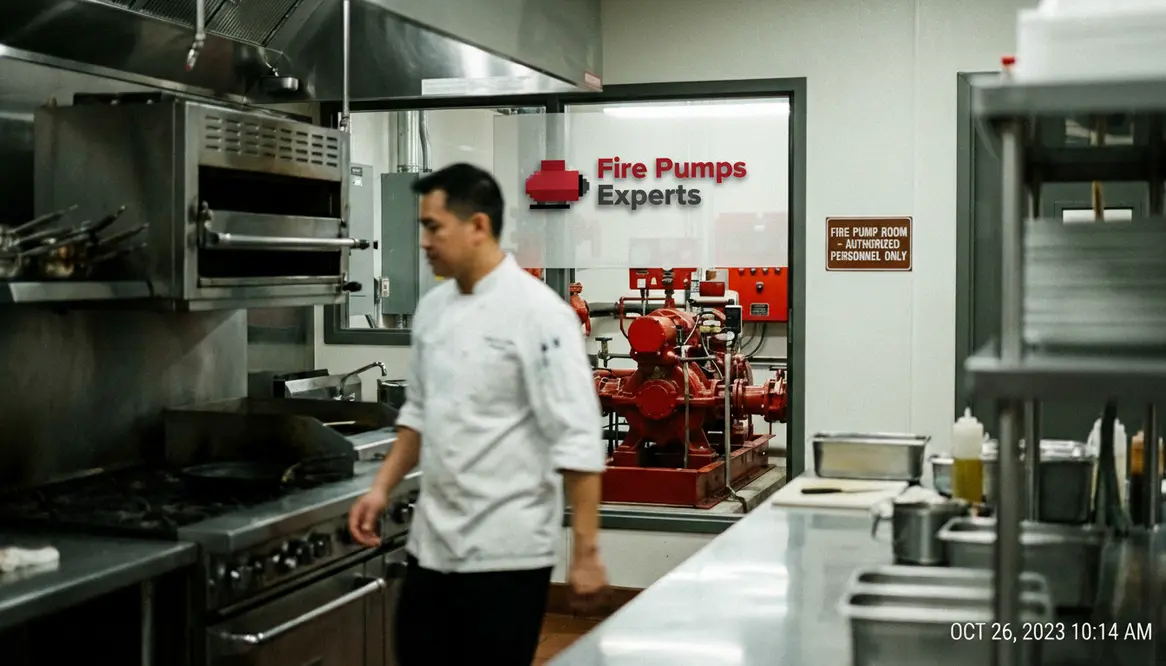
Fire Pump Requirements for Restaurants and Kitchens
I have spent years walking through large commercial kitchens where the heat is high, the pressure is higher, and the margin for error is almost zero. When we talk about Fire Pump Requirements for Restaurants, we are not discussing a luxury add on. We are talking about a system that quietly stands ready when everything else goes wrong. In larger food service occupancies, where open flames, grease, and dense layouts collide, the right fire pump setup is not just smart, it is essential. And yes, if fire safety had a superhero, the fire pump would be the calm, unshakable one who never needs a cape.
What makes large food service facilities different from standard buildings?
I get this question often, and the answer is simple. Scale changes everything. A small café might manage with basic suppression systems, however a multi level commercial kitchen, hotel banquet operation, or industrial food production space brings a different level of risk.
First, there is a higher fuel load. Oils, grease, and packaging materials build up fast. Second, there is complexity. Long pipe runs, multiple cooking zones, and storage areas stretch fire protection systems thin. Therefore, standard water pressure from municipal supplies often falls short. That is where fire pumps step in, boosting pressure and ensuring water reaches every corner when it matters most.
And let’s be honest, relying on weak water pressure in a high risk kitchen is like bringing a squirt gun to a dragon fight. It is not going to end well.
Fire Pump Requirements for Restaurants in high volume operations
When I evaluate large food service properties, I focus on how fire pump systems support sprinkler and standpipe systems under peak demand. Codes typically require that systems deliver enough pressure and flow simultaneously across multiple hazard zones. In larger kitchens, that demand spikes quickly.
Moreover, fire pump sizing becomes critical. It is not just about having a pump, it is about having the right one. Electric or diesel driven pumps must match the building’s hydraulic calculations. In many cases, redundancy is also required, especially in facilities that cannot afford downtime.
Additionally, placement matters. I always recommend installing pumps in protected, accessible rooms that allow for maintenance without disrupting operations. Because let’s face it, no chef wants a service interruption during dinner rush because someone forgot about pump access clearance.
Why high volume restaurants cannot ignore pressure and flow
The more simultaneous cooking, dishwashing, and cleaning operations occur, the more strain is placed on both water supply and fire protection infrastructure. Fire Pump Requirements for Restaurants in these environments recognize that firefighting water must perform reliably even when the rest of the building’s water demand is peaking.
How do I size a fire pump for a large commercial kitchen?
I approach sizing with a mix of data and experience. First, I look at the hazard classification of each area. Commercial cooking zones often fall under higher hazard categories due to grease and open flame exposure. Then, I calculate the required flow and pressure based on the most demanding scenario.
Next, I factor in system losses. Friction in pipes, elevation changes, and long distribution paths all reduce effective pressure. Therefore, the pump must compensate for these losses while still delivering adequate performance at the farthest point.
Finally, I coordinate with local codes and insurance requirements. Authorities having jurisdiction often set minimum standards, however many large commercial properties go beyond those minimums to ensure operational continuity. In other words, meeting code is the baseline, not the finish line.
Coordinating pump sizing with real kitchen operations
Sizing based only on drawings or static calculations can miss how the kitchen truly runs. When grills, fryers, combi ovens, and dishwashers are all pushing heat and steam, the consequences of underestimating demand become obvious. Fire Pump Requirements for Restaurants are most effective when they reflect worst case conditions, not best case assumptions.
Key design considerations I never overlook
System integration
Fire pumps must work seamlessly with sprinklers, standpipes, and suppression systems. A mismatch creates weak points.
Power reliability
Electric pumps need backup power, while diesel pumps require fuel management. Either way, failure is not an option.
Maintenance access
I always ensure there is room for inspection and testing. Tight spaces lead to neglected equipment.
Future expansion
Large food service facilities evolve. I plan systems that can handle increased demand without full replacement.
Testing and monitoring
Regular testing keeps pumps ready. Smart monitoring adds another layer of confidence.
Code alignment
I stay aligned with NFPA standards and local regulations to avoid compliance issues.
Translating design choices into everyday resilience
Each of these design decisions shapes how the building performs when alarms sound and visibility drops. Thoughtful Fire Pump Requirements for Restaurants recognize that the most impressive layout on paper means nothing if hoses sputter, valves stick, or pumps cannot sustain pressure when the kitchen is at full tilt.
Fire Pump Requirements for Restaurants and compliance realities
Staying compliant is not just about passing inspections. It is about ensuring real world performance under stress. I have seen systems that checked every box on paper yet struggled during live testing. That gap can be dangerous.
Therefore, I emphasize performance testing. Flow tests, pressure verification, and routine inspections keep systems honest. In addition, documentation matters. Clear records help facility managers track maintenance and prove compliance during audits.
Also, insurance providers often take a close look at fire pump systems in large food service environments. A well designed and maintained system can reduce risk profiles and potentially lower premiums. So yes, safety and cost savings can sit at the same table for once.
Compliance, documentation, and credible partners
From satisfying the authority having jurisdiction to keeping insurers comfortable, documentation and testing reports matter as much as the hardware itself. Resources such as https://firepumps.org can help clarify expectations, but the day to day reality lives in logs, inspection tags, and honest performance data.
FAQ about fire pumps in large food service buildings
Do all large restaurants need a fire pump?
Not all, but most large or high risk facilities require one when municipal pressure is insufficient.
What type of fire pump is best?
It depends on the building. Electric pumps are common, however diesel pumps provide reliability during power loss.
How often should fire pumps be tested?
Weekly or monthly checks are typical, with annual full performance testing.
Can one pump serve multiple kitchen areas?
Yes, if properly sized to handle the total demand across all zones.
What happens if a fire pump fails?
Water pressure drops, which can compromise the entire fire protection system.
Conclusion
If you manage or design a large food service facility, do not treat fire pumps as an afterthought. I encourage you to take a proactive approach, evaluate your system, and ensure it meets real world demands. The right design protects people, property, and operations. Reach out to experienced professionals who understand complex commercial environments and can guide you toward a reliable, compliant solution that stands strong when it matters most.