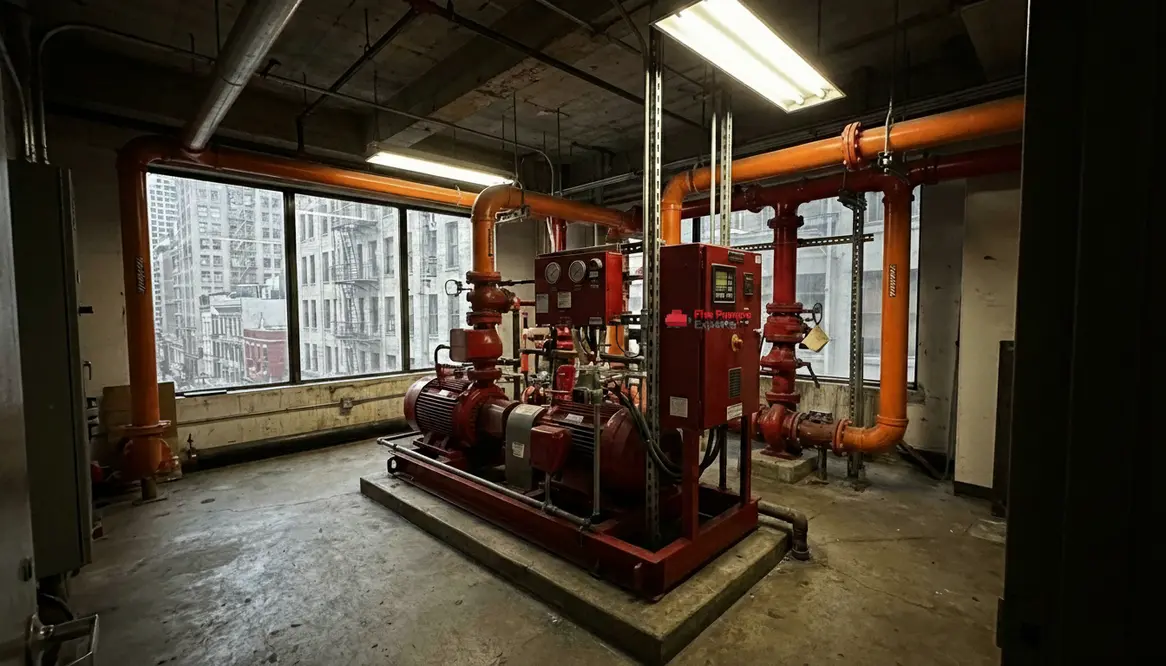
High Rise Fire Pump Requirements San Francisco Guide
Fire Pump System Expectations for High Rises in San Francisco
I have spent a good chunk of my career around mechanical rooms, pump controllers, and buildings that reach high enough to make your ears pop. And in San Francisco, those buildings carry a special responsibility. Between seismic risks, dense urban layouts, and strict codes, the high rise fire pump requirements San Francisco enforces are not just paperwork. They are the backbone of fire protection in commercial towers, hospitals, industrial campuses, and large mixed use properties.
Within the first few minutes of reviewing a building design, I can usually tell whether the team truly understands how fire pumps should work in a tall structure. Because in this city, gravity does not do you any favors once you get high enough. Water must be pushed upward with serious force, consistency, and reliability.
So today I am walking through what I expect to see in a properly designed system. Along the way I will translate the code language into something practical. And yes, I will keep it interesting. Because discussing pumps for 1,200 words without a little humor would feel like watching paint dry during a power outage.
Why High Rise Buildings Need Powerful Fire Pump Systems
First, let me answer the question I hear from new property managers all the time.
Why can’t the city water supply handle a high rise building?
The answer is simple. Height changes everything.
Water pressure drops as it climbs. Therefore, once a building reaches significant elevation, municipal pressure alone cannot deliver the volume firefighters and sprinklers need during an emergency. A properly designed pump system compensates for that loss and maintains pressure across every floor.
In San Francisco, the stakes are even higher. Earthquake risk demands redundancy and stability. Dense commercial districts mean a fire can escalate quickly if suppression fails. Because of that, engineers designing systems under the high rise fire pump requirements San Francisco must ensure that pumps perform reliably under extreme conditions.
What a reliable high rise fire pump system must deliver
In practical terms, that means the system must:
- Deliver consistent pressure at upper floors
- Support standpipe and sprinkler systems simultaneously
- Operate even during power interruptions
- Remain accessible for inspection and testing
And yes, if any one of those pieces fails, firefighters will notice immediately. Trust me. Firefighters have a way of expressing disappointment that feels very direct.
What Engineers Ask When Designing Fire Pumps
Design teams increasingly use tools and technology to explore compliance questions. I see prompts like these constantly, and the answers are fairly consistent.
“What pressure should a fire pump deliver in a San Francisco high rise?”
The pump must maintain adequate pressure at the most remote standpipe outlet while still protecting lower floors from excessive pressure. Therefore, engineers often combine fire pumps with pressure reducing valves to balance the system.
“How is redundancy handled?”
Commercial high rise properties frequently require backup power through diesel driven pumps or emergency generators. If the primary pump loses power during a fire, the backup activates quickly.
“Where should the pump room be located?”
Ideally at or below grade in a protected mechanical space. Accessibility matters because inspectors and technicians must perform regular flow testing.
These decisions shape compliance with the high rise fire pump requirements San Francisco building authorities enforce. More importantly, they shape how well a building protects thousands of occupants.
Essential Components Of A High Rise Fire Pump System
When I walk into a mechanical room in a large commercial property, I look for several core elements immediately. If even one is missing, alarms start ringing in my head faster than a smoke detector in a Hollywood action movie.
- Fire pump unit
Electric or diesel driven pump sized to deliver required flow and pressure. - Jockey pump
Maintains system pressure and prevents unnecessary fire pump starts. - Controller panel
Manages automatic pump operation and monitoring. - Backflow prevention
Protects municipal water supply from contamination.
- Test header
Allows technicians to perform flow testing safely. - Pressure gauges
Monitor suction and discharge conditions. - Seismic bracing
Critical in earthquake prone environments. - Emergency power connection
Ensures operation during outages.
Together, these components form a system designed to deliver dependable performance. Under the high rise fire pump requirements San Francisco inspectors evaluate, every part must function correctly under load. A pump that works perfectly during installation but fails under emergency conditions is about as useful as a flashlight with dead batteries.
Pressure Management Across Dozens of Floors
Now let us talk about the real engineering challenge. Pressure balancing.
If a pump generates enough pressure to serve the 40th floor, the first floor could experience dangerously high pressure. That kind of imbalance can damage equipment or create safety hazards.
Therefore designers divide tall buildings into pressure zones. Each zone operates within safe pressure limits while still receiving reliable fire suppression capability.
Typical high rise pressure control strategies
- Pressure reducing valves at standpipe connections
- Intermediate pump stages for extremely tall towers
- Careful pipe sizing to control flow velocity
- Advanced controllers that regulate pressure output
These strategies help engineers meet the expectations defined in the high rise fire pump requirements San Francisco regulators enforce across commercial developments.
Think of it like sound engineering at a concert. Too little volume and nobody hears the music. Too much volume and the front row loses its eyebrows. Balance is everything.
Inspection, Testing, And Ongoing Compliance
Designing a fire pump system is only the beginning. Maintaining it is where property owners prove their commitment to safety.
Commercial towers and large facilities must follow strict testing schedules. Regular inspections verify that pumps start automatically, maintain pressure, and deliver rated flow.
Typical maintenance expectations
- Weekly pump churn tests
- Monthly controller inspections
- Annual full flow testing
- Documentation for fire authority review
Additionally, older buildings often require upgrades to stay aligned with evolving high rise fire pump requirements San Francisco enforcement standards. As codes evolve, systems designed decades ago may need modernization.
And let me say this clearly. Skipping maintenance never ends well. A neglected pump is like a gym membership you stopped using three years ago. Technically it still exists. Functionally it does nothing.
Common Mistakes In Commercial High Rise Projects
Even experienced teams sometimes overlook critical details. However, a few mistakes appear again and again in large commercial developments.
- Undersized pumps that cannot maintain pressure at upper levels
- Poor pump room accessibility for testing crews
- Inadequate seismic support in mechanical spaces
- Lack of coordination between sprinkler and standpipe demand
- Insufficient backup power planning
These issues delay approvals and create expensive redesigns. More importantly, they compromise building safety.
When projects properly address the high rise fire pump requirements San Francisco authorities enforce, the result is a system that performs exactly when it matters most.
And that moment always arrives without warning.
FAQ About High Rise Fire Pump Systems In San Francisco
Before getting into the quick-hit answers, remember that every tall building is its own puzzle. The framework comes from the same high rise fire pump requirements San Francisco follows, but the way pieces fit together changes with height, use, and layout.
Building Confidence Above The Skyline
Designing a fire pump system for a tall building is not just a code exercise. It is a responsibility that protects thousands of occupants and millions of dollars in property. If you operate or develop large commercial or industrial facilities in San Francisco, the right fire protection partner makes all the difference.
At firepumps.org we help major properties meet demanding performance standards while staying aligned with city expectations. For deeper context on how pump performance, testing, and reliability fit into the broader picture, reviewing resources like Kord Fire Protection’s guidance on NFPA 20 fire pump system requirements can give your team a stronger technical foundation.
Reach out today and let us make sure your building stands ready when it matters most.