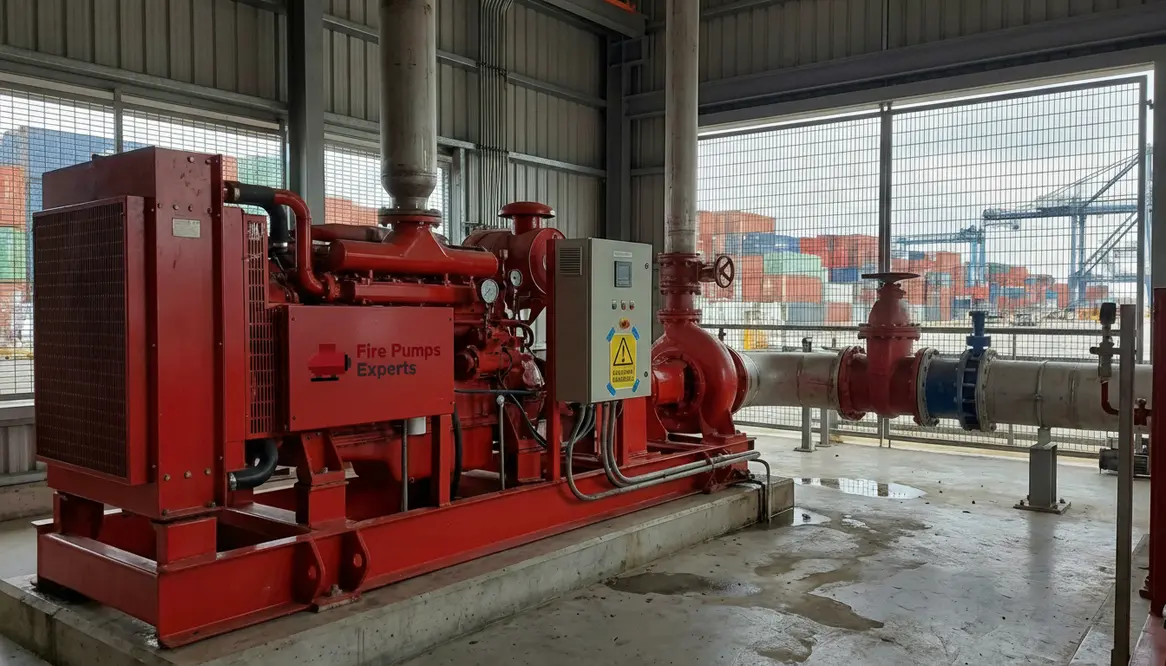
How Ports Rely on Industrial Fire Pump Systems
Ports and heavy industry run on motion. Cargo cranes swing containers through the air. Tankers glide in with millions of gallons of fuel. Conveyors hum like a steady heartbeat. Yet behind that motion sits something quieter and far more important: safety.
Right at the center of that safety net are industrial fire pump systems. A fire pump is a bit like the bass player in a band. You may not notice it during the show. However, if it disappears, the whole performance falls apart pretty fast.
Why Industrial Fire Pump Systems Sit Behind Every Safe Operation
In massive commercial environments such as shipping ports, refineries, logistics hubs, and manufacturing complexes, fire protection is not optional. It is a critical layer of infrastructure. These sites depend on industrial fire pump systems to turn static plumbing into a living, breathing safety backbone.
Today we are going to walk through how ports and industrial facilities depend on these powerful pump systems and why they remain one of the most important investments a large property can make in protecting people, equipment, and uptime.
Why Ports and Heavy Facilities Face Unique Fire Risks
First, let us talk about scale. A commercial port can stretch for miles. Warehouses stack high with cargo. Fuel depots sit beside chemical storage tanks. Meanwhile, ships carry everything from automobiles to flammable liquids. In other words, the fire load can be massive.
Because of that scale, fire response must happen immediately and with enormous water pressure. Municipal water alone rarely meets that demand. Therefore, ports rely on dedicated pumping infrastructure designed to move large volumes of water through hydrants and sprinkler networks.
When a fire starts in a residential building, firefighters bring hoses and connect to city hydrants. However, when a fire starts in a container terminal or petrochemical facility, the response must already be built into the property. The muscle has to live on site, ready to go before the first siren sounds.
That is where purpose built pumping stations come into play. These systems boost water pressure and ensure that suppression equipment across huge sites performs instantly. Without that force behind the pipes, even the best sprinkler network becomes little more than decorative plumbing.
Furthermore, industrial sites contain complex layouts. Pipelines run underground. Storage tanks stand hundreds of feet apart. Warehouses cover acres of floor space. As a result, the pumping infrastructure must move water across long distances without losing pressure.
In short, the larger the property, the more it depends on powerful pump driven fire protection. That is why serious operators lean on engineered industrial fire pump systems instead of hoping city pressure will save the day.
Industrial Fire Pump Systems Keep Water Moving When Seconds Matter
Here is the real job of industrial fire pump systems: they turn water supply into reliable fire fighting pressure.
When a detection system triggers or firefighters open a hydrant valve, the pump system immediately boosts flow throughout the network. Consequently, sprinklers discharge at the correct pressure and hydrants deliver strong streams capable of controlling large industrial fires.
Think of these pumps as the muscle behind the fire protection system. Pipes are the skeleton. Sprinklers are the hands. But the pump provides the strength that makes everything else matter.
Where the Water Comes From
These systems typically pull from one of several water sources:
- Dedicated fire water storage tanks
- Large reservoirs or basins on port property
- Municipal supply connections
- Seawater intake systems in coastal facilities
Redundancy When Things Go Wrong
Because reliability is everything, most facilities use multiple pump types working together. Electric driven units handle standard operation. Meanwhile, diesel driven pumps stand ready if electrical power fails. This redundancy ensures that water continues flowing even during severe emergencies.
When you store flammable materials near shipping traffic and heavy machinery, redundancy becomes your best friend. Industrial fire pump systems are engineered with that reality in mind.
What Questions Do Facility Managers Ask About Industrial Fire Pump Systems?
I hear a lot of the same questions from engineers and property managers responsible for large commercial sites. Here are some of the most common, answered the same way I would during a facility walkthrough.
1. Why not rely on the city water supply?
Simply put, municipal systems rarely provide the pressure or flow required for massive industrial protection zones. A container yard alone may require thousands of gallons per minute. Therefore, dedicated pumping infrastructure ensures consistent performance regardless of city demand or what is happening several miles away in the municipal grid.
2. Do these pumps actually activate often?
Thankfully, no. However, they are tested regularly because reliability matters more than frequency. Think of them like the emergency exit lights on an airplane. You hope they never turn on. Still, you definitely want them working if things get exciting.
3. Why are they designed so large?
The answer comes down to worst case scenarios. Engineers size pumps to handle maximum hazard conditions across the entire property. Consequently, they deliver enough pressure to support hydrants, monitors, and automatic sprinklers at the same time.
Industrial safety planning always assumes the toughest day possible. Properly engineered industrial fire pump systems are built to perform on that day, not just on a typical Tuesday.
The Hidden Engineering Behind Reliable Industrial Fire Pump Systems
What many people do not see is the engineering that supports these pump installations. Designing them requires deep coordination between fire protection engineers, mechanical specialists, and facility planners.
Hydraulic brains behind the brawn
First, hydraulic calculations determine how much pressure the system must produce. Engineers analyze pipe lengths, elevation changes, and friction losses across the network. Then they select pump sizes capable of overcoming those obstacles without starving distant hydrants or sprinklers.
Control logic and monitoring
Next comes the control logic. Automatic controllers monitor pressure levels throughout the system. If pressure drops, the pump starts immediately. As a result, water flow increases before flames gain ground.
In addition, industrial facilities integrate monitoring systems that report pump activity to central control rooms. That way operators know instantly when the system activates, switches from electric to diesel, or requires service.
Maintenance: the unglamorous hero
Maintenance also plays a major role. Commercial properties conduct weekly or monthly testing to verify pump operation. During these tests, technicians measure pressure, flow, and engine performance.
It may sound routine. Yet that routine is what keeps a facility prepared for the unexpected. If you want a deeper technical breakdown of how codes like NFPA 20 shape pump design and testing, resources from specialists such as Kord Fire Protection offer a useful dive into standards and compliance.
Where These Systems Deliver the Greatest Protection
Across major commercial and industrial properties, pumping infrastructure protects several high value zones. Each one carries unique hazards and operational challenges, but they all share one thing: a heavy dependence on industrial fire pump systems when things go wrong.
High risk areas
- Petroleum storage terminals
- Chemical processing units
- Bulk cargo warehouses
- Container yards
- Ship fueling stations
Why pump capacity matters
- Rapid fire growth from flammable liquids
- Large open spaces requiring long hose streams
- High stacked storage increasing sprinkler demand
- Multiple hydrants used at the same time
- Need for continuous water flow during extended response
Each of these zones requires dependable pressure and flow. Therefore, facility owners invest in dedicated pumping stations that support the entire suppression network.
It may not sound glamorous, but this infrastructure protects billions of dollars in equipment, cargo, and operations every single day. When you zoom out across an entire port, industrial fire pump systems quietly anchor the risk profile of the whole operation.
Reliability Is the Real Return on Investment
When executives evaluate safety infrastructure, they often focus on cost first. However, experienced operators see the bigger picture.
A major industrial fire can halt operations for months. Supply chains stall. Equipment suffers damage. Insurance claims climb quickly. More importantly, lives may be at risk.
Because of that reality, reliable fire protection becomes a strategic investment rather than a regulatory obligation. Industrial fire pump systems are not window dressing for an insurance audit; they are core infrastructure that keeps revenue moving.
What a strong pump program supports
- Compliance with commercial fire codes
- Protection of critical infrastructure
- Operational continuity
- Lower risk exposure for insurers
- Confidence for facility operators
In other words, they quietly protect the engine that keeps industrial operations running. And if you have ever watched a cargo ship the size of a city block glide into port, you quickly realize just how much is at stake and how much trust is being placed in those pumps humming away in their rooms.
FAQ About Fire Pump Systems in Ports and Industrial Facilities
Conclusion
At the end of the day, ports and industrial complexes depend on reliability. Cargo moves on strict schedules. Equipment runs around the clock. Safety systems must perform with the same discipline.
That is why professionally engineered pump infrastructure remains essential for large commercial properties. When industrial fire pump systems are designed, installed, and maintained correctly, they stand ready to push water wherever it is needed across sprawling, high risk sites.
If your facility depends on consistent protection and uninterrupted operations, investing in the right pumping system ensures that when pressure drops, the solution rises instantly to meet the moment. In a world built on motion, these quiet machines make sure that one unexpected spark does not bring everything skidding to a stop.