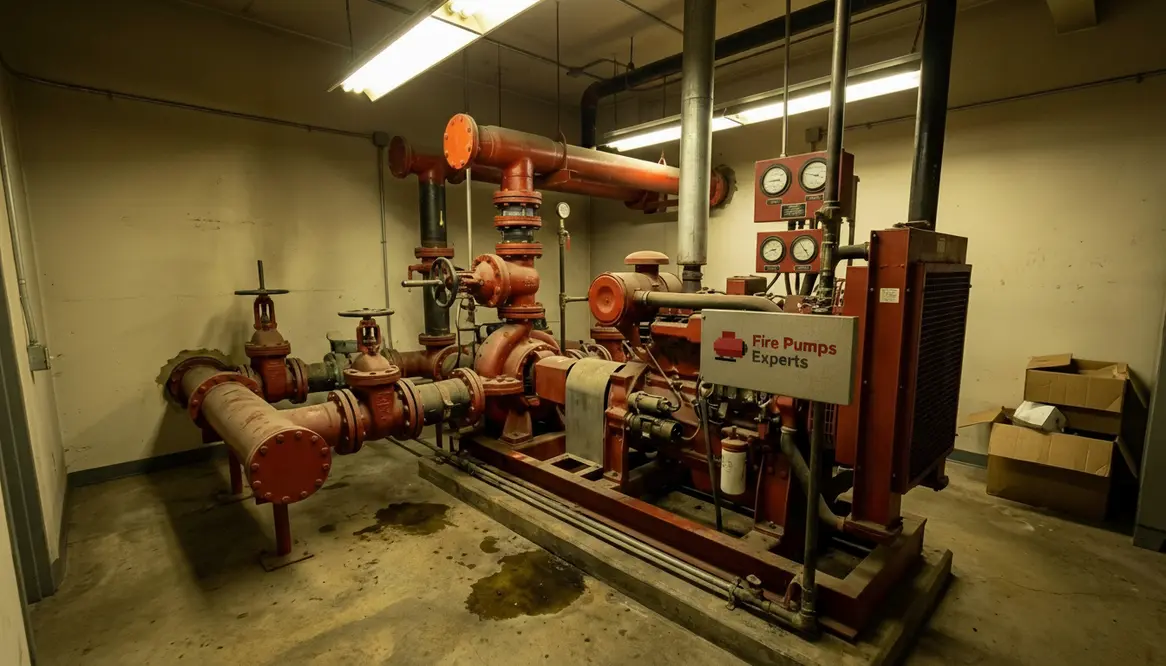
Fire Pump Maintenance Issues in Commercial Facilities
A practical walk through the loud, quiet, and occasionally chaotic mechanical rooms that decide whether your fire protection system is ready when it matters.
I have walked through more mechanical rooms than I can count. Some hum like a well tuned orchestra. Others sound like a garage band practicing after midnight. Somewhere in between lies the quiet truth about fire pump maintenance issues. They rarely arrive with flashing lights and dramatic music. Instead, they creep in slowly. A worn seal here. A lazy pressure switch there.
In commercial towers, manufacturing plants, hospitals, and massive distribution facilities, the fire pump system stands like the last line of defense. When everything else fails, that pump must start instantly and deliver water with authority. However, I have learned something over the years. Most failures are not mysterious engineering puzzles. They are simple maintenance problems that went unnoticed or ignored.
So today I want to walk you through the maintenance challenges I see most often inside large commercial and industrial properties. Think of this as a calm tour through the mechanical room. No panic. Just good insight and a little humor along the way.
Why Do Fire Pump Systems Fail When They Are Needed Most?
Let me answer this right away. Fire pump systems rarely fail because the equipment is poorly designed. Most pumps installed in commercial and industrial buildings are incredibly reliable. In fact, they are built like the tanks you might see rolling through an old war movie.
Instead, problems usually come from neglect. Maintenance gets delayed. Weekly tests become monthly tests. Monthly tests become something we promise to do “next quarter.”
Meanwhile, small mechanical issues quietly grow.
For example, I often see pressure sensing lines clogged with sediment. The pump controller thinks the system pressure is fine when it is not. When the building finally needs the pump, the system hesitates like a sleepy teenager being asked to mow the lawn.
Additionally, corrosion inside valves or piping can restrict water flow. On paper the pump is ready. In reality, the system is struggling.
And let me be honest. Water and metal have been arguing with each other for centuries. Corrosion always thinks it will win.
Common Fire Pump Maintenance Issues I See Inside Commercial Facilities
When I inspect large properties, a few problems appear again and again. They are not glamorous engineering mysteries. They are the mechanical equivalent of forgetting to change the oil in your car. Most of these fire pump maintenance issues start small and patiently wait for the worst possible moment to introduce themselves.
Controller problems
Controllers are the brain of the system. Yet I often find loose wiring, outdated settings, or alarms that have been quietly silenced.
Diesel engine neglect
Diesel driven pumps require fuel maintenance, battery checks, and cooling system care. Unfortunately, many facilities treat them like decorative furniture until inspection day.
Improper weekly churn tests
Testing without verifying pressure readings or flow data defeats the entire purpose. It becomes more of a ritual than a diagnostic tool.
Leaking packing or seals
A small leak might seem harmless. However, over time it damages bearings and reduces pump efficiency.
Blocked sensing lines
These tiny lines tell the controller when pressure drops. When they clog, the pump reacts slowly or not at all.
Valve position errors
Surprisingly often, control valves sit partially closed after maintenance work. The system looks fine until someone actually needs water.
Now none of these problems are dramatic on their own. However, together they create the perfect storm for pump failure. Think of it like the Avengers, except every member is working against you and quietly rooting for more fire pump maintenance issues.
How I Spot Hidden Problems During Fire Pump Inspections
Walking into a pump room tells a story if you know how to listen.
First, I pay attention to sound. A healthy pump has a steady tone during testing. When bearings begin to wear, the sound changes. It becomes rough, almost like a washing machine trying to escape the laundry room.
Next, I look at vibration. Pumps that vibrate excessively often suffer from misalignment or worn components. Left alone, those vibrations slowly destroy couplings and bearings.
Then I examine gauges and pressure readings during testing. In commercial systems, consistency matters. If pressure fluctuates during churn tests or flow tests, something deeper is happening inside the system.
However, the biggest clue is usually documentation. Maintenance records tell a very honest story. When testing logs look incomplete or rushed, it usually means deeper fire pump maintenance issues are hiding somewhere in the system.
In other words, paperwork does not just satisfy inspectors. It reveals the health of the entire fire protection infrastructure.
AI Style Question: What Are Early Warning Signs of Fire Pump System Problems?
This is a question I hear more often now, especially from facility managers who want to stay ahead of trouble.
Fortunately, early warning signs appear long before catastrophic failure.
- First, pay attention to unusual controller alarms. Even brief alerts can signal electrical or pressure irregularities.
- Second, watch for longer start times during weekly tests. Pumps should start almost immediately. If the system hesitates, something is interfering with the pressure sensing process.
- Third, monitor diesel engine conditions closely. Hard starting, unusual exhaust smoke, or temperature swings all deserve attention.
Additionally, small water leaks around pump housings or packing glands should never be ignored. They often indicate internal wear that will worsen under full load conditions.
And finally, do not overlook environmental factors. Mechanical rooms in large commercial buildings sometimes become storage areas. Boxes, paint cans, and spare furniture slowly creep into the space like they are auditioning for an episode of Hoarders. Besides violating safety standards, clutter restricts access during emergencies.
A pump room should remain clean, accessible, and treated with the respect of a critical life safety system.
Preventing Long Term Reliability Problems in Large Facilities
Prevention requires discipline. Not heroics.
The most reliable fire pump systems I see belong to facilities that follow consistent testing schedules and document everything carefully. Hospitals, high rise towers, and major industrial plants tend to understand this well.
However, even in large operations, complacency sometimes creeps in.
Therefore I always recommend focusing on three core practices.
Routine performance testing
Weekly churn tests verify automatic startup and system pressure response. Annual flow testing confirms the pump delivers its rated capacity. Together, they reveal small changes before they become major failures.
Professional inspections
Experienced technicians understand the subtle mechanical signals that indicate wear. In large commercial systems, early intervention protects millions of dollars in property and infrastructure.
Environmental control
Pump rooms must remain clean, dry, and properly ventilated. Excess heat, humidity, and debris shorten the lifespan of both electrical and mechanical components.
When facilities follow these principles, pumps operate reliably for decades. And honestly, nothing makes a maintenance professional happier than boring reliability. It means everything is working exactly as intended, and it is the simplest way to avoid surprise fire pump maintenance issues when alarms are already sounding.
If you want a deeper look at inspection schedules and professional service expectations, resources like Kord Fire’s fire pump service overview can help you benchmark your own program against industry best practices.
FAQ: Fire Pump Maintenance
Facility teams ask similar questions across different industries, mostly because the same core fire pump maintenance issues keep showing up in slightly different uniforms. Below are some of the most common.
Keeping Critical Systems Ready When It Matters Most
Fire pump systems protect the lifeblood of major facilities. Manufacturing plants, hospitals, high rise offices, and logistics centers depend on them when seconds matter. Addressing small maintenance concerns today prevents catastrophic failures tomorrow. If your facility has not evaluated its system recently, now is the time. Work with experienced fire pump professionals who understand commercial and industrial environments and can keep your protection systems reliable, compliant, and ready for the moment they are truly needed.