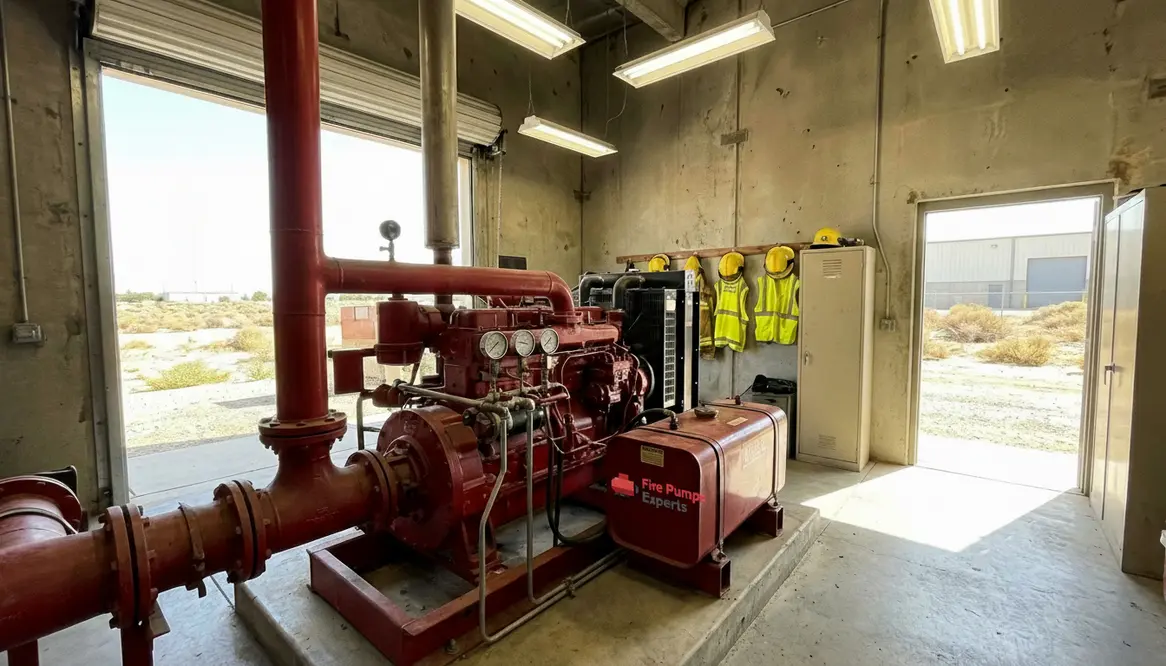
Industrial Site Fire Pump Requirements – Kern County
I have spent years walking through large facilities in Kern County, listening to the quiet hum of systems most people never notice. And yet, when it comes to industrial site fire pump requirements, those unseen systems can mean the difference between a close call and a catastrophe. In this region, where industrial growth meets dry conditions, developers cannot afford guesswork. So, I am going to walk you through what really matters, in plain terms, with a steady pace and maybe a small grin along the way.
Why Kern County Developments Rely On Fire Pumps
Kern County is not just another checkbox on a project map. It comes with specific expectations shaped by climate, infrastructure, and local enforcement. Because of that, fire pump systems here are not optional extras. They are core components.
At A Glance: Kern County Conditions
Dry weather, expanding industrial footprints, and strict local oversight all converge here. That combination pushes industrial site fire pump requirements to the front of the risk conversation, right alongside power, access, and production schedules.
Understanding Fire Pumps in Kern County Developments
Fire pumps exist to maintain pressure when the main water supply falls short. And yes, that moment always seems to happen at the worst possible time. Think of them as the understudy in a play who suddenly becomes the star when the lead actor disappears.
Moreover, local authorities enforce strict compliance with codes that align with California standards and national benchmarks. Therefore, developers must plan early. Waiting until late design stages often leads to expensive redesigns and delays that no one enjoys explaining in meetings.
Local Context: Why Industrial Pumps Matter Here
Across Kern County, industrial campuses keep getting larger, and water infrastructure is not always located where your risers and hydrants are. That is where a properly designed fire pump steps in, translating the industrial site fire pump requirements in the code into real-world performance when a sprinkler head opens or a hydrant valve spins.
What Are The Key Industrial Site Fire Pump Requirements in Kern County?
I get this question a lot, usually when timelines start getting tight. So here is the straight answer.
The industrial site fire pump requirements in Kern County revolve around three pillars: reliability, capacity, and accessibility. Each one carries weight.
Reliability: No Time For Hesitation
Reliability means the system must function under stress without hesitation. This includes backup power sources, typically diesel or emergency generators. Because when the grid fails, the fire pump cannot take a coffee break.
Capacity: Matching The Hazard
Capacity must match the hazard level of the facility. Large warehouses, processing plants, and energy sites often demand higher flow rates. Therefore, proper hydraulic calculations are not optional. They are the backbone of compliance and sit at the center of industrial site fire pump requirements.
Accessibility: Fast, Clear, Obvious
Accessibility ensures that fire personnel can reach and operate the system quickly. Placement, clearances, and signage all play a role. It is not glamorous, but it is critical when minutes suddenly feel extremely expensive.
When those three pillars line up with local and national standards, your industrial site fire pump requirements stop being a mystery and start looking like a clear design checklist.
Design Considerations Developers Should Not Overlook
Now, let us talk design. This is where good projects become great ones, or at least avoid becoming cautionary tales.
To begin with, water supply analysis is essential. Kern County often presents challenges with pressure variability. As a result, I always recommend testing early and designing with a margin of safety.
In addition, selecting the right pump type matters. Electric pumps work well in stable power environments. However, diesel pumps often provide added resilience. It is a bit like choosing between a sleek sports car and a rugged truck. Both have their place, but the terrain decides.
Furthermore, layout planning should integrate the fire pump room into the broader facility design. Too often, I see it treated as an afterthought. And yet, squeezing it into a corner rarely ends well.
Common Oversights
Ignoring long term maintenance access
Underestimating flow demand
Late coordination with fire authorities
Smart Moves
Early hydraulic modeling
Clear equipment spacing
Future expansion planning
Need A Fire Pump Specialist For Kern County?
If your next step is selecting, testing, or maintaining the pump itself, partnering with a dedicated service provider matters. A great starting point is the fire pump service overview at Kord Fire Protection’s fire pump services, which highlights inspection, testing, and maintenance support tailored to demanding facilities.
Permitting and Compliance in Large Scale Projects
Let me be honest. Permitting is where patience gets tested. Still, it does not have to feel like a never ending maze.
In Kern County, fire departments and building officials expect detailed documentation. Therefore, developers should prepare complete submittals that include system specifications, calculations, and layout drawings. Missing pieces slow everything down.
Additionally, inspections occur at multiple stages. Rough installation, final setup, and performance testing all require approval. So, staying organized is not just helpful, it is survival.
And yes, there will be revisions. There are always revisions. Even the best plans face adjustments. Think of it as the system refining itself, not fighting you personally.
Turning Requirements Into A Submission Strategy
The most successful teams translate industrial site fire pump requirements into a tidy permit package: water supply data, pump curves, sequence of operations, and plans that make it obvious the system is buildable and maintainable. When reviewers can see that logic, approvals tend to move faster.
Balancing Cost with Long Term Reliability
Here is where reality steps in. Budgets exist. However, cutting corners on fire protection is a gamble that rarely pays off.
Instead, I encourage a value driven approach. Invest in durable components, efficient layouts, and systems that can adapt to future needs. Because retrofitting a fire pump system later is about as fun as rewriting a movie after opening night.
Moreover, operational costs should be part of the equation. Energy use, maintenance frequency, and part availability all affect long term performance. Therefore, choosing the right system upfront often saves more than it costs.
Cost, Risk, And The Kern County Reality Check
When you price out pumps, controllers, tanks, generators, and testing, it is tempting to trim. Yet the true price tag of not meeting industrial site fire pump requirements shows up later: downtime, damaged equipment, or a failed inspection right when a tenant needs to open doors.
Industrial Site Fire Pump Requirements and Future Ready Planning
Looking ahead, I see one clear trend. Facilities are growing larger and more complex. As a result, industrial site fire pump requirements continue to evolve.
Developers who think ahead gain an edge. This includes planning for system expansion, integrating monitoring technology, and ensuring compatibility with advanced fire protection systems.
Also, sustainability is entering the conversation. Efficient pumps and smarter controls can reduce environmental impact without compromising safety. And that is a win worth pursuing.
Designing Today For Tomorrow’s Facility
On a practical level, that may mean allowing room for larger pumps or additional units later, sizing power infrastructure with growth in mind, and using monitoring tools that give you real performance data over time. Those choices help your industrial site fire pump requirements stay aligned with reality for years instead of just at the ribbon cutting.
FAQ
Do all industrial buildings in Kern County need fire pumps?
No. It depends on water supply and hazard level, but many large facilities require them.
How early should I plan for a fire pump system?
As early as possible during site design to avoid delays and redesign costs.
What type of fire pump is most common?
Electric and diesel pumps are both common, depending on power reliability.
Are inspections mandatory?
Yes. Multiple inspections ensure the system meets safety and performance standards.
Can I upgrade a system later?
Yes, but it is often more expensive than planning correctly from the start.
Conclusion
When I look at successful developments in Kern County, one thing stands out. They treat fire protection as a priority, not a checkbox. If you are planning a commercial or industrial facility, now is the time to get it right. Work with experts, design with intention, and build systems that last. Because in the end, a well planned fire pump system does more than meet code. It protects everything you are working so hard to create.