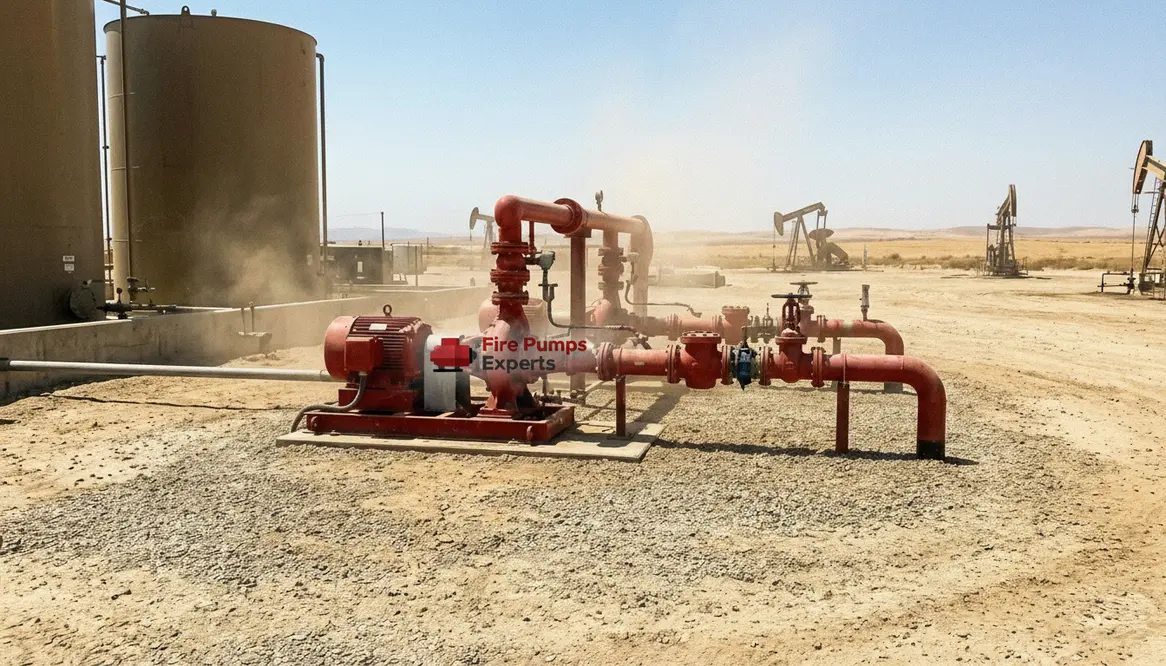
Kern County Fire Pump Design for Oil and Gas Safety
I have spent years studying how environments shape engineering decisions, and nowhere is that more evident than in Kern County. When I design systems for oil and gas fire protection, I cannot rely on a one size fits all approach. Instead, I let the land speak. The dry air, the heat, the industrial demands all whisper the same message: adapt or fall behind. And in a place where a spark can travel faster than office gossip, those whispers matter.
So, let me walk you through how local conditions influence fire pump design here, with a calm voice, a steady pace, and just enough humor to keep us both awake. Because, frankly, fire pumps deserve better than being the forgotten background character. They are more like the quiet hero in a blockbuster, not flashy, but absolutely essential.
Why Kern County Climate Shapes Every Fire Pump Decision
Kern County does not do moderation. It leans hard into heat, dryness, and long summers. As a result, I design fire pumps with durability at the forefront. High temperatures reduce water density and strain mechanical components. Therefore, I select materials and motors that can handle extended exposure without losing efficiency.
Additionally, dust plays a larger role than most expect. Fine particles infiltrate systems, affecting seals and moving parts. Because of this, I often specify enhanced filtration and protective enclosures. It is not glamorous work, but neither is replacing a failed pump during peak summer.
And yes, if fire pumps had feelings, Kern County would be their gym membership. Tough conditions build stronger systems.
How Do Water Supply Conditions Affect Fire Pump Design in Kern County?
Water supply here can be unpredictable. In some industrial zones, I deal with limited municipal pressure. In others, storage tanks carry the burden. So, I design pumps that compensate for variability rather than depend on stability.
I frequently calculate for worst case scenarios, not average days. This means accounting for pressure drops, long pipe runs, and simultaneous system demands. Consequently, pump sizing becomes more precise and less forgiving.
Moreover, I consider redundancy essential. If one component fails, another must take over instantly. Because in large commercial or industrial facilities, downtime is not just inconvenient, it is expensive.
Key Water Challenges I Address
- Low municipal pressure
- High demand from large facilities
- Variable storage tank levels
Design Responses I Implement
- Higher capacity pumps
- Backup pump systems
- Smart monitoring controls
Industrial Demands and Oil and Gas Fire Protection Requirements
Kern County thrives on industry, particularly energy production. Therefore, oil and gas fire protection systems must meet stricter performance standards. I design for rapid response times and high flow rates because flammable materials leave no room for hesitation.
Additionally, I integrate specialized suppression systems that work alongside fire pumps. Foam systems, for example, require precise pressure control. So, I ensure compatibility between components from the start, rather than forcing them to cooperate later.
And let us be honest, in these environments, failure is not an option. This is not a rehearsal. It is opening night, every day.
For facilities that rely on high-performance pumps every day, partnering with a dedicated fire pump service provider like Kord Fire’s fire pump systems team keeps inspection, testing, and maintenance aligned with the realities of Kern County conditions and modern oil and gas fire protection expectations.
Seismic and Terrain Considerations in Pump Installation
Kern County sits in a region where the ground occasionally reminds us who is in charge. Because of seismic risks, I design fire pump systems with reinforced anchoring and flexible connections.
Terrain also adds complexity. Some facilities sit on uneven or remote land. Therefore, I adjust installation strategies to maintain consistent performance despite elevation changes. Pressure calculations become more nuanced, and equipment placement becomes strategic.
Furthermore, accessibility matters. Maintenance teams must reach equipment quickly. So, I plan layouts that balance protection with practicality. After all, a perfectly designed system that no one can service is about as useful as a screen door on a submarine.
Regulations and Compliance in Commercial Fire Systems
Codes and standards guide every decision I make. In Kern County, local regulations often build upon national standards, adding another layer of complexity. Therefore, I stay current with both, ensuring compliance without sacrificing performance.
Inspections play a critical role. I design systems that not only meet requirements on paper but also perform reliably during testing. This includes proper documentation, clear labeling, and accessible components.
Additionally, I work closely with facility managers. Their input helps align system design with operational realities. Because compliance is not just about passing inspections, it is about maintaining safety every single day.
Tying Compliance Back to Oil and Gas Fire Protection
For refineries, terminals, and processing plants, regulatory expectations around oil and gas fire protection are not abstract—they translate into specific demands on fire pumps, foam systems, monitors, and hydrant networks. That is why every pump curve, controller setting, and acceptance test is mapped directly to those high-stakes operational realities.
FAQ: Fire Pump Design in Kern County
What makes Kern County unique for fire pump design?
High heat, dry conditions, and industrial demands require more durable and higher capacity systems.
Do fire pumps need special materials in this region?
Yes. Components must resist heat, dust, and wear to maintain performance over time.
How important is redundancy in these systems?
Very important. Backup pumps ensure continuous protection during failures or maintenance.
Are regulations stricter for industrial facilities?
Yes. Facilities handling hazardous materials must meet higher safety and performance standards.
Does water supply variability affect design?
Absolutely. Systems must compensate for low pressure and fluctuating availability.
Conclusion: Building Fire Pump Systems That Stand the Test of Kern County
If you manage a commercial or industrial facility in Kern County, now is the time to invest in a system designed for your reality, not someone else’s. I bring practical experience, local insight, and a steady hand to every project. Let us build a fire pump system that performs when it matters most. Reach out today, and together we will create protection that works as hard as your operation does.
From the way heat and dust reshape pump selection to the way seismic movement, regulations, and industrial throughput shape layout and redundancy, Kern County keeps me honest. Fire pumps are not decoration; they are the backbone of reliable oil and gas fire protection. Designing them to match the land, the climate, and the risk is how we keep every quiet hero ready for its moment on stage.