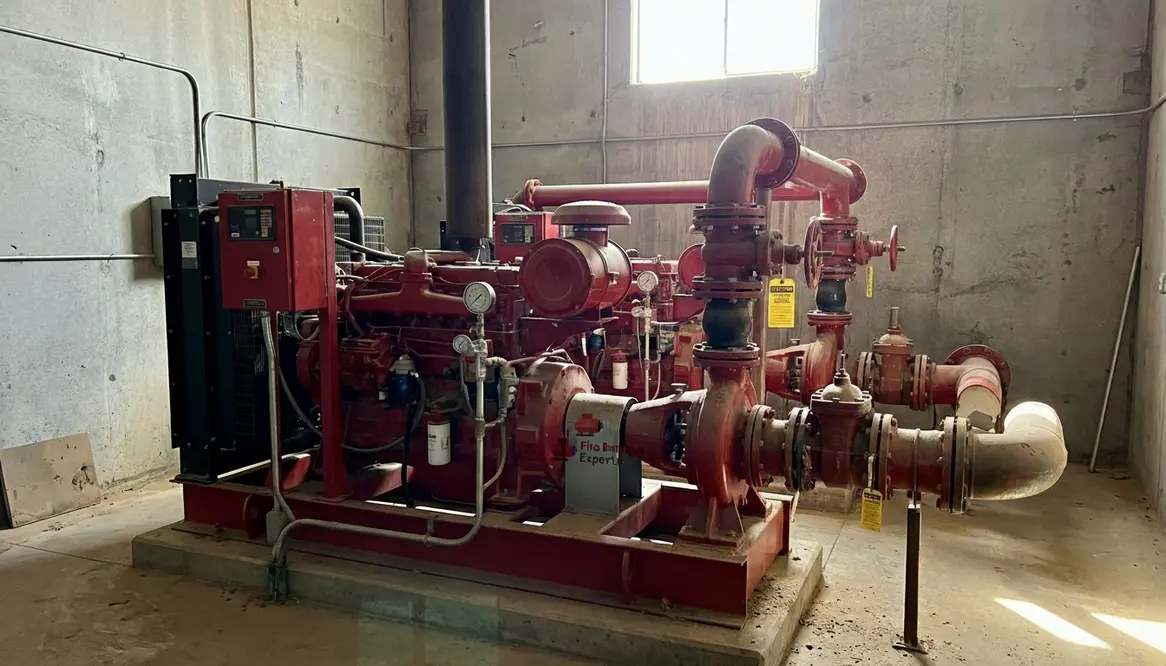
Fire Pump Readiness in Kern County Industry
I have walked enough industrial corridors in Kern County to know this truth: when fire hits, it does not knock first. That is why fire pump readiness is not just a checklist item. It is the quiet guardian behind your operation. In facilities where downtime costs thousands by the minute, a reliable fire pump system is the difference between a close call and a catastrophe. So today, I will guide you through what it takes to keep those systems sharp, steady, and ready to answer the call without hesitation.
Fire Pump Readiness for Kern County Industrial Facilities
In Kern County, industries face a unique mix of heat, dust, and heavy workloads. Therefore, maintaining fire pump preparedness requires more than routine attention. I always recommend aligning your system with both local fire codes and the specific demands of your facility.
For example, oil and gas operations often need higher capacity systems due to flammable materials. Meanwhile, food processing plants must ensure water quality does not compromise safety systems. Because of this, one size never fits all.
Additionally, regular inspections are not just about compliance. They help uncover small issues before they become expensive surprises. And trust me, surprises are great for birthdays, not for fire protection systems.
This is where disciplined fire pump readiness really pays off: understanding your risk profile, tailoring the system, and keeping it tuned so it can carry the load when everything else is going wrong.
If you want an overview of regional solutions that support Kern County operations, resources like Kord Fire’s Kern County fire protection services show how comprehensive protection can be built around real-world conditions.
How Do I Choose the Right Fire Pump System for My Facility in Kern County?
Start With Your Risk Profile
I get this question a lot, and the answer starts with understanding your building’s risk profile. First, I look at the size of the facility and the type of hazards present. Then, I evaluate water supply reliability.
Power Sources and Pressure Needs
Electric pumps work well when power is stable. However, diesel pumps step in when outages are a concern. In Kern County, where extreme weather can strain infrastructure, having a backup option is often a smart move.
Moreover, I consider system pressure requirements. High rise industrial complexes or large warehouses need consistent pressure across long distances. Without it, even the best sprinkler system becomes a decorative ceiling feature. And nobody installs sprinklers for decoration, unless it is a very expensive art piece.
Thoughtful design up front turns fire pump readiness from a gamble into a controlled, predictable strength built into your facility.
What Makes Fire Pump Systems Fail When You Least Expect It?
Neglected Testing
Failure rarely comes out of nowhere. Instead, it builds quietly over time. One common issue I see is neglected testing. Weekly and monthly tests might seem repetitive, yet they reveal performance drops early.
Component Wear and Environmental Stress
Another culprit is poor maintenance of components like valves, controllers, and fuel systems. When these parts degrade, the entire system suffers. Consequently, what should be a powerful response becomes a weak trickle.
Also, environmental factors play a role. Dust accumulation, temperature swings, and vibration from nearby equipment can all impact system health. Therefore, keeping your fire pump readiness intact means controlling the environment around it as much as the system itself.
Key Components That Keep Industrial Fire Pumps Reliable
Core Elements I Always Monitor
- Pump and driver performance consistency
- Controller responsiveness and alarms
- Fuel or power supply stability
- Valve positioning and flow paths
Support Systems That Matter More Than You Think
- Cooling systems for diesel units
- Proper ventilation in pump rooms
- Clear access for inspections and repairs
- Accurate pressure gauges and sensors
Each component plays a role, and when one slips, the rest feel it. So I treat the system like an orchestra. If the drums are off, the whole performance suffers. And yes, in this case, the audience is a fire, which is not known for its patience.
Keeping these elements in tune is what turns basic compliance into real fire pump readiness, the kind that holds up when alarms are blaring and visibility drops.
Maintenance Strategies That Actually Work in Industrial Settings
Structured Testing and Trend Tracking
I believe in structured, predictable maintenance. First, I schedule weekly churn tests to verify automatic startup. Then, I follow up with monthly flow tests to confirm performance under load.
However, I do not stop there. I also track trends over time. If pressure drops slightly each month, that is a warning sign. Addressing it early prevents larger failures later.
People, Training, and Everyday Awareness
Furthermore, training staff is essential. A well informed team can spot irregularities quickly. In many cases, human awareness is the first line of defense. And unlike your favorite streaming service, this is one system you cannot afford to buffer.
When your team understands why fire pump readiness matters and how their daily walk-throughs affect it, the system gets watched with the right mix of respect and healthy skepticism.
Staying Compliant Without Slowing Down Operations
Integrate Compliance Into the Workday
Balancing compliance and productivity can feel tricky. Yet, I find that integrating inspections into regular workflows makes a big difference. Instead of treating compliance as a disruption, I make it part of the routine.
Use Data and Monitoring to Your Advantage
Additionally, digital monitoring tools help track system performance in real time. These tools reduce manual checks while improving accuracy. As a result, facilities stay compliant without sacrificing efficiency.
In Kern County, local regulations are strict for a reason. They reflect real risks faced by industrial properties. So staying ahead of these standards protects both your people and your bottom line. Done right, compliance becomes a natural extension of strong fire pump readiness rather than an afterthought.
FAQ: Fire Pump Solutions for Industrial Facilities
Below are quick answers to the questions I hear most often from Kern County facilities working to improve fire pump readiness and tighten up their emergency response capabilities.
Keep Your Facility Ready When It Matters Most
In the end, fire pump systems are not just equipment. They are your facility’s silent protectors. When properly maintained, they stand ready without complaint or delay. If you want confidence in your system, now is the time to act. Partner with professionals who understand industrial demands in Kern County and take fire pump readiness seriously. Because when the moment comes, hesitation is not an option, and neither is failure.
Treat fire pump readiness as a core part of running an industrial facility in a high-risk region, not an after-hours project. Build the right system, test it relentlessly, train your people, and give that quiet guardian in the pump room everything it needs to do its job when your operation needs it most.