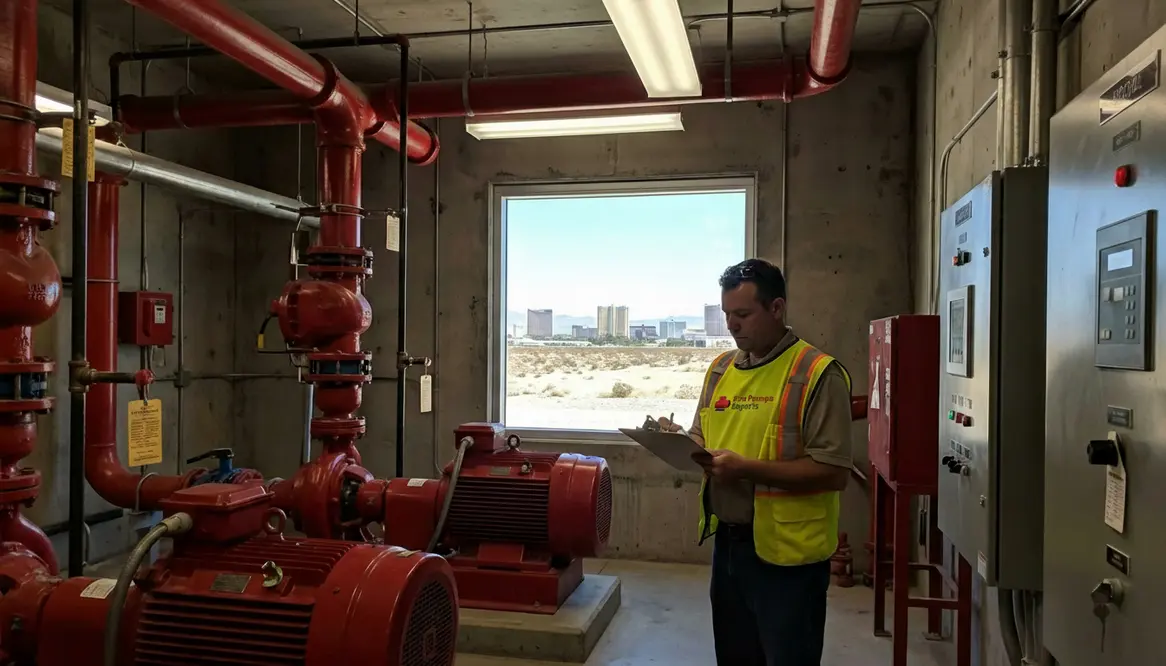
Las Vegas Fire Pump Budget and Local Code Costs
How local fire codes, desert conditions, and high‑demand occupancies quietly reshape your fire pump budget long before construction starts.
I have spent enough time around commercial pump rooms to know this simple truth. Fire code is not just ink on paper. It is the quiet force shaping budgets long before a single bolt gets tightened. For Las Vegas facility managers, that reality hits early. Between desert conditions, dense occupancy loads, and strict enforcement, local fire code requirements can nudge a fire pump budget from reasonable to eye widening faster than a casino lights up at dusk. So let’s walk through what really drives those costs and why it matters.
Why Local Fire Codes Quietly Control Your Fire Pump Budget
At first glance, a fire pump looks like a piece of equipment with a price tag. However, local codes turn it into a system with layers. While national standards like NFPA set the baseline, local authorities refine the rules. As a result, two nearly identical buildings in different cities can face very different costs.
For example, some jurisdictions require higher safety margins. Others demand redundancy or seismic bracing. Therefore, what starts as a standard installation can quickly expand. I have seen projects where a code amendment alone added tens of thousands to a budget, and nobody laughed about it except maybe the fire marshal, and even then only on the inside.
Code layers that add cost
- Local amendments that increase pump sizing or pressure requirements
- Additional redundancy or backup power expectations
- Structural bracing and seismic anchoring rules
- More frequent testing and documentation standards
Why Las Vegas facility managers feel it
- High rise and large assembly occupancies trigger stricter interpretations
- Water supply expectations push pump performance higher
- Closer scrutiny from authorities having jurisdiction on complex projects
What do Las Vegas facility managers need to know about fire pump room requirements?
In Las Vegas, pump room requirements are not casual suggestions. They are precise, and they directly affect cost.
Space and construction
First, space matters. Local codes often require dedicated rooms with fire rated construction. That means thicker walls, protected access, and sometimes independent ventilation. Consequently, construction costs rise before the pump even arrives.
Temperature control in desert conditions
Next, temperature control becomes critical. Desert heat is not just uncomfortable, it can damage equipment. Therefore, cooling systems or insulation upgrades often become mandatory. That adds electrical work and ongoing energy costs.
Accessibility and layout
Finally, accessibility rules come into play. Inspectors expect clear access for maintenance and emergency response. So squeezing a pump into a tight corner is not an option. And yes, that can mean redesigning layouts that architects thought were already perfect.
Hidden Cost Drivers Inside Fire Code Compliance
Some of the biggest budget surprises do not come from the pump itself. Instead, they come from the details wrapped around it.
Power supply requirements often demand dedicated electrical feeds or backup generators. As a result, electrical infrastructure costs climb quickly.
Controller specifications can also vary. Local codes may require advanced monitoring or integration with building systems. Therefore, a basic controller might not pass inspection.
Water supply conditions play a role too. If municipal pressure falls short, additional components like jockey pumps or storage tanks become necessary.
And then there is testing. Regular flow testing and acceptance testing require equipment, time, and coordination. While that might sound routine, it still adds to the total investment.
Las Vegas Facility Managers and the Cost of Compliance in High Demand Buildings
For Las Vegas facility managers overseeing large commercial or industrial properties, occupancy drives stricter requirements. Casinos, high rise hotels, and industrial complexes all carry higher risk profiles. Therefore, fire protection systems must perform under pressure, literally and figuratively.
Because of that, redundancy becomes more common. Dual pumps or backup systems are not unusual. Additionally, monitoring systems often need to tie into centralized control rooms. As a result, both installation and long term maintenance costs increase.
Still, there is a silver lining. When systems meet or exceed code, inspections go smoother. And in a city that never really sleeps, avoiding downtime is worth its weight in gold. Or at least worth avoiding a very awkward conversation with upper management.
Two Sides of Fire Pump Budgeting
Upfront Costs
- Equipment selection based on code requirements
- Construction of compliant pump rooms
- Electrical and backup power installation
- Specialized controllers and monitoring systems
Long Term Costs
- Routine inspections and testing
- Energy use for climate control
- Maintenance for code compliance
- Upgrades when regulations evolve
When I look at budgets, I always remind clients that the initial number is only part of the story. Codes do not stand still, and neither should your planning.
Planning Ahead to Avoid Budget Surprises
The best way to manage fire pump costs is to engage early. While that might sound obvious, many projects bring fire protection into the conversation too late.
Start by reviewing local amendments alongside national standards. Then, involve engineers who understand both. This step alone can prevent redesigns later.
Also, consider future expansion. If a facility might grow, sizing systems accordingly can save money down the line. Otherwise, upgrades become far more expensive.
And yes, always leave room in the budget for the unexpected. Because if there is one constant in construction, it is that something will surprise you. Usually when you least want it to.
For Las Vegas facility managers trying to keep both finance teams and inspectors happy, that buffer is not a luxury. It is survival.
If you want a deeper look at how water supply and fire protection infrastructure interact with code driven decisions, resources like Kord Fire Protection’s fire protection services guide can give additional context on how pumps, alarms, and suppression equipment fit together in a compliant system.
FAQ: Fire Pump Budgeting and Local Codes
These are some of the most common questions Las Vegas facility managers ask when fire pump line items start to grow on the spreadsheet.
Conclusion
Fire pump budgeting is not just about equipment. It is about understanding how local fire codes shape every decision from design to operation. If you manage a commercial or industrial facility, now is the time to align your plans with those requirements. Work with experts who know the landscape, anticipate the costs, and build systems that pass inspection the first time. Because in this world, preparation is not just smart. It is essential.