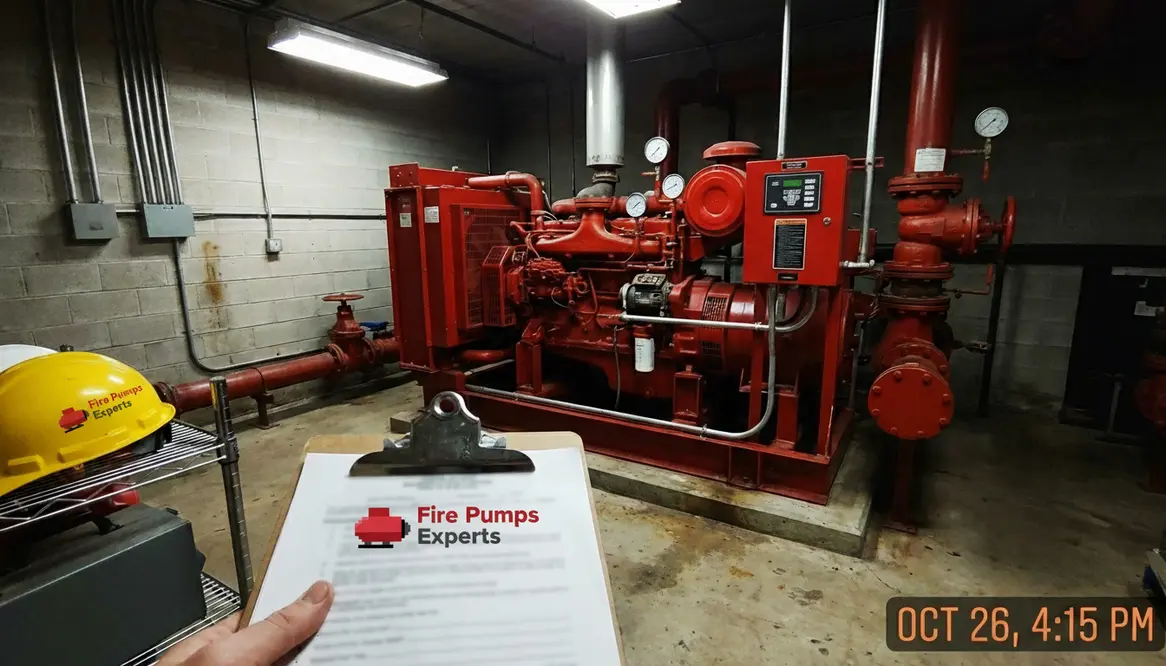
Las Vegas Fire Pump Code Compliance Strategies
Real world design lessons from mechanical rooms where “almost compliant” is just a longer way of saying “not ready.”
I have spent years walking mechanical rooms that hum like quiet engines of safety, and if there is one truth I have learned, it is this: strict codes do not forgive guesswork. When we talk about Las Vegas fire pump code compliance, we are not just checking boxes. We are building a system that stands ready when everything else fails. And in cities where inspectors have seen it all, your strategy has to be sharper than a late night poker player on the Strip.
So let me guide you through what actually works. Not theory. Not fluff. Real strategies that hold up under pressure, audits, and the occasional raised eyebrow from a fire marshal who has zero patience for shortcuts.
Why this matters in Las Vegas
Las Vegas fire pump code compliance lives at the intersection of national standards, local interpretations, and unforgiving environmental conditions. High heat, dense occupancies, and nonstop operations mean your fire pump is either truly ready or quietly becoming a liability.
What makes a fire pump strategy pass strict city codes?
First, I design with intent. That means I do not wait for compliance at the end. I build it in from day one. Because in high demand cities, fire pump systems are not just reviewed, they are dissected.
So what matters most? Flow consistency, pressure stability, and redundancy. However, those are just the headlines. The real story lives in details like controller logic, power supply reliability, and proper room conditions.
Core performance priorities
- Flow consistency that matches real building demand, not just theoretical curves.
- Pressure stability across all operating scenarios, including worst case fire events.
- Redundancy that keeps water moving when a single component fails.
The “hidden” compliance levers
- Controller logic that responds cleanly to every scenario instead of improvising under stress.
- Power supply reliability that does not depend on wishful thinking or a lucky day.
- Room conditions that protect equipment from heat, dust, and flooding risks.
Moreover, I always align early with local interpretations of national standards. Because while codes may look the same on paper, enforcement has personality. And yes, sometimes that personality feels like a movie villain who enjoys plot twists.
As a result, my strategy becomes simple. Over prepare, document everything, and never assume approval is automatic.
Designing for Las Vegas fire pump code compliance without overbuilding
Here is where many projects drift off course. They think stricter codes mean bigger everything. Bigger pumps. Bigger rooms. Bigger budgets. That is not strategy. That is panic wearing a hard hat.
Instead, I focus on precision. I match pump curves tightly to system demand. I avoid oversizing because it creates pressure issues and wasted energy. And yes, inspectors notice that.
Additionally, I plan for real world conditions. Heat, dust, and long operational cycles all affect performance. Las Vegas fire pump code compliance expects systems that function under stress, not just during a calm test.
Smart design beats “bigger is safer”
- Size pumps for real hydraulic calculations, not for comfort margins that spiral out of control.
- Coordinate with sprinkler, standpipe, and water supply design so the whole system behaves predictably.
- Design for maintainability: clear access, logical layout, and components that can be serviced without gymnastics.
So I build systems that are efficient, durable, and easy to maintain. Because a fire pump that looks good on paper but struggles in operation is like a sports car stuck in traffic. Impressive, but not helpful.
For a deeper look at how national standards shape design choices, I often point teams to resources like the NFPA 20 overview at Kord Fire Protection’s fire pump compliance guide. It is a solid benchmark when you are aligning Las Vegas fire pump code compliance with broader industry expectations.
Power reliability and redundancy for high rise and industrial facilities
Now we get into the backbone of the system. Power.
In major commercial and industrial properties, power failure is not a possibility. It is an expectation. Therefore, I always design with layered redundancy.
Primary Power Focus
- Dedicated electrical feeds
- Protected routing
- Clear separation from non critical loads
Backup Strategy
- Diesel driven fire pumps
- On site fuel reliability planning
- Automatic transfer integration
Meanwhile, I ensure seamless transitions between power sources. Because delays are unacceptable. Fire codes in strict jurisdictions demand immediate response, not hesitation.
And let me be honest. If your backup system needs encouragement to start, it is already too late.
Inspection readiness and documentation that actually works
Here is where many strong systems fail. Not because they are poorly built, but because they are poorly documented.
I treat documentation like part of the system itself. Every valve, test result, and calibration record matters. Furthermore, I make sure everything is easy to access and clearly labeled.
Turning inspections into routine checkpoints
- Clear labeling on valves, controllers, and test connections so inspectors are not playing detective.
- Organized digital and physical records of weekly, monthly, and annual tests.
- Trend tracking on pressures, flows, and runtimes to spot issues before they become violations.
Inspectors are not treasure hunters. If they have to search, they assume something is wrong.
Therefore, I prepare for inspections long before they happen. I run internal checks, simulate scenarios, and verify performance under load. Consequently, when the official review comes, there are no surprises.
Think of it like a dress rehearsal. Except the audience carries clipboards and can delay your entire project.
Maintenance strategies that support long term compliance
Passing inspection once is not the goal. Staying compliant is.
I design maintenance plans that are realistic and consistent. That includes scheduled testing, performance tracking, and proactive component replacement. Because wear and tear does not wait politely.
Additionally, I train facility teams to understand the system. Not just how to operate it, but how to spot early warning signs.
Keeping Las Vegas fire pump code compliance on track
- Weekly visual walk throughs that catch leaks, alarms, and abnormal sounds early.
- Monthly churn tests with results logged in a consistent, inspector friendly format.
- Annual full flow tests that verify the pump still delivers what the drawings promised.
- Component lifecycle planning so controllers, engines, and relief valves are replaced before they fail a test.
Las Vegas fire pump code compliance is not a one time achievement. It is an ongoing commitment. And frankly, the systems that perform best are the ones that are respected daily, not ignored until inspection season rolls around.
FAQ: Commercial Fire Pump Compliance
Build smarter systems that pass the first time
If you are planning or upgrading a system, do not leave compliance to chance. I help commercial and industrial properties design fire pump strategies that meet strict codes without wasting time or money. From planning to final approval, every step is intentional.
Las Vegas fire pump code compliance rewards teams that coordinate early, document relentlessly, and design for conditions beyond the test day. When power fails, temperatures spike, or occupancy is at its peak, the system you built either performs or it does not. There is no middle ground.
Reach out today and let us build a system that performs when it matters most, passes inspection without drama, and keeps your operation moving forward with confidence.