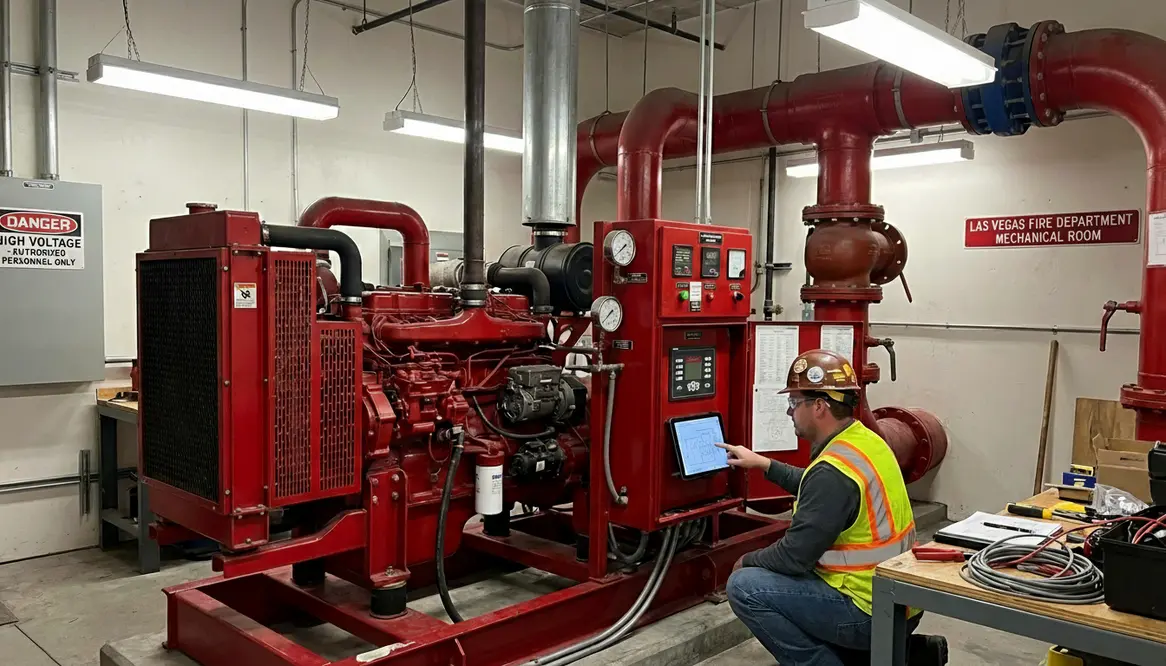
Las Vegas Fire Pump Reliability and Code Design
I have spent years inside mechanical rooms that hum like quiet engines of survival, and I can tell you this right away: when we talk about Las Vegas fire pump reliability, we are not talking about theory. We are talking about systems that must work the first time, every time, no excuses. In cities where codes stack up like casino chips and inspectors read them like gospel, design becomes both art and discipline. So today, I am pulling back the curtain on how I approach fire pump system design in complex U.S. code environments, with a calm hand and just enough humor to keep us awake.
Why reliability in Las Vegas feels different
The strip never really sleeps. Neither do the fire protection systems guarding guests, staff, data centers, back-of-house operations, and the kind of infrastructure you never see on a postcard. That is why Las Vegas fire pump reliability is about far more than passing inspection; it is about designing quiet, unflinching performance into every bolt, conduit, and control sequence.
Designing Fire Pump Systems in Cities with Layered Codes
First, I treat every city like its own personality. New York is strict and relentless. Los Angeles is detailed and seismic minded. Las Vegas? Fast moving, high stakes, and yes, deeply focused on reliability. Therefore, I never assume one design fits all.
I begin with NFPA 20 as my backbone. However, local amendments quickly enter the scene. In many major metros, fire departments add requirements that go beyond national standards. Consequently, I map out three layers at once: federal guidance, state modifications, and city specific rules.
Meanwhile, I coordinate early with AHJs. That step alone can save weeks. Or headaches. Or both, which frankly feels like winning a small jackpot.
Three-layer code mapping in practice
- Layer 1: National standards – NFPA 20, NFPA 13, and friends set the baseline performance expectations.
- Layer 2: State overlays – Plumbing, electrical, and building codes tweak the picture with seismic, environmental, and licensing nuances.
- Layer 3: Local flavor – City fire prevention bureaus, local ordinances, and AHJ preferences that dictate how “acceptable” actually looks.
In a city that lives on tourism, gaming, and entertainment, Las Vegas fire pump reliability is not just a safety topic; it is quietly built into how properties stay open, insurable, and trustworthy.
How do I design for complex fire codes without overcomplicating the system?
I keep it simple where it counts. Complexity in code does not mean complexity in execution. Instead, I focus on clarity in layout, accessibility for maintenance, and predictable performance.
For example, I avoid over engineering pump arrangements unless the building truly demands it. Redundancy is good. Chaos is not. So I design systems where each component has a clear role, and every operator can understand it at a glance.
Additionally, I document everything in plain language. Inspectors appreciate it. Contractors appreciate it. And years later, the facility team will quietly thank you without ever knowing your name.
Clarity beats cleverness
Every extra valve, bypass, and alternate flow path must earn its keep. If I cannot explain the logic in a few sentences to an operator on a night shift, it probably does not belong in the final design.
Documentation that actually gets used
I build straight-forward one-line diagrams and sequences of operation that walk through exactly how the system behaves under normal, emergency, and failure conditions. Clear design documents are part of Las Vegas fire pump reliability, even if they never make the marketing brochure.
Core Components That Drive Performance in Large Facilities
In commercial and industrial buildings, scale changes everything. A high rise hotel, a data center, or a manufacturing plant demands precision. So I pay attention to the details that actually move the needle.
Hydraulic Accuracy
I calculate demand carefully and verify real world pressure losses. Guesswork has no place here.
Power Reliability
Electric or diesel, the power source must survive worst case scenarios. Backup systems are not optional.
Controller Logic
A smart controller prevents false starts and ensures proper sequencing. It is the quiet brain behind the system.
Room Design
I plan for airflow, drainage, and access. A cramped pump room is a future problem waiting patiently.
Testing Access
Flow testing must be easy. If it feels like a chore, it will not happen often enough.
Material Durability
In cities with heat or corrosion risks, I choose materials that will last, not just pass inspection.
Linking design to real-world service
Design means very little without ongoing inspection, maintenance, and testing. That is where a specialized partner such as Kord Fire’s fire pump service team turns drawings into dependable performance across the full life of the system.
Las Vegas Fire Pump Reliability in High Demand Environments
Now let us return to Las Vegas fire pump reliability, because this city is a masterclass in pressure, both literal and figurative. Hotels operate around the clock. Casinos never sleep. And downtime is about as welcome as a bad poker hand.
So I design with continuity in mind. Dual power feeds, robust diesel backups, and clear maintenance paths all come into play. Moreover, I factor in heat. Mechanical rooms in desert climates can become ovens, and equipment does not enjoy that any more than we do.
At the same time, I work closely with facility managers. Their insight helps me align design with real operations. After all, a system that looks good on paper but fails in practice is just expensive decoration.
Design priorities for 24/7 properties
- Keep pump rooms serviceable without disrupting guests or operations.
- Select components rated for heat, runtime, and tough conditions typical of desert properties.
- Build test headers and discharge arrangements that invite regular use instead of dread.
- Turn Las Vegas fire pump reliability into a predictable outcome, not wishful thinking.
Coordination with Engineers, Contractors, and Inspectors
No fire pump system exists in isolation. I collaborate constantly with structural engineers, electrical teams, and contractors. Otherwise, conflicts show up late, and late problems are the worst kind.
For instance, I confirm slab loads early for heavy equipment. I verify electrical capacity before specifying large motors. And I align pipe routing with structural constraints. These steps sound basic, yet they prevent costly redesigns.
Meanwhile, I treat inspectors as partners, not obstacles. When I bring them into the process early, approvals move faster. And yes, everyone sleeps better at night.
Communication as a design tool
On paper, coordination sounds like emails and meetings. In reality, it is what turns ambitious projects into stable, code-compliant systems that deliver when alarms sound. In Las Vegas and other major cities, that coordination is a quiet but critical part of overall fire pump reliability.
Common Pitfalls I Avoid in Complex Code Environments
I have seen patterns over the years, and some mistakes repeat like reruns of an old sitcom.
Overcomplicating redundancy often leads to systems that confuse operators. Instead, I design backup strategies that are clear and testable.
Ignoring maintenance access creates long term issues. If a technician cannot reach a valve easily, that valve will eventually become a problem.
Delaying AHJ engagement almost always results in revisions. Early communication saves time and money.
And finally, treating reliability as optional is never acceptable. In cities that demand peak performance, system dependability is everything.
A quick mental checklist
- Can the night shift operator explain how the fire pump behaves in a power failure?
- Can a tech isolate, repair, and return the system to service without gymnastics?
- Have you verified that test connections will actually be used, not avoided?
- Does the design make Las Vegas fire pump reliability more likely, or less?
FAQ
What is the most important factor in fire pump design?
Reliability under real conditions, including power loss and peak demand.
How do local codes affect system design?
They add specific requirements that can change layout, equipment, and testing standards.
Why is testing access critical?
Easy testing ensures regular verification, which keeps systems dependable.
Do large facilities need redundant pumps?
Often yes, especially where downtime risks are high.
How early should AHJs be involved?
As early as possible to avoid redesign and delays.
Conclusion
Designing fire pump systems in complex U.S. cities is not about chasing codes. It is about mastering them and delivering systems that perform without hesitation. If you are planning a commercial or industrial project and need dependable results, I am ready to help you build with confidence, clarity, and long term reliability in mind. Let us create a system that works exactly when it matters most.