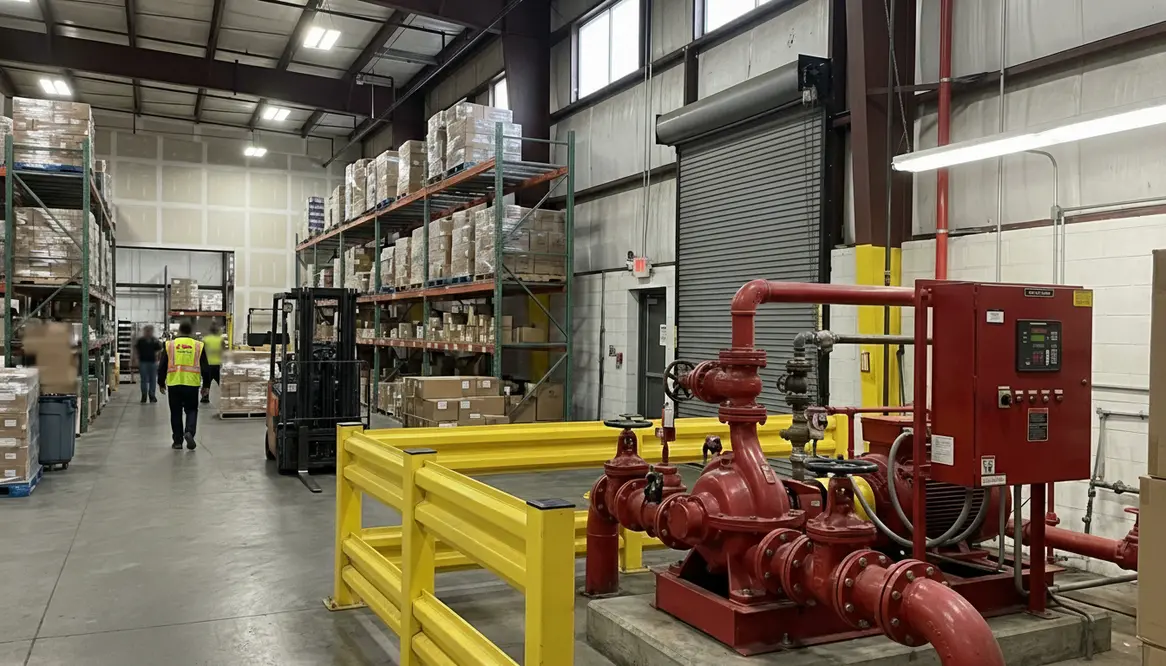
Mixed Use Fire Pump Compliance in NJ Warehouses
I’ve spent enough time around warehouses and distribution centers in New Jersey to know one thing for sure. When things go wrong, they go big. That is why mixed-use fire pump compliance is not just a box to check. It is the backbone of a facility that keeps moving, even under pressure. In these massive spaces filled with inventory, machinery, and tight timelines, fire protection needs to work quietly, reliably, and without hesitation. So let’s walk through what actually matters, without the fluff and with just enough personality to keep us awake.
Why Fire Pump Systems Matter in New Jersey Warehouses
Warehouses are not your average buildings. They stretch wide, stack high, and operate fast. Because of that, fire risks scale quickly. A small ignition can turn into a multi-alarm event before anyone finishes their coffee.
That is where fire pump systems step in. They boost water pressure when municipal supply falls short. And in New Jersey, where older infrastructure meets modern logistics, that gap shows up more often than people expect.
Moreover, local codes are not casual suggestions. They demand performance. If your system cannot deliver under peak demand, you are not just out of compliance. You are exposed.
So yes, fire pumps matter. Not in theory. In real, measurable outcomes.
How Do I Choose the Right Fire Pump for a Distribution Center?
I get this question a lot, and honestly, the answer is less glamorous than people hope. It is not about picking the biggest pump and calling it a day. This is not a superhero movie where bigger always wins.
Instead, I focus on three things that keep both code officials and operations teams happy, while still staying laser-focused on mixed-use fire pump compliance in busy New Jersey facilities.
1. Building Size, Layout, and Storage Profile
First, I look at building size and layout. High rack storage changes everything. Water has to travel farther and faster. Narrow aisles, mezzanines, and mixed uses such as offices tucked into one corner all affect how the system needs to perform when a sprinkler head opens up at the far end of the building.
2. Water Supply Conditions
Second, I evaluate water supply. If city pressure dips during peak hours, the pump must compensate instantly. In older New Jersey industrial zones, that fluctuation can be dramatic. A carefully selected pump keeps your sprinkler system from gasping for air when it should be throwing water.
3. Fire Protection Design and Hazard Classification
Third, I align with fire protection design. Sprinkler density, hazard classification, and system demand all drive the final decision. That sizing has to stand up during plan review, hydraulic calculations, and field acceptance tests, especially when mixed-use fire pump compliance is part of the discussion.
As a result, the right pump is not just powerful. It is precise. It fits the building like a tailored suit, not a one size fits all hoodie.
Understanding Mixed Use Fire Pump Compliance in Large Facilities
Now let’s talk about the phrase that tends to make people nod slowly while secretly Googling it later: mixed-use fire pump compliance.
In simple terms, it means your fire pump system must support multiple operational demands within one property. Warehouses today often include office space, refrigerated zones, and even light manufacturing areas. Each brings its own fire protection needs, and each can stress the system differently.
Therefore, compliance is not just about installing a pump. It is about ensuring that every section of the building receives adequate protection without compromise. Mixed-use fire pump compliance forces you to think about how those office areas, loading docks, and high-piled storage all pull from the same heart of the system.
Additionally, inspectors in New Jersey pay close attention to this. They want proof that your system performs across all use cases. And they will test it. Thoroughly.
Think of it like an orchestra. Every section must play in sync. Otherwise, the whole performance falls apart, and no one wants their fire system compared to a middle school band rehearsal.
Key Components That Keep Systems Reliable
Even the best pump will fail if the supporting pieces are weak. So I always look beyond the pump itself.
Mechanical Strength
Controllers, drivers, and valves must respond instantly. Delays are not acceptable when seconds matter.
Power Supply
Backup power is critical. Because relying on a single source during an emergency is like bringing one flashlight into a horror movie.
System Testing
Routine testing ensures everything works under real conditions, not just on paper.
Monitoring
Modern systems provide alerts before failures happen, which is exactly the kind of foresight you want.
Consequently, reliability comes from integration, not isolation. Every component plays a role, especially when your system is expected to maintain mixed-use fire pump compliance during real emergencies, not just plan review meetings.
Designing for New Jersey Codes and Real World Demands
New Jersey does not play around when it comes to fire safety. Regulations here reflect both dense development and high property value.
Because of that, I approach design with a dual mindset. I meet code requirements, but I also plan for real world stress. That mix is at the core of mixed-use fire pump compliance, especially in large warehouse campuses that evolve over time.
For example, seasonal temperature swings can affect equipment performance. Cold winters and humid summers demand durable configurations. In addition, distribution centers often run around the clock, which leaves little room for downtime.
So I design systems that handle constant use without wearing down. That means selecting materials that last, layouts that allow easy maintenance, and configurations that adapt to operational changes.
After all, compliance should not just satisfy inspectors. It should support your business every single day.
Common Mistakes That Cost Time and Money
I have seen a few patterns over the years, and they are surprisingly consistent.
First, people underestimate future expansion. A system designed for today may fail tomorrow when storage increases.
Second, maintenance gets pushed aside. Out of sight, out of mind. Until something breaks, usually at the worst possible moment.
Third, there is a tendency to treat fire protection as separate from operations. In reality, they are deeply connected.
However, avoiding these mistakes is not complicated. It just requires planning ahead and respecting the system as a critical asset.
And yes, ignoring maintenance is a bit like ignoring the check engine light. It will not fix itself, no matter how optimistic you feel.
Partnering with the Right Fire Pump Experts
Choosing experienced specialists can take a lot of the guesswork out of mixed-use fire pump compliance. If your operation spans office, warehouse, and light industrial processes, you want a team that has seen that movie before and knows how to avoid the plot twists.
Working with a dedicated fire pump service provider, such as a team that lives and breathes fire pump systems, helps keep design, testing, and documentation aligned. That means fewer surprises at inspection time and a system that is genuinely ready when alarms go off.
FAQ: Fire Pump Solutions for Warehouses in New Jersey
Keep Your Facility Ready for Anything
If you run a warehouse or distribution center in New Jersey, you already juggle enough moving parts. Your fire protection system should not be one of your worries. I help facilities design, install, and maintain systems that meet code, support mixed-use fire pump compliance, perform under pressure, and support long term growth. Let’s make sure your operation stays protected, compliant, and ready for whatever comes next. Reach out and let’s get it handled the right way.