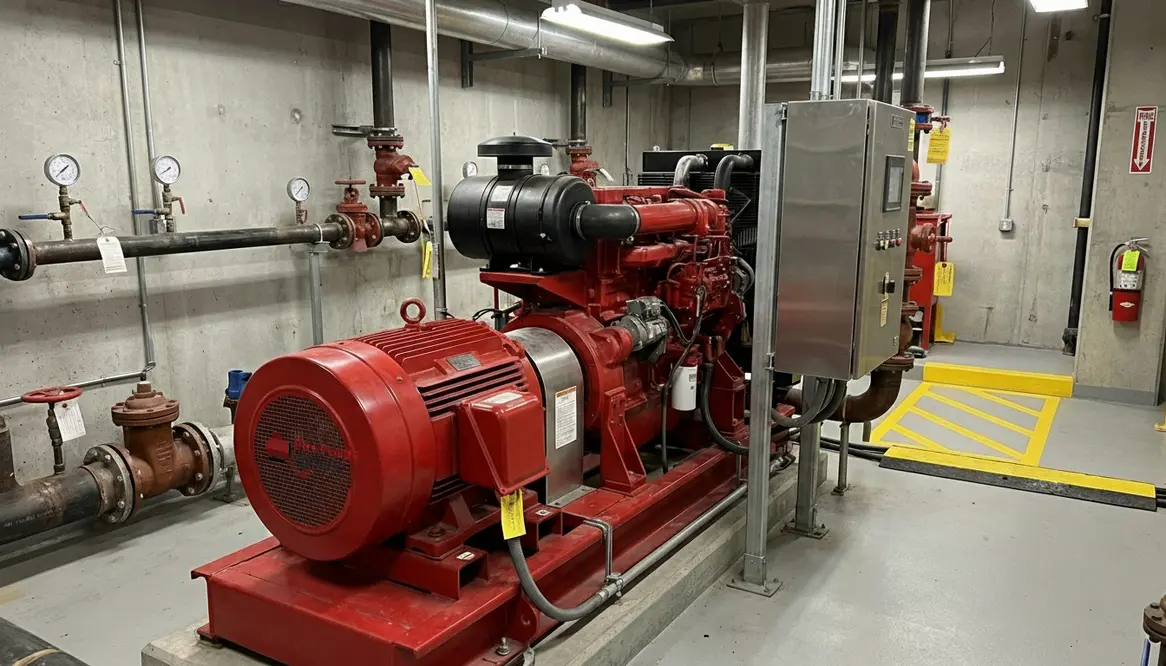
Fire Pump Room Requirements for New Jersey Safety
I have walked into more pump rooms than I can count, and I can tell you this right away: fire pump room requirements are not just lines in a codebook. They are the difference between a controlled incident and a headline nobody wants. In New Jersey, where commercial and industrial properties operate at full tilt, these requirements shape how a building survives its worst day. And yes, they matter even more than your morning coffee… though I admit that is a close race.
Why reliable fire pumps matter for New Jersey commercial properties
I have seen it firsthand. A fire pump either performs exactly when needed or it doesn’t. There is no in between, no warm up act. Therefore, reliability becomes the backbone of any serious fire protection system. In large facilities, where operations run nonstop, even a few seconds of delay can escalate damage fast.
Moreover, New Jersey codes demand systems that can handle high demand scenarios. Consequently, a properly installed and maintained pump ensures water pressure stays consistent across sprinkler systems. Without that, even the best design falls flat. Think of it like Batman without gadgets. Technically still Batman, but not nearly as effective.
What do fire pump room requirements actually mean in practice
When I explain fire pump room requirements, I keep it simple. These rules define how the pump environment supports performance. That includes space, access, temperature control, and protection from hazards. In other words, the room itself becomes part of the system.
Additionally, proper layout allows technicians to inspect and maintain equipment without obstruction. This matters more than people expect. If a technician cannot reach a valve easily, small issues turn into big ones. As a result, compliance is not just about passing inspections. It is about ensuring long term reliability.
How I design pump rooms for performance and compliance
Operational priorities
- Clear access paths for maintenance
- Stable temperature control
- Reliable power supply integration
- Proper drainage systems
Compliance essentials
- Adherence to NJ fire codes
- Adequate lighting and ventilation
- Separation from other building systems
- Protection against flooding or freezing
At the same time, I balance these priorities carefully. A pump room cannot just meet code on paper. It must function smoothly in real conditions. Therefore, I always look at how the space will perform during stress. Because that is when the truth shows up.
The hidden risks of ignoring fire pump system standards
Here is where things get serious. When fire pump room requirements are ignored or treated casually, the risks stack up quickly. For example, poor ventilation can overheat equipment. Likewise, limited access can delay emergency repairs. And unfortunately, those delays can cost millions in damage.
However, the biggest risk is false confidence. A system may appear functional during routine checks, yet fail under real fire conditions. That is the kind of plot twist nobody wants. Not even M. Night Shyamalan would recommend it.
Because of this, I always emphasize proactive design and maintenance. It is not just about avoiding penalties. It is about protecting people, assets, and operations.
How reliable systems support business continuity
In New Jersey’s commercial and industrial landscape, downtime is expensive. Therefore, reliable fire pumps play a direct role in keeping businesses operational. When a system works as intended, damage stays contained. Consequently, recovery becomes faster and less disruptive.
Also, insurers and regulatory bodies pay close attention to compliance. A well maintained system can influence premiums and approvals. So, investing in proper infrastructure often saves money in the long run. Not flashy, but very effective.
Where fire pump room requirements fit into long term planning
I always tell clients that fire pump room requirements are not a one time checklist. Instead, they are part of an ongoing strategy. As buildings evolve, systems must adapt. That includes upgrades, inspections, and occasional redesigns.
Furthermore, integrating these requirements early in construction avoids costly retrofits later. Planning ahead may not feel exciting, yet it delivers consistent results. And in this field, consistency is everything.
If you are mapping out upgrades for existing facilities, this is the perfect time to align your infrastructure with modern expectations. Treating fire pump room requirements as a living part of your asset strategy turns compliance into a long term advantage instead of a recurring headache.
Linking room design to real-world fire pump performance
Room layout decisions ripple directly into how your fire pump behaves during an emergency. Tight clearances complicate maintenance, awkward pipe routing can hide slow leaks, and poor separation from other utilities exposes the pump to avoidable hazards. Stack enough small compromises together and you end up with a system that looks compliant but wilts when the pressure hits.
That is why I treat every pump room as an operational space, not a storage closet with nice piping. When technicians can move freely, see critical components clearly, and work in a safe, well lit environment, inspections start catching problems while they are small. That is what real compliance looks like in practice.
Why professional fire pump support matters
Even a solid design needs the right partner to keep everything working as intended. From inspection schedules to troubleshooting odd noises at 2 a.m., your fire pump setup benefits from specialists who work with these systems every day. That is where a dedicated service provider comes in.
If you are looking for a deeper technical perspective on pump performance, testing, and maintenance strategies, take a look at this overview of fire pump systems and services from a specialist provider. It is a useful reference point when you are comparing your own fire pump room requirements with what high performing facilities are doing in practice.
FAQ: Fire Pumps for Commercial Properties
Below are some of the most common questions I hear when we start talking about fire pump room requirements and system performance in New Jersey commercial properties.
Conclusion
If you manage or own a commercial or industrial property in New Jersey, now is the time to take a closer look at your system. Fire pump room requirements are shaping the way your building will respond on the day you hope never arrives, and they deserve the same attention you give to operations, production, or revenue.
I can help you evaluate, design, or upgrade your setup so it performs when it matters most. That means looking beyond a simple checklist and making sure your room layout, equipment selection, access, and testing routines all work together under real world conditions, not just in a neat diagram.
Reach out today and let’s make sure your fire protection is not just compliant, but truly reliable. Because when it comes to safety, good enough is never enough, and the right approach to fire pump room requirements is one of the smartest investments you can make in your building’s future.