EN 12845 Fire Pump Requirements for Buildings
EN 12845 Fire Pump Requirements Explained
When I talk about fire safety for commercial and industrial sites, I start with EN 12845 requirements. This standard sets the rules for fixed fire sprinkler systems, and the fire pump sits right at the center of it all. If the pump fails, the whole setup can turn into a very expensive decoration. So, I will walk through what the standard expects, why it matters, and how it affects major property buildings, warehouses, plants, and other large facilities that cannot afford guesswork.
In simple terms, EN 12845 fire pump requirements focus on supply, pressure, reliability, testing, and backup. In other words, the pump must deliver the right water at the right time, even when life gets dramatic. And yes, fires have a habit of doing exactly that.
What EN 12845 Fire Pump Requirements Mean for My Building
When I review a site, I look at the fire pump as a critical part of the sprinkler system, not as a separate machine sitting in a room and hoping for the best. EN 12845 requirements tell me that the pump must support the sprinkler demand under the worst expected conditions. Therefore, I check the building use, hazard level, water source, and system design before I even think about pump size.
This standard matters most for commercial and industrial properties because these sites often have higher fire loads, more people, and more costly downtime. A warehouse fire does not just burn goods. It can halt supply chains, damage equipment, and turn a normal Tuesday into a company wide headache.
Fire Pump Setup That EN 12845 Expects
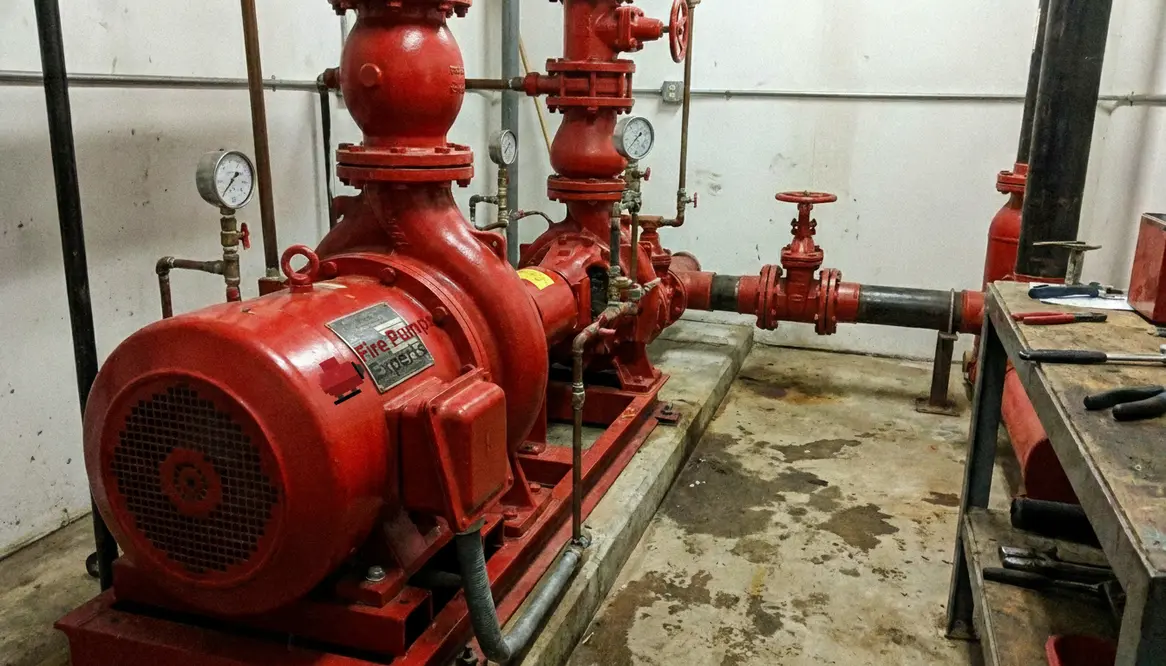
I keep the pump arrangement simple but disciplined. EN 12845 requirements expect the fire pump system to be dependable, easy to monitor, and ready to start without delay. That usually means the pump room stays protected, the water supply remains stable, and the controls stay clear and accessible.
Here is the core setup I look for:
- A reliable water source with enough capacity for the design demand
- A pump sized to meet sprinkler flow and pressure needs
- Approved power supply or engine drive, based on system design
- Clear suction and discharge pipework
- Proper valves, gauges, and control equipment
- Protection against freezing, flooding, and damage
Also, I make sure the pump room does not become a storage closet for forgotten boxes, old chairs, and the kind of mystery items that seem to multiply in every facility. Fire pumps like order. Clutter, not so much.
How I Check Pump Performance and Water Supply
This is where the real work begins. EN 12845 requirements do not stop at “install a pump and move on.” They expect the pump to perform under test and during real demand. So I check the pump curve, operating pressure, suction condition, and flow delivery. I also verify that the water supply can support the system for the required duration.
The pump must handle the system demand without dropping below acceptable pressure. At the same time, the suction side must stay strong enough to avoid cavitation or performance loss. If the pump sounds like it is grinding coffee beans, something has already gone wrong. And in fire protection, “sounds funny” is not a useful category.
EN 12845 Requirements for Testing and Maintenance
I always treat testing as part of the design, not an afterthought. EN 12845 requirements expect regular checks so the pump stays ready. That means I look at weekly runs, flow checks, alarms, controller functions, and any signs of wear or leakage. Furthermore, the site team should record each test so trends appear before failure does.
Here is a simple way to think about it:
| Area | What I Check |
| Start up | Fast, automatic, and reliable pump start |
| Pressure | Stable output under test load |
| Water source | Enough supply for the required system run time |
| Controls | Clear alarms, switches, and power status |
| Condition | No leaks, corrosion, vibration, or blocked lines |
Moreover, I tell facility teams to treat maintenance like a seat belt, not a luxury. You do not think about it until you need it, and by then, it had better work.
How I Align EN 12845 Requirements with Real World Facility Risks
Every building has its own risk profile, so I never assume one pump plan fits all. EN 12845 requirements help guide me, but the site use drives the final choice. A logistics hub may need different pump support than a manufacturing plant with heat, dust, and process equipment. Likewise, a high rise commercial property may need stronger pressure control than a single level site with wide floor coverage.
To keep the system practical, I match the pump design to the hazard classification, the sprinkler layout, and the site water supply. Then I confirm the backup strategy. If one pump or one power path fails, the system should still have a lifeline. That backup layer is not flashy, but neither is a fire extinguisher until the day it saves the building. Then it becomes the star of the show.
Where I Look for Expert Help and Documentation
For larger sites, I always recommend working with specialists who understand commercial and industrial fire systems, not general contractors guessing their way through a life safety job. Clear records, pump test reports, design notes, and compliance documents all matter. They help prove the system meets EN 12845 requirements and they make inspections smoother.
If you want a deeper technical reference, I suggest reviewing this helpful resource on EN 12845 fire pump requirements for commercial and industrial facilities. It gives a useful starting point for teams planning sprinkler pump compliance across major properties.
FAQ
Conclusion
If you manage a commercial or industrial facility, I urge you to treat EN 12845 requirements as a working shield, not just paperwork. A well planned fire pump system protects people, property, and operations when risk shows up uninvited. So, review your current setup, test it properly, and fix weak points before they become costly drama. If you need a compliant path forward, start now and make your fire protection system earn its keep.