EN 12845 Fire Pump Requirements Guide
EN 12845 Fire Pump Requirements Explained
When I talk about fire protection in commercial and industrial buildings, I always start with one thing: EN 12845 requirements set the tone for how the whole sprinkler system must perform when it matters most. In plain terms, this standard helps make sure a fire pump can deliver the right water flow and pressure fast enough to support sprinkler systems in major properties. That sounds dry, I know. But in a real fire, dry is exactly what we do not want. So, let me walk you through what the standard expects, why it matters, and how it shapes a safer building from day one.
Why EN 12845 requirements matter
They force every part of the sprinkler system to be honest: from the pump room and water supply to power backup, testing, and maintenance. When the standard is followed properly, the system behaves the same way on a quiet Tuesday test as it does at 3 a.m. when an actual fire kicks off.
What EN 12845 Means for Commercial Fire Pump Design
I see EN 12845 as the rulebook for sprinkler system reliability in business and industrial settings. It focuses on the performance needed to protect people, stock, equipment, and the building itself. Because of that, the fire pump must match the hazard level of the site, the water demand of the system, and the time needed to keep supply steady during an emergency.
In practice, this means I look at three things first. I check the building use, the fire load, and the sprinkler design density. Then I make sure the pump can support the system without drama. No one wants a hero pump that looks great on paper and folds under pressure like a bad movie sequel.
Hazard, demand, and duration
Each commercial site has its own fire personality. High racks of combustible stock, deep-freeze stores, or process plants all shape how hard the fire pump must work. EN 12845 requirements tie the pump duty to this risk profile so that water flow and pressure are not guessed but calculated against real hazards and required run times.
Design snapshot
- Understand building use and occupancy
- Classify fire load and storage type
- Confirm sprinkler design density
- Select a pump that comfortably meets these needs
EN 12845 requirements in the pump room
Treat the pump room like critical infrastructure
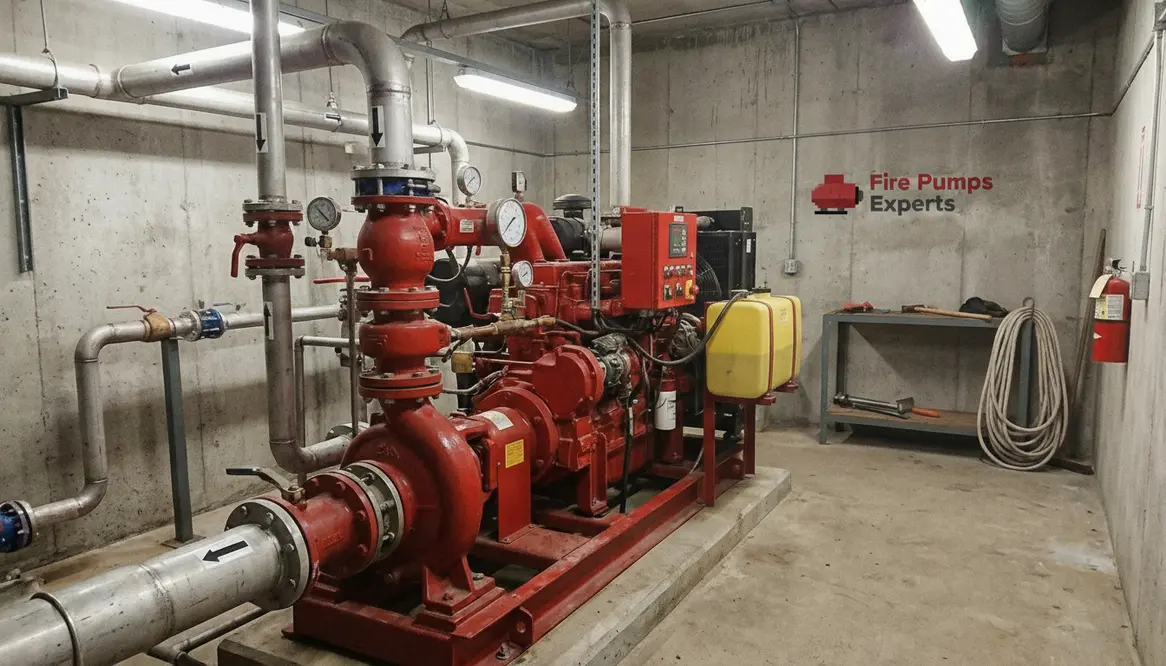
The pump room is not just a cupboard with a badge. It must support the pump in a clean, safe, and reliable way. I always expect easy access, enough space for inspection, and proper protection from heat, frost, and flooding. After all, a fire pump should not have to share a room with old boxes, cleaning supplies, or the office coffee machine from 1998.
Here is what I focus on most:
- Safe access for maintenance and testing
- A stable water supply for the pump
- Good ventilation for diesel driven sets
- Protection against freezing and overheating
- Clear controls and visible status indicators
Also, the pump room should stay dedicated to fire protection equipment. That sounds simple, yet it saves headaches later. If a system needs urgent service, nobody wants to play hide and seek with critical parts.
How I check pump capacity and pressure
This is where the standard gets practical. I never treat pump sizing as guesswork. Instead, I match the pump output to the sprinkler demand at the worst expected condition. That includes pressure losses in pipes, valves, and fittings. Then I check if the pump can still hold the needed pressure when the system runs for the required duration.
To make that easier, I break the task into two simple columns:
| What I check | Why it matters |
| Pump flow | It must supply enough water to protect the hazard area |
| Pressure at system demand | It keeps sprinkler heads working as designed |
| Duty and standby setup | It improves reliability if one pump fails |
| Test performance | It confirms the pump works under real conditions |
Moreover, I look closely at the water source. A strong pump cannot fix a weak supply. That is like putting premium tires on a car with no engine. Nice, but not useful.
Linking EN 12845 requirements to real pump performance
This standard is not satisfied with a nameplate value and a handshake. EN 12845 requirements expect the actual, tested performance of the pump to line up with the design calculations, including friction losses, elevation changes, and the most demanding operating point of the sprinkler system.
Why power supply and backups matter
In major buildings, pump reliability depends on more than the pump itself. The power supply must stay dependable during a fire event. For electric pumps, I check the main supply and the backup arrangement. For diesel pumps, I look at fuel storage, battery condition, ventilation, and automatic start controls.
EN 12845 requirements push me to think about failure before it happens. That is the whole point. A fire pump should start automatically, run smoothly, and keep going even if the building loses normal power. Because when the lights go out, nobody wants a dramatic surprise worthy of a bad action film.
Just as important, I verify alarms and fault signals. If the pump has a problem, the system must show it fast. That helps staff act before a small issue becomes a very expensive lesson.
EN 12845 requirements for testing and maintenance
A fire pump is not a “fit and forget” item. I treat testing as part of its life, not an afterthought. Regular checks confirm that the motor, controller, valves, suction line, and discharge line still work as expected. In addition, routine maintenance helps spot wear, leaks, air issues, and control faults before they become a problem.
Common tests include:
- Weekly or scheduled start checks
- Flow and pressure verification
- Battery and fuel checks for diesel units
- Inspection of valves and gauges
- Review of fault logs and alarms
Also, I always remind clients that testing must reflect real site risk. A site with high fire load, complex storage, or long pipe runs needs a sharper eye. That is where a specialist review helps, especially for commercial and industrial facilities that cannot afford guesswork.
Need help with EN 12845 fire pump compliance?
If I had to sum it up, EN 12845 requirements exist to keep sprinkler systems ready when a fire starts and time suddenly becomes very rude. The pump room, water supply, power backup, sizing, and testing all work together. So, if you manage a commercial or industrial property, I recommend reviewing your system now rather than after an alarm forces the issue. Contact a fire protection specialist who understands EN 12845 and can help you protect your building with confidence.
If you want more technical resources and guidance, one useful starting point is https://firepumps.org, where you can explore practical insights on fire pump design, testing, and standards alignment.
FAQ
Conclusion
Fire pumps, on their own, are just heavy metal and spinning parts. What makes them valuable is how closely they follow EN 12845 requirements from design through commissioning and into daily operation. When the pump room is fit for purpose, the water source is reliable, the power supply has backups, and testing is treated as non‑negotiable, the sprinkler system becomes a quiet, dependable part of the building’s safety strategy. That quiet reliability is exactly what you want on the day everything else becomes loud.