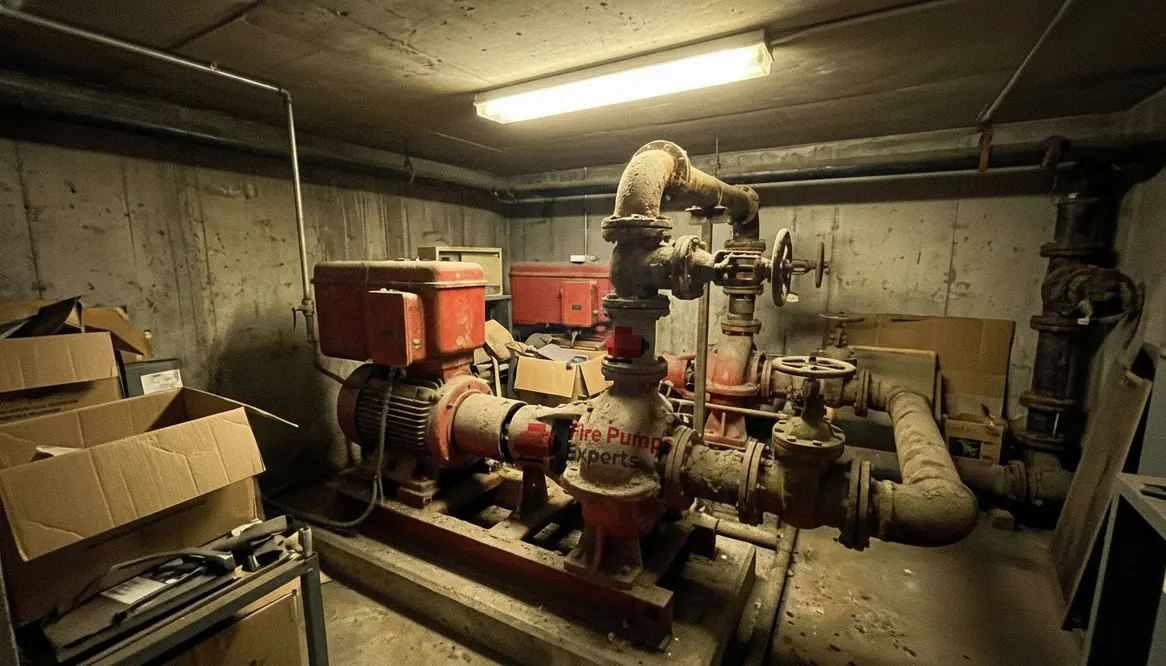
Parking Garage Fire Pumps in Older Buildings Guide
A practical field guide for owners and managers who are tired of trusting yesterday’s equipment with today’s fire risks.
I have spent years walking through older commercial buildings, listening to the hum of machinery that most people forget exists. And right there, often tucked beneath layers of dust and decades, sit the lifelines of fire protection. Parking garage fire pumps are a perfect example. They do not ask for attention, yet they demand respect. In many aging structures, these systems still carry the burden of modern safety expectations. And if you own or manage one of these buildings, you need to know exactly what you are dealing with before a small oversight becomes a very large headline.
What this guide covers
- What to check first in older fire pump systems
- How to recognize performance gaps before they fail you
- The special risks hiding in parking structures
- Upgrades that actually matter (and which ones can wait)
- Testing and compliance realities that affect your liability
What should I check first in an older building fire pump system?
I always start with the basics, because even the most complex systems fail for simple reasons. First, I look at the age of the fire pump itself. Many older units were built to last, but not forever. Seals wear down, motors lose efficiency, and controllers become outdated. Next, I check maintenance records. If those records look like they have been on vacation since 2003, that is a problem.
Then, I move to compliance. Codes evolve. What passed inspection twenty years ago might not meet today’s standards. Therefore, I compare the system against current NFPA requirements. It is not glamorous work, but it is necessary. Think of it like updating your phone. Ignore it long enough, and suddenly nothing works the way it should.
High-impact checks
- Age and condition of the fire pump and driver
- Controller type, condition, and compatibility
- Maintenance records and testing logs
- Water supply reliability and redundancy
Red flags you cannot ignore
- Unknown installation date
- No recent flow test data
- Evidence of leaks, corrosion, or vibration
- Controller panels with missing labels or taped-on “fixes”
Understanding performance gaps in aging systems
Older fire pumps often operate, but not optimally. That distinction matters. Over time, internal wear reduces pressure output. Consequently, the system may fail to deliver adequate water flow during a real emergency. I have seen pumps that technically run, yet cannot meet demand beyond a single floor.
Additionally, corrosion inside pipes and valves restricts flow. This is especially true in large commercial and industrial facilities where systems sit idle for long periods. While everything may appear fine during a visual check, performance testing often tells a different story.
And let’s be honest, relying on a decades old system without testing is like trusting a flip phone to stream high definition video. It might turn on, but it will not deliver when it counts.
Typical symptoms of underperforming systems
- Noticeable pressure drops at upper levels
- Long start times or unreliable pump starts
- Excessive noise or vibration while running
- Inconsistent readings between gauges and test results
Parking garage fire pumps and the hidden risks below ground
Parking structures introduce a unique challenge. Because they sit below grade or partially enclosed, they rely heavily on consistent water pressure and rapid response. Parking garage fire pumps must overcome elevation changes, ventilation issues, and vehicle related fire loads.
However, in older buildings, these pumps are often undersized by today’s standards. As vehicle designs evolved, so did fire risks. Modern cars burn hotter and faster, especially with electric components involved. Therefore, systems designed decades ago may not provide sufficient suppression.
Moreover, access to these pump rooms is often limited. I have walked into spaces that felt more like storage closets than critical infrastructure hubs. That kind of neglect does not just hurt performance. It delays response time during inspections and emergencies alike.
Below-grade realities
- Longer runs of piping increase friction loss
- Ramps and multiple levels demand careful hydraulic design
- Ventilation constraints intensify heat and smoke
- Limited access slows inspections and emergency access
Why parking garage fire pumps matter
- Vehicles now include higher fuel loads and batteries
- Fire spread between tightly parked cars is fast
- Evacuation routes often cross through smoke paths
- Failures here tend to be very visible and very expensive
Key upgrades that actually make a difference
Not every system needs a full replacement. In fact, targeted upgrades can significantly improve performance without tearing the building apart. I usually recommend focusing on components that directly impact reliability and control.
Mechanical Improvements
- Replace worn impellers and seals
- Upgrade outdated pump motors
- Clean or replace corroded piping
- Improve suction supply conditions
Control and Monitoring
- Install modern fire pump controllers
- Add remote monitoring systems
- Integrate alarms with building management systems
- Ensure backup power reliability
While these changes may seem straightforward, they dramatically increase system dependability. And frankly, dependability is the whole point.
Why regular testing is non negotiable
I cannot stress this enough. Weekly churn tests and annual flow tests are not optional. They are the only way to confirm that your system performs under real conditions. Yet, many older facilities either skip testing or treat it as a checkbox exercise.
Because of that, small issues go unnoticed. A slight pressure drop today becomes a major failure tomorrow. Regular testing, on the other hand, exposes problems early. It gives you time to fix them without urgency breathing down your neck.
Besides, if Hollywood has taught us anything, it is that systems always fail at the worst possible moment. This is one cliché I prefer not to see play out in real life.
Testing priorities for older parking garage fire pumps
- Weekly churn tests to confirm reliable pump starts
- Annual flow tests to verify pressure and volume at design points
- Full end-to-end testing from water supply through distribution
- Documented results that track trends across years
How compliance impacts liability and insurance
Code compliance is not just about safety. It directly affects liability and insurance coverage. If a fire occurs and your system does not meet current standards, the consequences extend far beyond property damage.
Insurance providers increasingly require documented proof of testing, maintenance, and upgrades. Therefore, staying compliant protects more than just the building. It protects your financial stability and reputation.
And in large scale commercial properties, reputation travels fast. One incident can echo across portfolios, tenants, and stakeholders.
Where parking garage fire pumps fit into the risk picture
- They protect high-value vehicles and dense concentrations of property
- They sit at the intersection of life safety, access, and egress
- Failures can damage more than one level, and more than one business
- Well-documented upgrades and testing can reduce unpleasant surprises from insurers
FAQ: Fire pumps in older commercial buildings
Take control before the system takes control of you
If you manage or own an older commercial property, now is the time to act. I have seen what happens when fire pump systems are ignored, and it is never convenient or cheap. Instead, take a proactive approach. Assess your system, upgrade where needed, and commit to consistent testing. When you invest in reliability today, you avoid chaos tomorrow. Reach out to professionals who understand large scale systems and ensure your building stands ready, not vulnerable.
If you want a deeper technical reference point to compare your own system against, resources like https://firepumps.org can help you frame the right questions before your next inspection or upgrade project.