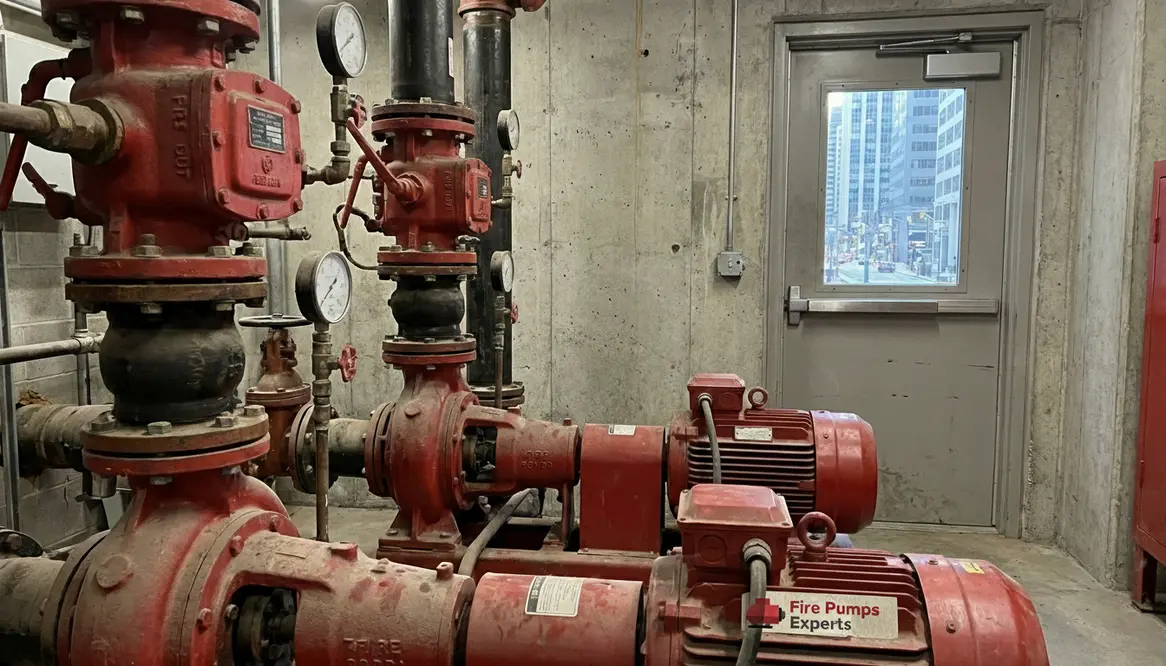
Reliable Water Supply for Fire Pumps in Buildings
A calm lobby can hide a lot of unseen risk. Understanding how a reliable water supply for fire pumps actually works is what separates a truly protected building from one that only looks the part.
I have spent years walking through large commercial buildings where everything looks calm on the surface. Lights hum, elevators glide, and tenants go about their day. Yet behind that calm sits something far more important than polished floors or sleek glass walls. It is a reliable water supply for fire pumps. Without it, even the most advanced fire protection system becomes little more than a decorative suggestion. And as much as we all enjoy a good action movie, no one wants their building to audition for one.
Think of that quiet mechanical room or pump room tucked away behind a locked door. If the reliable water supply for fire pumps in that space fails when it is needed most, everything your tenants see and value becomes vulnerable in a matter of minutes.
Why Commercial Buildings Cannot Afford Weak Water Infrastructure
When I evaluate a property, I do not start with aesthetics. I start with risk. A commercial or industrial facility carries dense occupancy, expensive equipment, and often complex layouts. Therefore, fire protection must work instantly and without hesitation.
A weak or inconsistent water source creates a chain reaction. First, pressure drops. Then, coverage becomes uneven. Finally, response time stretches just enough to turn a small incident into a major loss. In my experience, fire does not wait politely for systems to catch up.
Moreover, insurance providers and local codes expect consistency. They do not accept guesswork. They expect systems that deliver under stress, every single time. For many owners, that reliability starts with partnering with specialists who live and breathe fire pump performance, like the team providing fire pump service and inspections across complex properties.
The Cost of “Almost” Prepared
Many facilities operate in a gray area where systems technically pass inspection but are not truly ready for worst case conditions. The water supply might be barely adequate during normal hours, but shift patterns, process changes, or added tenants push it past the edge. That gap between paper compliance and real resilience is exactly where costly surprises tend to appear.
What Strong Infrastructure Actually Means
A strong, reliable water supply for fire pumps is not just about having a big tank or a robust municipal main. It means understanding how demand, elevation, pipe sizing, and pump selection all interact in real time during an emergency. It means designing for the bad day, not the average one.
What Happens When Fire Pumps Lack Consistent Water Flow?
I have seen systems that look perfect on paper fail in real conditions. The culprit is often simple. Inconsistent supply.
When fire pumps do not receive steady input, they struggle to maintain pressure. As a result, sprinklers may not activate effectively across all zones. In large facilities, that gap can stretch across thousands of square feet.
Additionally, pumps can overwork themselves trying to compensate. This leads to wear, breakdowns, and costly downtime. It is like asking a marathon runner to sprint uphill with no water. Eventually, something gives.
And let me be clear, this is not the moment where a heroic soundtrack swells and everything works out. This is real life. Systems either perform or they fail.
Failure Modes You Do Not Want to Discover During a Fire
- Sprinkler heads that barely mist instead of delivering proper discharge patterns
- Upper floors where pressure collapses just when evacuation routes are most crowded
- Pumps overheating or tripping offline because they are chasing unstable suction
- Valves that were “fine last year” but now choke flow at higher loads
Reliable Water Supply for Fire Pumps in High Demand Facilities
In high demand environments like manufacturing plants, distribution centers, and high rise office towers, demand spikes are not rare. They are expected. Therefore, a reliable water supply for fire pumps becomes the backbone of the entire fire protection strategy.
These properties often require:
- High volume delivery to support wide coverage areas
- Stable pressure across multiple floors or zones
- Immediate response during peak operational hours
Because of this, I always recommend systems designed with redundancy and capacity in mind. A single source may not be enough. Layered supply strategies often provide the resilience these buildings need.
And yes, it may sound like overkill until the day it is not. That day tends to be expensive.
Layered Supply Strategies
- Municipal supply supported by on site storage tanks
- Multiple tanks feeding a common suction header
- Separate supplies for different zones or towers
- Backup pumps and independent power where appropriate
Questions Owners Should Be Asking
- What happens if the municipal main is compromised?
- How long can existing storage feed the fire pumps at full design flow?
- Are there single points of failure hiding in the layout?
- When was the last time a real performance test stressed the entire chain?
How I Evaluate Water Supply and Fire Pump Performance Together
Water Source Strength
I look at municipal supply, on site storage, and refill capability. If one source fails, another must step in without delay. That is the practical measure of a reliable water supply for fire pumps, not just the nameplate numbers.
System Integration
The pump, piping, and control systems must act as one. Any lag between them creates risk. Controls that are slow to respond or poorly configured can sabotage even the best designed hardware.
Peak Demand Testing
I simulate worst case scenarios. If the system holds under pressure, it earns trust. If it wilts during a controlled test, I assume it will do worse when alarms are sounding and people are moving.
Maintenance Readiness
Even the best setup fails without upkeep. I check accessibility and service plans. If technicians cannot easily reach key components, or if testing records are thin, I assume performance is drifting in the wrong direction.
Each element matters on its own. However, together they tell the real story. A system is only as strong as its weakest link, and in fire protection, weak links tend to show up at the worst possible moment.
Reliable Water Supply for Fire Pumps as a Long Term Investment
Some property owners hesitate when they see the upfront cost. I understand that. Budgets are real, and every line item competes for attention. However, I always frame this as a long term investment rather than an expense.
A dependable supply reduces system strain. Consequently, equipment lasts longer and requires fewer emergency repairs. Insurance premiums may improve. More importantly, the building maintains compliance and protects its occupants.
And let us not forget reputation. A commercial property that handles safety well earns trust. One that does not becomes a case study people would rather avoid.
Pay Now or Pay Later
Think of it this way. You can pay now for reliability, or pay later for consequences. In my experience, the second option always costs more. A reliable water supply for fire pumps quietly prevents the kind of headline making events that no owner wants associated with their property.
FAQ
Conclusion
I always tell property owners the same thing. Fire protection is not the place to cut corners or hope for the best. A reliable water supply for fire pumps supports every layer of your safety system and keeps your operations secure. If you manage a commercial or industrial property, now is the time to evaluate your setup and strengthen it where needed. The right system does more than protect a building. It protects everything inside it.