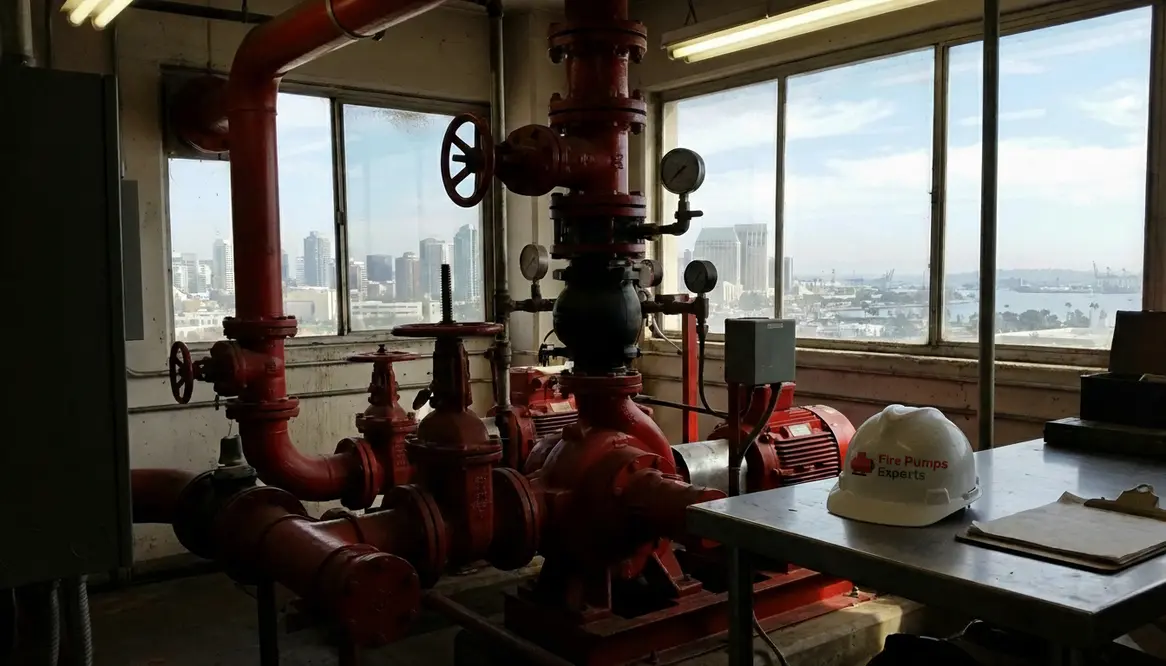
San Diego Fire Pump Planning for Commercial Buildings
I have spent years walking through mechanical rooms that hum like quiet orchestras, and I can tell you this: when it comes to San Diego fire pump planning, there is no room for guesswork. In a city where commercial towers meet coastal हवा and industrial sites run around the clock, fire protection is not just a box to check. It is a system that must perform flawlessly when everything else goes wrong. So today, I am going to walk you through it in a way that feels less like a code manual and more like a conversation you actually want to finish.
What does effective fire pump planning look like in San Diego?
First, let me answer this plainly. It looks intentional. It looks engineered. And above all, it looks prepared.
In San Diego, water supply conditions can vary more than your morning coffee order. Therefore, I always start by evaluating municipal supply, pressure fluctuations, and peak demand scenarios. A fire pump is not there for decoration. It exists to boost pressure when the system needs it most.
Moreover, local codes and seismic considerations play a major role. This is California, after all. The ground occasionally reminds us who is really in charge. So, I ensure every component is anchored, compliant, and built to endure both fire and movement.
And yes, if this sounds serious, that is because it is. Although I like to think of it as assembling the Avengers of fire protection. Each component has a role, and when one fails, the whole team feels it.
San Diego fire pump planning for large scale commercial buildings
When building scale changes the rules
When I step into a high rise or a sprawling industrial facility, the stakes rise with the structure. Taller buildings demand higher pressures. Larger footprints require consistent flow across longer distances.
So, I focus on three essentials:
- Capacity: The pump must meet peak demand without hesitation. Not almost. Not close enough. Exactly.
- Redundancy: Because relying on a single system is like bringing one flashlight into a cave and hoping the batteries last.
- Integration: The pump must work seamlessly with sprinklers, standpipes, and alarms.
Additionally, I always coordinate with architects and engineers early. Waiting until construction is halfway done is like trying to install plumbing after the walls are painted. Possible, but nobody is happy about it.
How do I choose the right fire pump system?
I keep it simple. I match the system to the building’s risk profile and operational demands.
Electric pumps are efficient and reliable when power stability is strong. Diesel pumps, on the other hand, bring independence. They do not care if the grid goes down. They just keep going, like that one friend who never leaves the party.
Then comes controller selection, suction conditions, and flow testing. I never skip testing. Ever. Because assumptions in fire protection are like plot twists in horror movies. They rarely end well.
Key planning factors
- Water supply reliability
- Building height and layout
- Local fire codes
- Seismic requirements
- System integration needs
Common mistakes I avoid
- Undersized pumps
- Poor room ventilation
- Ignoring maintenance access
- Late stage design changes
- Skipping performance testing
Designing for compliance and long term reliability
Now here is where things get real. Compliance is not just about passing inspection. It is about ensuring the system works ten years from now, not just on opening day.
I follow NFPA standards closely, but I also think beyond them. For example, I consider how maintenance teams will access the equipment. If reaching a valve feels like solving a puzzle, something went wrong in design. When in doubt, I lean on resources like NFPA 20 fire pump design guidance from Kord Fire Protection to make sure every decision stays grounded in real-world performance.
Furthermore, I account for environmental factors. Coastal air can be unforgiving. Corrosion does not care about your project timeline. So, material selection matters more than most people realize.
And yes, inspectors will look closely. They always do. Think of them as the final boss level. If you pass, you know you did it right.
Why maintenance planning matters as much as installation
Keeping San Diego fire pump planning realistic
Here is a truth many overlook. A perfectly installed fire pump can still fail if it is not maintained.
So, I build maintenance into the planning phase. Weekly churn tests, annual flow testing, and routine inspections are not optional. They are essential.
Additionally, I make sure facility teams understand the system. Because in an emergency, no one has time to read a manual the size of a novel.
And let me say this with a bit of humor. A fire pump that has not been tested is like a gym membership in January. Full of promise, but not always delivering when it counts.
FAQ about fire pump systems for commercial properties
Commercial property owners in Southern California ask many of the same questions when they start getting serious about San Diego fire pump planning. The fundamentals below are the ones I hear most often during walkthroughs and design meetings.
Bringing it all together with confidence
When I approach San Diego fire pump planning, I do not just see equipment. I see a system that protects people, property, and business continuity. Every decision, from design to testing, plays a role in that outcome.
So, if you are managing a commercial or industrial facility, now is the time to get serious about your fire protection strategy. Whether you are dealing with new construction or rethinking an existing system, treating San Diego fire pump planning as a strategic decision rather than a last minute requirement changes everything about the result.
Reach out, ask the right questions, and build a system that works when it matters most. Because in this line of work, reliability is everything.