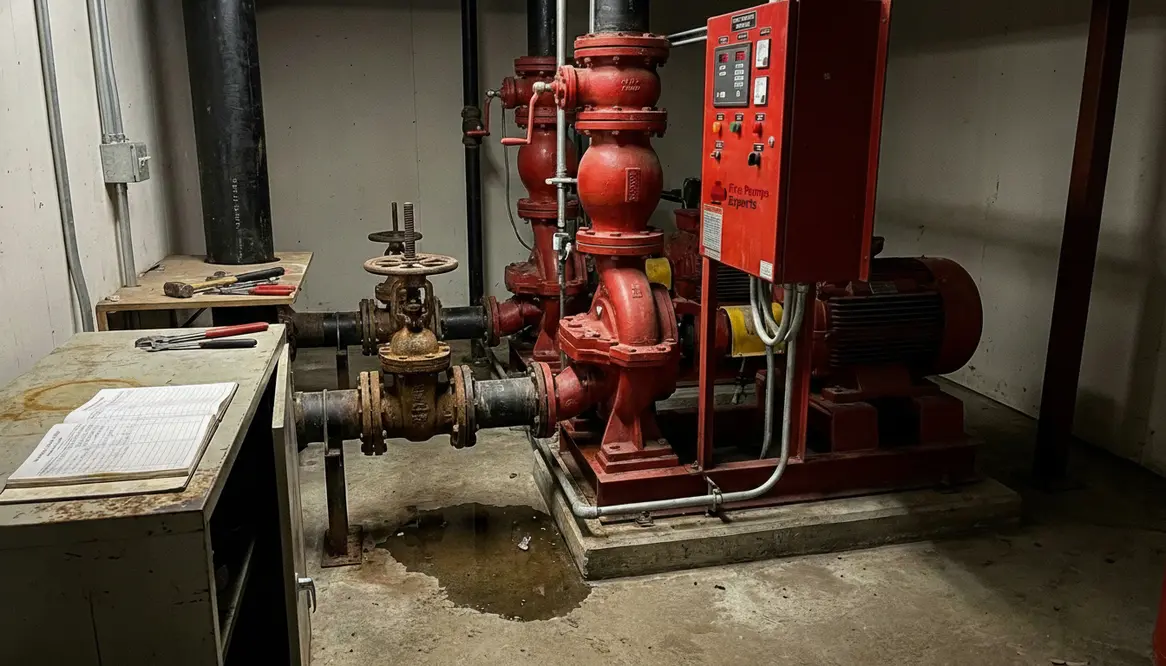
SCDF Fire Pump Deficiencies to Watch For in Commercial and Industrial Buildings
I have seen enough plant rooms, risers, and pump sets to know one thing: SCDF deficiencies rarely arrive with drama. They show up quietly, often as a loose valve, a weak pressure reading, or a pump that sounds a little too tired for its own good. In commercial and industrial buildings, that small miss can turn into a big problem fast. So, if you want your fire protection system to do its job when it matters most, I will walk you through the fire pump issues I watch for first, and why they matter more than most people think.
What I check first in a fire pump room
When I enter a pump room, I start with the basics. I look at the condition of the main fire pump, the jockey pump, the controller, the suction line, and the discharge line. Then I check for leaks, rust, poor labeling, and any sign that the system has been left to age like an old action hero who still insists he can do the stunt work.
In many commercial and industrial sites, the first warning sign is poor housekeeping around the pump set. That may sound harmless, but clutter, blocked access, or poor lighting can slow down inspection and response. I also look for any signs of vibration, overheating, or unusual noise during operation. A pump should not sound like it is auditioning for a horror movie.
Most importantly, I check whether the system is easy to access and ready for service. If I have to fight my way into the room, the deficiency is already bigger than the pump itself.
SCDF deficiencies that usually point to real risk
When I talk about SCDF deficiencies, I focus on the ones that affect performance, not just appearance. A clean room means little if the pump cannot deliver the pressure the building needs. So, I watch for these common problems:
Insufficient pressure or unstable pressure
If the pump cannot maintain pressure, the fire system may fail to protect upper floors, long pipe runs, or high demand zones. This often points to worn parts, poor settings, or a hidden leak.
Faulty automatic start
A fire pump must start when demand drops pressure. If it hesitates, fails to start, or only works after manual help, that is a serious deficiency.
Leaking valves or pipes
Even small leaks matter. They waste water, reduce pressure, and can signal corrosion or bad fittings.
Weak controller condition
A damaged or poorly maintained controller can delay the pump or stop it from running when needed.
Poor battery or power supply support
If the system depends on backup power, I make sure it works. Otherwise, the pump may go silent right when the site needs it most. That is not a plot twist anyone wants.
These issues often appear together. Therefore, I never treat one defect as an isolated problem. It usually tells me where the next issue is hiding.
How I read warning signs before a failure happens
I do not wait for a full breakdown before I take action. Instead, I look for patterns. For example, if the jockey pump runs too often, I ask why pressure keeps falling. If the main pump starts too late, I check the controller, the sensors, and the system settings. If a pressure gauge swings up and down, I suspect air in the system, a leak, or worn components.
Here is how I break the warning signs down in practice:
Visual signs
Rust, water marks, broken seals, and damaged insulation often point to deeper trouble.
Sound signs
Grinding, rattling, or high vibration can mean wear, imbalance, or blocked flow.
Performance signs
Slow start times, poor pressure recovery, or short cycling tell me the system is not stable.
Record signs
If inspection logs are missing, incomplete, or full of the same repeated fault, I know the issue may be ignored rather than fixed.
In other words, the pump room always tells a story. My job is to read it before it turns into a very expensive sequel.
Why commercial and industrial facilities need deeper checks
Commercial and industrial buildings face heavier loads, larger pipe networks, and more complex fire protection demands. Because of that, a small deficiency can spread across the whole system. A weak pump in a warehouse, factory, or large property building can affect hose reels, sprinklers, and wet riser supply all at once.
Dual view of the problem and the fix
Problem
High demand, long pipe runs, and heavy daily use make fire pump weaknesses harder to spot.
What I do
I check operating pressure, duty cycle, valve position, backup power, and test results with more care.
Problem
Old equipment may still run, but not at the right level.
What I do
I review wear, service history, and the condition of key parts before a small issue becomes a shutdown.
Problem
Site teams may assume “it worked last month, so it is fine.”
What I do
I remind them that fire systems are not like streaming subscriptions. You do not get value just because the account exists.
This deeper check matters because major properties cannot afford guesswork. They need systems that perform under pressure, not just systems that look ready during a walkthrough.
What I do to close SCDF deficiencies before they grow
Once I find a deficiency, I move quickly. First, I confirm whether the issue is urgent or developing. Then I document the fault, isolate the cause, and arrange the right repair. I also make sure the inspection record reflects what I found, because good records help prevent repeat failures.
I focus on three practical steps:
Test the full system
I do not check only one part. I test the pump, controller, valves, and pressure response together.
Fix the root cause
If a leak or pressure loss keeps returning, I look deeper instead of patching the same spot over and over.
Keep service schedules tight
Regular checks help me catch wear early, which saves time, money, and stress later.
That approach keeps the system in fighting shape and helps protect the building, the people inside it, and the operations that depend on it.
FAQ: SCDF fire pump deficiencies
Final thoughts and next step
If you manage a commercial or industrial property, I would not wait for a fault to become a failure. I would review the pump room, test the system, and close any SCDF deficiencies before they grow teeth. A strong fire pump setup protects more than equipment. It protects people, uptime, and peace of mind. If you want a proper inspection or need help finding weak spots, now is the time to act. Your building deserves a system that stands ready, not one that merely looks the part.